



























Prologue: When Systems Start Thinking
There was a time when systems followed rules.
Factories followed schedules. Governments followed procedures. Markets followed supply and demand. Everything was structured, predictable, and ultimately dependent on human input.
But something has changed.
Systems are no longer just executing instructions—they are learning, adapting, and optimizing themselves in real time.
We are entering the age of intelligent systems, where technology does not merely assist society—it actively reconstructs it.
This transformation is not happening in one place or one industry. It is unfolding everywhere, simultaneously, quietly, and irreversibly.
1. The Shift from Infrastructure to Intelligence
Traditional infrastructure was static.
- Roads connected cities
- Power grids delivered electricity
- Institutions governed behavior
These systems were designed once and adjusted slowly over time.
Intelligent Infrastructure
Modern technological systems behave differently. They are:
- Adaptive – responding to real-time data
- Predictive – anticipating future states
- Self-optimizing – improving without direct intervention
Examples include:
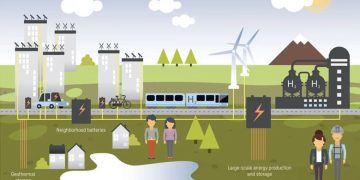
- Traffic systems that adjust signals dynamically
- Energy grids that balance supply and demand autonomously
- Financial systems that detect anomalies instantly
The key transformation is this:
Infrastructure is no longer passive. It is active intelligence embedded into society itself.
2. Data: The New Foundation of Civilization
If industrial society was built on oil, the digital society is built on data.
But data is not valuable on its own—it becomes powerful when it is:
- Collected continuously
- Connected across systems
- Interpreted through algorithms
The Data Loop
Modern systems operate through a continuous cycle:
- Capture behavior
- Analyze patterns
- Generate predictions
- Influence outcomes
- Capture new behavior
This loop creates a self-reinforcing system where:
- The more data collected
- The more accurate predictions become
- The more influence systems gain
The Hidden Layer
Most people interact only with the surface:
- Apps
- Interfaces
- Dashboards
But beneath that lies an invisible layer:
- Data pipelines
- Machine learning models
- Optimization engines
This hidden layer is where real power resides.
3. AI as a Structural Force, Not a Tool
Artificial intelligence is often discussed as a tool.
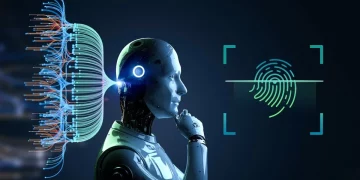
But in reality, it is becoming a structural force—something that shapes the very architecture of society.
From Task Automation to Decision Systems
Early AI automated tasks:
- Sorting emails
- Recognizing images
- Translating text
Now, AI is making decisions:
- Approving loans
- Diagnosing diseases
- Recommending legal outcomes
- Managing supply chains
The Consequence
When decisions shift from humans to systems:
- Accountability becomes complex
- Transparency becomes limited
- Control becomes distributed
AI is no longer at the edge of systems—it is at the core.
4. The Reconfiguration of Work
Work is not disappearing—it is being redefined.
The End of Linear Careers
Traditional careers followed predictable paths:
- Education → Job → Promotion → Retirement
But intelligent systems disrupt this model by:
- Automating routine tasks
- Accelerating skill obsolescence
- Creating new roles faster than old ones disappear
The Rise of Fluid Work
Modern work is becoming:
- Project-based
- Skill-driven
- Continuously evolving
Individuals are no longer defined by a single profession but by a portfolio of capabilities.
Human Advantage
As machines handle:
- Speed
- Scale
- Pattern recognition
Humans increasingly focus on:
- Creativity
- Emotional intelligence
- Ethical judgment
- Complex problem framing
5. Smart Cities and Algorithmic Urban Life
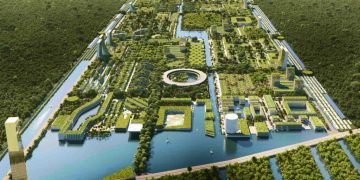
Cities are becoming living systems.
What Makes a City “Smart”?
A smart city integrates:
- Sensors
- Networks
- Data platforms
- AI-driven analytics
This enables:
- Real-time traffic management
- Predictive policing
- Efficient energy use
- Automated public services
The Urban Feedback Loop
Cities collect data from citizens and feed it back into systems that shape behavior.
For example:
- Navigation apps redirect traffic → changing urban flow
- Public transport optimization → altering commuting habits
- Dynamic pricing → influencing consumption patterns
The city becomes:
A continuously learning organism.
6. The Personalization of Reality
One of the most profound effects of technology is the fragmentation of shared reality.
Personalized Environments
Every individual now experiences a slightly different world:
- Different news feeds
- Different recommendations
- Different search results
This is driven by:
- Behavioral profiling
- Preference modeling
- Engagement optimization
The Consequence
Reality is no longer uniform—it is customized.
This leads to:
- Echo chambers
- Filter bubbles
- Diverging perceptions of truth
The challenge is not just misinformation—but misalignment of reality itself.
7. Power in the Age of Platforms
Power is shifting.
Traditional Power Structures
Historically, power resided in:
- Governments
- Institutions
- Physical resources
Platform Power
Today, power increasingly lies with:
- Technology companies
- Data owners
- Platform operators
Why?
Because they control:
- Information flow
- User behavior
- Economic ecosystems
The New Gatekeepers
Platforms decide:
- What is visible
- What is prioritized
- What is monetized
This makes them not just companies—but infrastructure for modern life.
8. Ethical Tensions and Governance Challenges
As technology reshapes society, governance struggles to keep up.
Key Tensions
- Innovation vs regulation
- Efficiency vs fairness
- Personalization vs privacy
- Automation vs accountability
The Speed Gap
Technology evolves rapidly.
Regulation evolves slowly.
This creates a gap where:
- Systems operate before rules are defined
- Consequences emerge before safeguards exist
The Need for New Frameworks
Future governance must address:
- Algorithmic transparency
- Data ownership rights
- AI accountability
- Global coordination
9. Human Meaning in a System-Driven World
As systems become more intelligent, a deeper question emerges:
What is the role of humans?
Beyond Productivity
If machines optimize efficiency, human value shifts toward:
- Meaning
- Purpose
- Experience
The Risk
There is a danger that:
- Life becomes overly optimized
- Decisions become overly automated
- Individuals become passive participants
The Opportunity
But there is also potential:
- To focus on creativity
- To deepen human connection
- To redefine success beyond output
10. The Next Phase: Autonomous Society
We are moving toward a world where systems operate with minimal human intervention.
Emerging Possibilities
- Autonomous transportation networks
- AI-managed economies
- Self-regulating supply chains
- Intelligent governance systems
The Critical Question
Not whether this will happen—but:
How much control humans will retain.
Conclusion: Designing the Future, Not Just Living in It
Technology is no longer an external force shaping society from the outside.
It is embedded within the very structure of how society functions.
We are building systems that:
- Learn faster than we do
- Scale beyond our capacity
- Operate beyond our visibility
The challenge is not to stop this transformation—it is already underway.
The challenge is to shape it intentionally.
Because the future will not be defined by technology alone.
It will be defined by the choices we make about:
- How it is designed
- Who controls it
- And what it is ultimately for












Discussion about this post