




























Opening Reflection: Exploration Before Technology
Long before rockets, satellites, or telescopes, humans were already explorers.
They crossed oceans without maps, walked into deserts without certainty, and climbed mountains without knowing what lay beyond the summit. Exploration is older than science, older than industry—it is woven into the very fabric of human existence.
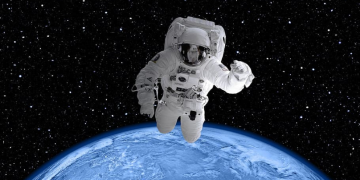
So when we look at modern space exploration—missions to Mars, deep space probes, orbital stations—we are not witnessing something entirely new.
We are witnessing the continuation of something ancient.
The question is not how we explore space.
The deeper question is: why do we feel compelled to explore at all?
I. Curiosity: The Cognitive Engine of Exploration
1.1 The Need to Know
At the core of exploration lies curiosity—a fundamental human trait. We are driven to ask:
- What is beyond the horizon?
- How does the universe work?
- Are we alone?
This drive is not purely practical. It is existential.
1.2 Exploration as Knowledge Expansion
Every exploration effort expands the boundaries of human knowledge:
- Mapping unknown territories
- Understanding natural laws
- Discovering new phenomena
Space exploration represents the ultimate extension of this process.
1.3 Curiosity vs. Utility
Many of the greatest discoveries were not initially driven by practical needs. Exploration often precedes application.
We explore first.
We understand later.
II. Survival: The Long-Term Imperative
2.1 Fragility of a Single-Planet Species
Human civilization currently depends entirely on one planet—Earth. This creates vulnerability:
- Natural disasters
- Climate change
- Asteroid impacts
2.2 The Multi-Planetary Vision
The idea of expanding beyond Earth is often framed as a survival strategy. Becoming a multi-planetary species could:
- Reduce existential risk
- Ensure long-term continuity
- Expand available resources
2.3 Beyond Immediate Threats
Even if immediate risks are low, long-term thinking drives exploration. Space offers:
- Redundancy
- Resilience
- Opportunity for growth
III. Competition and Ambition
3.1 Exploration as Power
Historically, exploration has been linked to power:
- Territorial expansion
- Resource acquisition
- Technological dominance
Space continues this pattern.
3.2 National Prestige
Milestones like the Apollo 11 Moon Landing were not just scientific achievements—they were symbols of national capability.
3.3 Corporate Ambition
Today, companies like SpaceX are driven by:
- Visionary goals
- Competitive advantage
- Market leadership
Ambition fuels progress.
IV. Meaning and Identity
4.1 The Cosmic Perspective
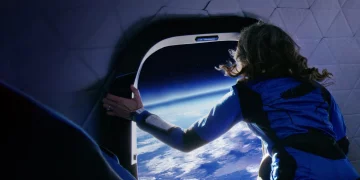
Space exploration changes how we see ourselves.
Images of Earth from space reveal:
- Its fragility
- Its unity
- Its isolation
This perspective reshapes human identity.
4.2 A Shared Humanity
From space, national borders disappear. Humanity appears as a single system.
This has implications for:
- Global cooperation
- Environmental awareness
- Cultural identity
4.3 The Search for Purpose
Exploration is also a search for meaning. It reflects a desire to:
- Understand our place in the universe
- Connect with something larger than ourselves
V. Innovation Through Exploration
5.1 Constraint as Catalyst
Exploration creates extreme constraints:
- Limited resources
- Harsh environments
- High risk
These constraints drive innovation.
5.2 Breakthroughs Under Pressure
Space exploration has led to:
- New materials
- Advanced computing
- Medical technologies
Innovation often emerges at the edge of possibility.
5.3 Exploration as a Driver of Progress
Exploration pushes societies forward by:
- Expanding knowledge
- Stimulating economies
- Inspiring future generations
VI. The Role of Imagination
6.1 Science Fiction as Blueprint
Before reality, there was imagination. Stories about space inspired generations of scientists and engineers.
6.2 Vision Precedes Reality
Many technologies began as ideas:
- Satellites
- Space travel
- Planetary exploration
Imagination creates direction.
6.3 Cultural Impact
Space exploration influences:
- Art
- Literature
- Philosophy
It expands not just our physical boundaries, but our mental ones.
VII. Ethical Dimensions of Exploration
7.1 Responsibility Beyond Earth
As we expand into space, we must consider:
- Environmental impact
- Preservation of extraterrestrial ecosystems
- Responsible use of resources
7.2 Avoiding Historical Mistakes
Past exploration on Earth often led to:
- Exploitation
- Inequality
- Conflict
Space exploration presents an opportunity to do better.
7.3 Governance and Cooperation
Global collaboration will be essential to ensure that space remains:
- Accessible
- Peaceful
- Sustainable
VIII. The Psychological Need for Frontiers
8.1 The Human Relationship with the Unknown
Humans are drawn to frontiers. When one boundary is reached, we seek another.
8.2 Exploration and Motivation
Frontiers provide:
- Goals
- Challenges
- Inspiration
Without them, societies can stagnate.
8.3 The Infinite Frontier
Space represents an effectively limitless frontier, ensuring that the drive to explore can continue indefinitely.
IX. The Future of Exploration
9.1 From Exploration to Presence
Humanity is moving from:
- Visiting space
- To living in space
9.2 Expanding the Definition of Civilization
As we establish a presence beyond Earth, civilization itself will evolve.
9.3 A New Chapter in Human History
Space exploration marks the beginning of a new era—one defined not by geographic expansion, but by planetary and interplanetary growth.
X. The Deeper Answer
10.1 Why We Explore
We explore because:
- We are curious
- We seek survival
- We pursue power
- We search for meaning
10.2 Exploration as Identity
Exploration is not something we do.
It is something we are.
10.3 The Journey Continues
There is no final destination. Exploration is an ongoing process—a defining characteristic of humanity.
Conclusion: The Infinite Horizon
Space exploration is often framed in terms of technology, economics, or politics. But at its core, it is something more fundamental.
It is a reflection of human nature.
From the first steps across unknown lands to the first footprints on another world, exploration has always defined our species. It is how we grow, how we learn, and how we find our place in the universe.
The horizon has simply moved.
It is no longer at the edge of the ocean or the top of a mountain.
It is written across the stars.












Discussion about this post