




























Artificial intelligence has become one of the most transformative forces in modern history. In only a few decades, AI has evolved from a niche branch of computer science into a technological revolution capable of reshaping economies, industries, governments, education systems, healthcare institutions, and even human identity itself. The rise of AI represents more than the development of smarter machines—it signals the emergence of an entirely new relationship between humanity and technology.
Unlike earlier technological revolutions that primarily enhanced physical labor, artificial intelligence directly influences cognitive work. Machines are now capable of performing tasks that once required uniquely human abilities such as language understanding, image recognition, strategic planning, creative generation, and decision-making. This shift has profound implications for nearly every aspect of civilization.
The AI revolution is occurring at extraordinary speed. Technologies that seemed futuristic only a decade ago are now integrated into everyday life. Smartphones use AI for voice assistants and image processing. Financial systems rely on machine learning for fraud detection and algorithmic trading. Hospitals use AI for diagnostics and medical research. Businesses deploy intelligent automation systems to improve efficiency and productivity.
At the same time, AI raises serious questions about employment, ethics, inequality, privacy, governance, and the future of human purpose. The choices societies make during the coming decades will determine whether AI becomes a force for broad human advancement or a source of instability and division.
Understanding artificial intelligence therefore requires more than technical knowledge. It requires examining how intelligence, innovation, economics, ethics, and human society interact in an age increasingly shaped by intelligent systems.
The Origins of Artificial Intelligence
The concept of artificial intelligence predates modern computers. Philosophers and inventors have long imagined machines capable of reasoning and autonomous action. Ancient myths described mechanical beings with human-like abilities, while early mathematicians explored the logical foundations of reasoning itself.
Modern AI research formally emerged during the twentieth century alongside advances in mathematics, computing, and information theory.
Alan Turing, one of the founding figures of computer science, proposed the idea that machines could potentially simulate intelligent thought processes. His famous “Turing Test” examined whether a machine could engage in conversation convincingly enough to appear human.
In 1956, researchers gathered at the Dartmouth Conference and officially established artificial intelligence as a scientific field. Early researchers believed human-level machine intelligence might be achieved quickly. However, technological limitations soon became apparent.
Computers lacked sufficient memory, processing power, and data availability. AI systems struggled with tasks that humans performed naturally, such as recognizing objects or understanding language.
During the following decades, AI experienced cycles of optimism and disappointment known as “AI winters.” Funding declined repeatedly when progress failed to meet expectations.
The resurgence of AI during the twenty-first century resulted from several major breakthroughs:
- Massive computational power
- Big data availability
- Cloud computing
- Neural network advances
- Internet connectivity
- Graphics processing technologies
These developments enabled machine learning systems to achieve unprecedented performance across numerous domains.
Machine Learning and the Rise of Data Intelligence
Machine learning lies at the heart of modern AI. Traditional software follows explicit instructions programmed by humans. Machine learning systems, however, improve by analyzing data and identifying patterns independently.
This fundamentally changed the nature of software development.
Instead of programming every rule manually, researchers create models capable of learning from examples. The more data these systems process, the more accurate and effective they become.
Machine learning now powers countless technologies including:
- Recommendation algorithms
- Voice assistants
- Autonomous vehicles
- Fraud detection systems
- Language translation tools
- Medical imaging diagnostics
- Predictive analytics
Deep learning, a subset of machine learning inspired loosely by neural structures in the human brain, has been especially influential.
Deep neural networks can process enormous amounts of information through multiple computational layers. This enables remarkable capabilities in image recognition, speech processing, and language generation.
AI systems can now identify faces, interpret complex language patterns, and generate realistic media with extraordinary accuracy.
However, machine learning systems also depend heavily on data quality. Biased or incomplete datasets can produce harmful outcomes, highlighting the importance of responsible AI governance.
AI and the Transformation of Work
One of the most widely discussed consequences of AI involves its impact on employment and labor systems.
Throughout history, technological innovation has consistently altered labor markets. Industrial machinery transformed agriculture and manufacturing. Computers automated administrative tasks. The internet changed communication and commerce.
AI differs from previous technologies because it increasingly affects cognitive labor rather than purely physical tasks.
Automation of Routine Work
Many repetitive tasks are now automated through AI systems:
- Data entry
- Customer service interactions
- Document processing
- Inventory management
- Scheduling systems
- Financial analysis
Automation improves efficiency and reduces operational costs for organizations.
The Rise of Hybrid Work Systems
Despite concerns about job displacement, many experts believe the future workplace will involve collaboration between humans and AI rather than complete replacement.
Examples include:
- Doctors using AI diagnostic tools
- Lawyers assisted by document analysis systems
- Journalists supported by AI research platforms
- Designers collaborating with generative AI systems
- Engineers using AI simulations
Human creativity, emotional intelligence, ethical reasoning, and social understanding remain difficult to automate fully.
New Industries and Opportunities
AI also creates entirely new professions and economic sectors including:
- AI ethics consulting
- Machine learning engineering
- Data science
- AI regulation
- Robotics maintenance
- Prompt engineering
- Digital content creation
The challenge for societies lies in managing workforce transitions while ensuring economic inclusion.
Generative AI and Creative Transformation
Generative AI represents one of the most disruptive developments in artificial intelligence research.
Unlike earlier systems focused mainly on prediction or classification, generative AI creates entirely new content including:
- Text
- Images
- Music
- Video
- Software code
- Simulations
Large language models have dramatically changed how people interact with information and digital systems.
Creativity and Collaboration
Generative AI tools now assist writers, artists, musicians, filmmakers, architects, and software developers.
Designers can rapidly generate visual concepts. Musicians experiment with AI-generated compositions. Programmers accelerate coding workflows through intelligent assistance systems.
Researchers increasingly study how AI may augment human creativity rather than replace it.
Challenges to Intellectual Property
Generative systems also raise major legal and ethical questions.
Debates continue regarding:
- Copyright ownership
- Artist compensation
- Data training practices
- Deepfake technologies
- Authenticity of creative work
Societies must determine how to balance innovation with protection for creators and public trust.
Information Integrity
AI-generated misinformation presents another major challenge. Realistic fake videos, synthetic voices, and automated propaganda systems may undermine social trust and democratic institutions.
Researchers now investigate methods for detecting synthetic media and preserving digital authenticity.
AI in Healthcare and Scientific Discovery
Healthcare represents one of the most promising applications of artificial intelligence.
Medical Diagnostics
AI systems can analyze medical images and identify abnormalities with remarkable accuracy.
Applications include:
- Cancer detection
- Radiology analysis
- Retinal disease screening
- Cardiac monitoring
- Pathology interpretation
These systems may improve diagnostic speed and accessibility, particularly in regions with limited medical specialists.
Drug Discovery
Developing pharmaceuticals traditionally requires years of experimentation and enormous financial investment.
AI accelerates this process by:
- Predicting molecular interactions
- Simulating biological systems
- Identifying drug candidates
- Optimizing clinical trial design
AI-assisted biomedical research may dramatically shorten development timelines for life-saving therapies.
Personalized Medicine
Machine learning systems analyze genetic data and patient histories to support individualized treatment plans.
Healthcare may increasingly shift toward predictive and preventive models rather than reactive treatment systems.
Ethical Challenges and AI Governance
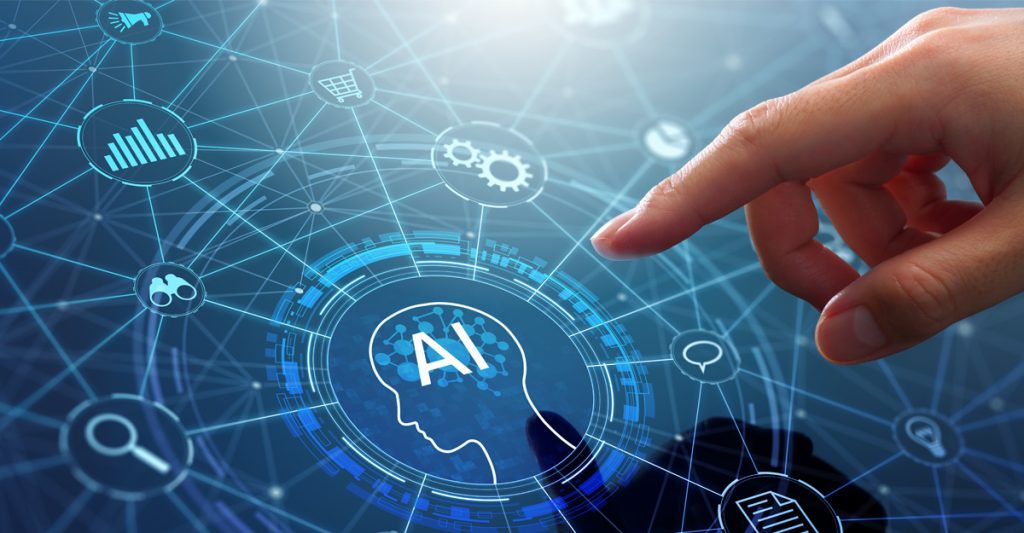
As AI systems become more powerful, ethical governance becomes increasingly essential.
Bias and Fairness
AI systems trained on biased data may produce discriminatory outcomes in:
- Hiring systems
- Financial services
- Healthcare
- Criminal justice
- Education
Researchers focus heavily on fairness, accountability, and transparency within algorithmic systems.
Privacy and Surveillance
AI enables advanced data analysis and behavioral prediction capabilities. Governments and corporations can collect enormous amounts of personal information through digital platforms and surveillance technologies.
This raises concerns regarding:
- Civil liberties
- Data ownership
- Behavioral manipulation
- Facial recognition
- Predictive policing
Balancing innovation with privacy protection represents one of the central governance challenges of the AI era.
Autonomous Weapons
Military applications of AI remain highly controversial. Autonomous systems capable of selecting and attacking targets without human oversight raise profound ethical questions.
International organizations continue debating regulations for military AI technologies.
Existential Risk
Some researchers warn that highly advanced AI systems could eventually exceed human control or alignment with human values.
Although opinions differ regarding the likelihood of such scenarios, AI safety research has become an increasingly important field.
Education in the Age of AI
Artificial intelligence is transforming education systems worldwide.
Personalized Learning
AI-powered educational platforms adapt content according to individual learning styles and performance levels.
Students may receive customized instruction, feedback, and pacing tailored to their needs.
Changing Skill Requirements
As AI automates routine cognitive tasks, future workers will require skills such as:
- Critical thinking
- Creativity
- Adaptability
- Communication
- Emotional intelligence
- Ethical reasoning
- Systems thinking
Educational institutions increasingly redesign curricula to prepare students for rapidly evolving labor markets.
Lifelong Learning
The pace of technological change means workers may need continuous retraining throughout their careers.
AI itself may support lifelong learning through intelligent tutoring systems and digital education platforms.
AI and Global Geopolitics
Artificial intelligence has become a central arena of international competition.
National AI Strategies
Governments worldwide invest heavily in AI research, infrastructure, and talent development.
Countries such as:
- United States
- China
- Singapore
- South Korea
- United Kingdom
- Canada
view AI leadership as strategically important for economic and military competitiveness.
Technological Sovereignty
Nations increasingly worry about dependence on foreign AI infrastructure, semiconductor supply chains, and digital platforms.
AI competition influences trade policy, cybersecurity, international alliances, and industrial strategy.
Global Governance Challenges
AI development transcends national borders, requiring international cooperation on issues such as:
- Ethical standards
- Cybersecurity
- Data governance
- Autonomous weapons
- Intellectual property
- Climate impact
The future global order may be shaped significantly by how nations manage AI competition and collaboration.
AI and Human Identity
Perhaps the deepest questions surrounding AI concern human identity itself.
If machines can generate art, compose music, write essays, diagnose diseases, and perform strategic reasoning, what remains uniquely human?
Some researchers believe AI will expand human capability through collaboration and augmentation. Others worry that increasing automation could reduce human agency and purpose.
AI forces societies to reconsider concepts such as:
- Creativity
- Intelligence
- Consciousness
- Labor
- Meaning
- Autonomy
These philosophical questions may become increasingly important as AI systems grow more sophisticated.
The Future of Artificial Intelligence
The future of AI remains uncertain but profoundly significant.
Several emerging trends may define coming decades:
Artificial General Intelligence
Researchers continue pursuing systems capable of generalized reasoning across diverse domains rather than narrow specialized tasks.
Human-AI Integration
Brain-computer interfaces and neurotechnology may blur distinctions between biological and digital intelligence.
Autonomous Scientific Research
AI systems may increasingly generate hypotheses, conduct experiments, and accelerate scientific discovery independently.
Sustainable AI
Researchers seek to reduce the environmental impact of large-scale AI computation and data infrastructure.
Ethical AI Systems
Future progress may depend not only on technical capability but also on ensuring alignment with human values and social well-being.
Ultimately, artificial intelligence represents more than a technological innovation. It represents a civilizational turning point.
The decisions humanity makes regarding AI governance, education, economics, ethics, and global cooperation will shape the future of society for generations to come.











Discussion about this post