



































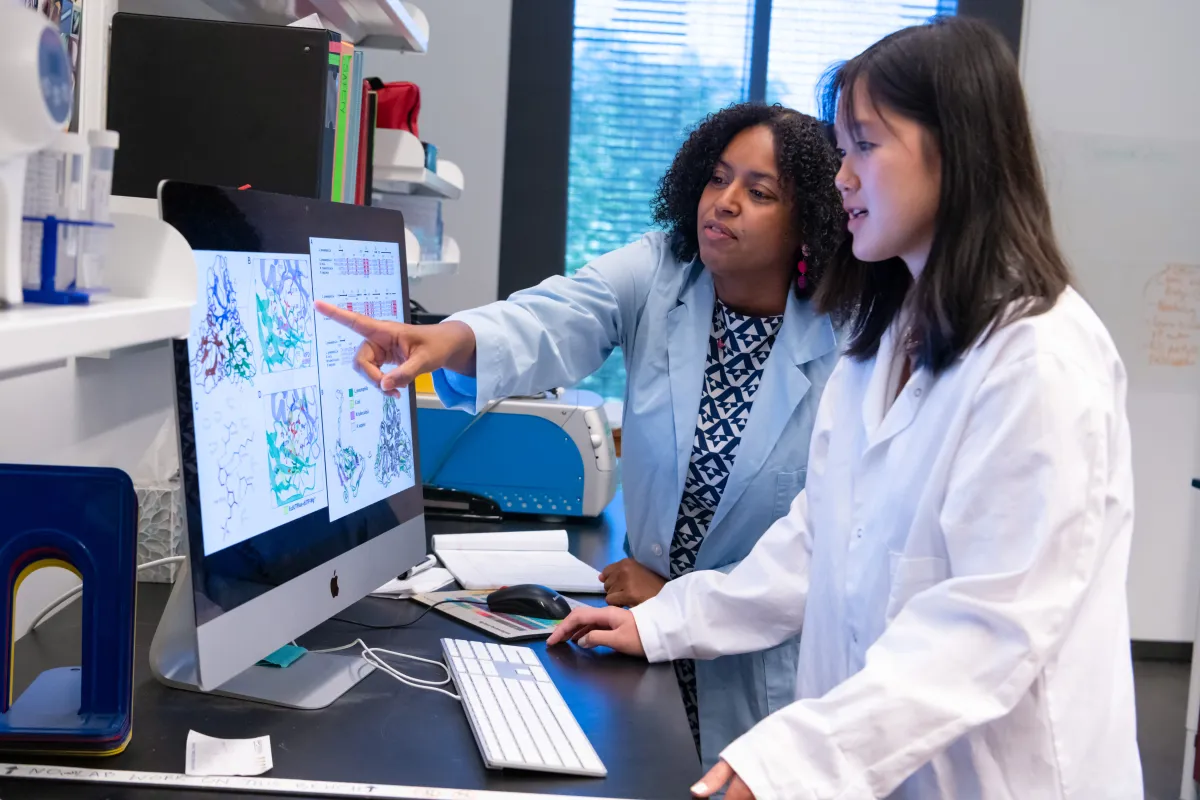
Innovation research has become one of the defining intellectual and economic forces of the twenty-first century. In earlier industrial eras, innovation was often viewed as the isolated achievement of brilliant inventors working independently in laboratories or workshops. Today, however, innovation research has evolved into a deeply interconnected and interdisciplinary ecosystem involving universities, governments, startups, multinational corporations, and even ordinary consumers. The modern innovation landscape is no longer confined to a single discipline or sector. Instead, it operates at the intersection of technology, psychology, economics, design, sustainability, sociology, and global policy.
The rise of artificial intelligence, biotechnology, renewable energy systems, robotics, and digital infrastructure has accelerated the need for more sophisticated forms of research. Problems such as climate change, healthcare inequality, food insecurity, and urban overcrowding cannot be solved by one discipline alone. Innovation research now emphasizes collaborative intelligence—bringing together experts from different fields to develop integrated solutions for increasingly complex global challenges.
This transformation has fundamentally altered how societies think about progress. Innovation is no longer simply about creating new products. It is about designing adaptive systems, improving quality of life, enhancing sustainability, and building resilient economies capable of surviving rapid technological disruption. Research institutions around the world are increasingly focused on understanding how innovation emerges, how it spreads, and how it can be managed responsibly.
The Historical Evolution of Innovation Research
Innovation research as an academic discipline began to gain prominence during the twentieth century. Economists such as Joseph Schumpeter argued that innovation was the primary engine of economic growth. Schumpeter introduced the idea of “creative destruction,” explaining how new technologies and business models continuously replace older systems. His theories laid the foundation for modern innovation studies.
During the post-World War II era, governments began investing heavily in scientific research and technological development. The Cold War accelerated innovation in aerospace, telecommunications, computing, and nuclear science. Universities became critical hubs for research, while corporations established dedicated research and development divisions to remain competitive.
By the late twentieth century, globalization and digitalization radically changed the innovation process. The internet enabled unprecedented levels of collaboration and information exchange. Companies could outsource research, coordinate international teams, and access global markets more efficiently than ever before.
In the twenty-first century, innovation research expanded beyond pure technological development. Scholars began studying innovation ecosystems, organizational behavior, consumer psychology, and ethical governance. Innovation became recognized as both a technological and social phenomenon.
Today, innovation research explores questions such as:
- How do breakthrough ideas emerge?
- What conditions foster creativity?
- How do organizations manage disruption?
- What ethical boundaries should guide innovation?
- How can innovation address global sustainability challenges?
These questions demonstrate how broad and multidimensional the field has become.
Interdisciplinary Collaboration as the New Standard
One of the most important developments in innovation research is the growing importance of interdisciplinary collaboration. Complex modern challenges require expertise from multiple fields.
Consider healthcare innovation. Developing a new medical technology involves not only doctors and biologists, but also software engineers, data scientists, behavioral psychologists, ethicists, and policymakers. A wearable health-monitoring device, for example, combines medical science, sensor engineering, artificial intelligence, user interface design, and cybersecurity.
Similarly, climate innovation requires environmental scientists, economists, urban planners, energy engineers, and political leaders to work together. Renewable energy systems must be technically effective, economically feasible, socially acceptable, and politically supported.
Innovation research increasingly focuses on understanding how interdisciplinary teams function. Studies show that diverse teams often generate more creative solutions because they combine different perspectives and problem-solving approaches. However, interdisciplinary collaboration also introduces communication challenges, cultural differences, and organizational complexity.
Researchers now investigate how institutions can create environments that encourage productive collaboration. Universities have established innovation labs, cross-disciplinary institutes, and startup incubators designed to bring researchers together from multiple fields.
The future of innovation research will likely depend heavily on humanity’s ability to integrate knowledge across disciplines rather than isolate expertise within traditional academic boundaries.
Artificial Intelligence and the Transformation of Research
Artificial intelligence has become one of the most influential forces shaping innovation research. AI systems are changing not only what researchers study but also how research itself is conducted.
Machine learning algorithms can analyze enormous datasets far more quickly than human researchers. In fields such as genomics, climate science, and materials engineering, AI accelerates discovery by identifying patterns that would otherwise remain hidden.
For example, pharmaceutical researchers now use AI to predict molecular interactions and identify potential drug candidates. This dramatically reduces the time and cost required for early-stage drug development. During global health emergencies, such capabilities can save millions of lives.
AI is also transforming academic publishing and scientific collaboration. Researchers use natural language processing tools to analyze vast collections of scientific papers, identify emerging trends, and map connections between disciplines.
In engineering and manufacturing, AI-driven simulations allow researchers to test thousands of design variations virtually before building physical prototypes. This accelerates innovation cycles while reducing material waste and development costs.
However, the integration of AI into research raises important ethical questions. Researchers must address concerns about algorithmic bias, data privacy, intellectual property, and the potential misuse of automated systems. Innovation research increasingly includes ethical governance as a core component rather than an afterthought.
The relationship between human creativity and machine intelligence will remain one of the central research topics of the coming decades.
Universities as Innovation Ecosystems
Modern universities are no longer simply educational institutions. They have become dynamic innovation ecosystems that combine research, entrepreneurship, industry partnerships, and public policy engagement.
Leading universities now operate startup incubators, venture capital partnerships, and technology transfer offices. Researchers are encouraged not only to publish scientific papers but also to commercialize discoveries and create real-world impact.
This shift reflects broader changes in the global economy. Knowledge has become one of the most valuable economic resources, and universities play a central role in generating that knowledge.
Innovation research within universities often focuses on translational science—the process of turning laboratory discoveries into practical applications. For example, research in nanotechnology, renewable energy storage, or synthetic biology may eventually lead to new industries and commercial products.
Students themselves have become active participants in innovation ecosystems. Many universities encourage interdisciplinary project-based learning where students collaborate on real-world challenges. Entrepreneurship programs teach students how to transform ideas into scalable businesses.
At the same time, universities face pressure to balance commercialization with academic independence. Critics argue that excessive corporate influence could distort research priorities or reduce intellectual openness.
Innovation research therefore also examines institutional governance: how universities can maintain scientific integrity while contributing to economic development and technological progress.
The Global Competition for Innovation Leadership
Innovation has become a key element of geopolitical competition. Nations increasingly recognize that technological leadership determines economic strength, military capability, and global influence.
Countries such as the United States, China, Germany, South Korea, and Singapore invest heavily in research and development infrastructure. Governments support innovation through grants, tax incentives, education systems, and public-private partnerships.
Innovation research now includes comparative studies of national innovation systems. Researchers analyze why some countries produce more startups, patents, scientific publications, and technological breakthroughs than others.
Several factors influence innovation leadership:
- Education quality
- Research funding
- Intellectual property protection
- Entrepreneurial culture
- Regulatory flexibility
- Access to venture capital
- International collaboration
China’s rapid rise in artificial intelligence, renewable energy, and advanced manufacturing demonstrates how strategic investment can transform national innovation capacity. Similarly, Scandinavian countries have become global leaders in sustainable innovation through strong public policy and environmental research.
Global competition also creates tensions around intellectual property, cybersecurity, and technological sovereignty. Governments increasingly worry about dependence on foreign technologies, particularly in areas such as semiconductors, telecommunications, and AI infrastructure.
Innovation research therefore intersects with international relations and national security studies more than ever before.

Sustainability as a Driver of Innovation
One of the defining characteristics of modern innovation research is the growing emphasis on sustainability. Climate change, biodiversity loss, pollution, and resource scarcity are forcing societies to rethink traditional models of industrial growth.
Researchers increasingly focus on developing technologies and systems that reduce environmental impact while maintaining economic productivity. This includes innovations in renewable energy, circular manufacturing, sustainable agriculture, green transportation, and carbon capture technologies.
The concept of the circular economy has become particularly influential. Traditional industrial systems operate on a linear model: produce, consume, and discard. Circular systems aim to minimize waste by reusing, recycling, and regenerating materials.
Innovation research explores how businesses can redesign products and supply chains to support circular practices. Companies now experiment with biodegradable materials, modular electronics, and product-as-a-service business models.
Sustainable innovation also includes social dimensions. Researchers study how technological change affects communities, employment, inequality, and public health. A technology may be technically efficient but socially harmful if it increases inequality or excludes vulnerable populations.
As a result, innovation research increasingly incorporates principles of inclusive and responsible innovation.
Open Innovation and Collective Intelligence
Traditional innovation models often relied on secrecy and internal research teams. Today, many organizations embrace open innovation—collaborating with external partners, consumers, universities, and even competitors.
Open-source software communities demonstrate the power of collective intelligence. Thousands of contributors from around the world collaborate to improve software platforms that power modern digital infrastructure.
Crowdsourcing platforms allow companies to gather ideas and solutions from global communities. Innovation competitions encourage researchers, entrepreneurs, and citizens to solve specific challenges collaboratively.
Innovation research studies how open systems influence creativity, knowledge sharing, and technological diffusion. Researchers examine the balance between openness and intellectual property protection.
The COVID-19 pandemic illustrated the importance of global scientific collaboration. Researchers shared genomic data, vaccine research, and epidemiological models at unprecedented speed. International cooperation accelerated vaccine development and demonstrated how open innovation can address urgent global crises.
Future innovation ecosystems will likely become even more networked and decentralized. Digital platforms enable researchers from different countries and disciplines to collaborate in real time.
Ethical Challenges in Innovation Research
Rapid technological advancement creates profound ethical dilemmas. Innovation research increasingly focuses on ensuring that technological progress aligns with human values and social well-being.
Artificial intelligence raises concerns about surveillance, automation, bias, and job displacement. Biotechnology introduces debates about genetic editing, human enhancement, and biosecurity. Data-driven systems challenge traditional concepts of privacy and autonomy.
Researchers now emphasize the importance of ethical frameworks in innovation governance. Responsible innovation involves anticipating risks, engaging stakeholders, and considering long-term societal consequences.
Ethics committees, regulatory agencies, and international organizations play increasingly important roles in shaping research standards. However, regulation must balance safety with flexibility. Excessive restrictions can slow beneficial innovation, while insufficient oversight can create harm.
Innovation research therefore seeks to understand how societies can encourage creativity while protecting public interests.
The Future of Innovation Research
The future of innovation research will likely be defined by convergence. Technologies that once developed separately are increasingly merging into integrated systems.
Artificial intelligence combines with biotechnology to create personalized medicine. Robotics integrates with renewable energy systems and smart cities. Quantum computing may transform cybersecurity and materials science. Brain-computer interfaces could reshape communication and healthcare.
Innovation research will become even more interdisciplinary, global, and ethically complex. Researchers must navigate accelerating technological change while addressing environmental sustainability, economic inequality, and social stability.
Education systems will also evolve. Future researchers will require not only technical expertise but also adaptability, communication skills, ethical awareness, and cross-cultural collaboration abilities.
Ultimately, innovation research is about more than invention. It is about understanding how societies imagine the future and how humanity chooses to shape technological progress responsibly. The decisions made today will influence not only economic development but also the quality of life, environmental stability, and ethical foundations of future generations.
As the pace of change accelerates, innovation research will remain one of the most important intellectual fields guiding the direction of human civilization.













Discussion about this post