



































Introduction: When AI Meets Sustainability
Artificial intelligence has become one of the most transformative technologies of the modern era. It is reshaping industries, redefining productivity, and changing how humans interact with information, machines, and each other. At the same time, the world is facing an urgent environmental crisis driven by climate change, resource depletion, pollution, and unsustainable industrial systems.
These two global forces — AI advancement and environmental necessity — are increasingly converging into a powerful new field: AI-driven green technology.
Artificial intelligence is no longer only about automation, prediction, or digital convenience. It is becoming a critical tool in solving some of humanity’s most complex environmental challenges. From optimizing renewable energy systems to predicting climate patterns, from reducing industrial waste to designing sustainable cities, AI is increasingly embedded in the global transition toward greener societies.
At its core, AI in green technology represents an attempt to make sustainability more intelligent, adaptive, and efficient. Traditional environmental solutions often rely on static models, long-term planning, and manual optimization. AI introduces dynamic systems capable of learning, adapting, and improving continuously based on real-time data.
This creates entirely new possibilities for how energy is produced, how resources are managed, how cities operate, and how industries function. However, it also introduces new concerns, including energy consumption from data centers, algorithmic bias, environmental costs of computation, and ethical questions about automation-driven decision-making.
The relationship between AI and sustainability is therefore complex. AI can help solve environmental problems, but it can also contribute to them if not managed responsibly.
Understanding this dual role is essential for shaping the future of green technology.
This article explores how artificial intelligence is transforming renewable energy, climate science, transportation, agriculture, industry, and urban systems, while also examining the challenges and ethical considerations of AI-driven sustainability.
The Energy Cost of Artificial Intelligence
The Hidden Environmental Footprint of Digital Systems
While AI is often seen as a solution to environmental problems, it also has its own environmental footprint.
Training large AI models requires significant computational power, which depends on massive data centers consuming large amounts of electricity.
These systems require:
- High-performance processors
- Cooling infrastructure
- Continuous data storage
- Large-scale network operations
As AI systems become more advanced, their energy demands increase.
This creates an important paradox: the same technology being used to support sustainability also contributes to energy consumption and carbon emissions.
However, the environmental impact of AI depends heavily on how energy is sourced. If data centers are powered by renewable energy, their carbon footprint can be significantly reduced.
Many major technology companies are now investing in:
- Solar-powered data centers
- Wind-powered computing facilities
- Energy-efficient chip designs
- Low-power AI algorithms
The future of AI sustainability depends on making computational systems more energy-efficient and environmentally responsible.
AI in Renewable Energy Systems
Making Clean Energy Smarter
One of the most important applications of artificial intelligence in green technology is renewable energy optimization.
Renewable energy sources such as solar and wind are naturally variable. They depend on weather conditions, time of day, and geographic factors.
AI helps solve this variability problem through predictive modeling and real-time optimization.
AI systems can:
- Predict energy generation patterns
- Optimize grid distribution
- Balance supply and demand
- Reduce energy waste
- Improve storage efficiency
For example, AI can analyze weather data to predict how much solar energy will be produced in the coming hours or days, allowing energy systems to adjust accordingly.
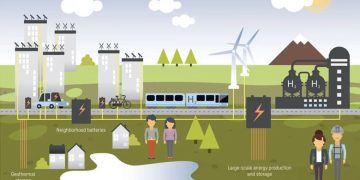
Smart grids powered by AI can automatically distribute electricity where it is needed most, reducing inefficiency and preventing overload.
In wind energy systems, AI can adjust turbine angles in real time to maximize energy capture.
These improvements make renewable energy more reliable and economically viable.
AI and Climate Change Modeling
Understanding a Complex Planet
Climate change is one of the most complex scientific challenges in human history. It involves interacting systems including oceans, atmosphere, ecosystems, and human activity.
Traditional climate models rely on mathematical simulations that can be slow and limited in scope.
AI significantly enhances climate science by analyzing vast datasets and identifying patterns that are difficult for humans to detect.
AI can assist in:
- Predicting extreme weather events
- Modeling long-term climate trends
- Tracking deforestation
- Monitoring glacier melt
- Analyzing carbon emissions
- Simulating environmental scenarios
Machine learning systems can process satellite data, sensor networks, and historical climate records to improve prediction accuracy.
This allows governments and organizations to prepare more effectively for environmental risks such as floods, droughts, and heatwaves.
AI does not replace climate science, but it enhances its precision and speed.
Smart Agriculture and AI Farming Systems
Feeding a Growing Population Sustainably
Agriculture is one of the most resource-intensive industries in the world. It consumes large amounts of water, land, energy, and chemicals.
AI is transforming agriculture into a more efficient and sustainable system through precision farming technologies.
AI-driven agriculture includes:
- Crop monitoring using drones and sensors
- Soil health analysis
- Automated irrigation systems
- Pest detection and prevention
- Yield prediction models
- Climate-adaptive farming strategies
Farmers can use AI systems to optimize water usage, reduce fertilizer waste, and increase crop productivity while minimizing environmental impact.
Vertical farming systems also use AI to control lighting, temperature, humidity, and nutrient delivery in indoor environments.
This allows food production with significantly lower land and water requirements compared to traditional agriculture.
AI is helping shift agriculture from a resource-intensive system into a data-driven ecological optimization process.

AI in Sustainable Transportation
Smarter Mobility Systems
Transportation systems are undergoing major transformation through artificial intelligence.
AI is used to improve efficiency in electric vehicles, public transportation, logistics, and autonomous driving systems.
Applications include:
- Traffic flow optimization
- Route planning
- Energy-efficient driving systems
- Autonomous navigation
- Fleet management
- Delivery optimization
In urban environments, AI can reduce traffic congestion by dynamically adjusting traffic signals and routing vehicles more efficiently.
In logistics, AI helps reduce fuel consumption by optimizing delivery routes and reducing empty travel distances.
In electric vehicle systems, AI can manage battery usage and charging cycles more efficiently, extending battery life and reducing energy waste.
Autonomous vehicles also have the potential to reduce accidents and improve traffic efficiency, though they remain under development.
AI and Smart Cities
The Intelligent Urban Environment
Smart cities rely heavily on AI systems to manage complex urban infrastructure.
AI helps coordinate:
- Transportation networks
- Energy systems
- Waste management
- Water distribution
- Emergency response systems
- Public services
In smart cities, AI acts as a central intelligence layer that analyzes real-time data and optimizes city operations continuously.
For example:
- Traffic congestion can be reduced automatically
- Energy usage can be balanced across districts
- Waste collection can be scheduled efficiently
- Public safety systems can respond faster to emergencies
AI-driven cities aim to become more efficient, sustainable, and responsive.
However, they also raise concerns about surveillance, privacy, and centralized control.
AI in Industrial Sustainability
Greening Manufacturing Systems
Industrial production is one of the largest contributors to environmental pollution and resource consumption.
AI is helping industries become more sustainable through process optimization.
AI systems can:
- Reduce energy consumption in factories
- Minimize material waste
- Predict equipment maintenance needs
- Improve supply chain efficiency
- Optimize production schedules
Predictive maintenance is particularly important because it prevents machine failures and reduces unnecessary resource usage.
AI also supports circular economy models by improving recycling processes and material recovery systems.
Factories of the future may operate as intelligent systems that continuously optimize environmental performance.
Environmental Monitoring and AI Sensors
A Digital Eye on the Planet
AI combined with sensor networks allows continuous environmental monitoring on a global scale.
Sensors and AI systems can track:
- Air pollution levels
- Water quality
- Deforestation rates
- Wildlife populations
- Ocean conditions
- Carbon emissions
Satellite imagery combined with AI analysis enables real-time environmental observation across large geographic areas.
This helps governments and organizations respond more quickly to environmental threats and illegal activities such as deforestation or pollution dumping.
AI transforms environmental monitoring from periodic observation into continuous planetary awareness.
AI and Energy Efficiency in Daily Life
Smarter Homes and Devices
AI is increasingly integrated into everyday life through smart home systems and energy-efficient devices.
Smart systems can:
- Adjust lighting automatically
- Control heating and cooling efficiently
- Optimize appliance energy use
- Learn user behavior patterns
- Reduce unnecessary energy consumption
These systems help individuals reduce their environmental footprint without requiring major lifestyle changes.
AI-driven home energy management systems are becoming an important part of residential sustainability.
Ethical Challenges of AI in Green Technology
Balancing Innovation and Responsibility
While AI offers powerful tools for sustainability, it also raises important ethical questions.
Key concerns include:
Energy Consumption
Large AI systems require significant computational power, which may contribute to environmental impact if not powered sustainably.
Data Privacy
AI-driven environmental systems often rely on large-scale data collection, raising concerns about surveillance and privacy.
Algorithmic Bias
AI systems may produce biased results if trained on incomplete or unbalanced datasets.
Technological Dependence
Over-reliance on AI systems could reduce human oversight in critical environmental decisions.
Unequal Access
Advanced AI technologies may not be equally available across all countries and communities.
Responsible development is essential to ensure AI benefits sustainability without creating new problems.
The Integration of AI and Renewable Energy Futures
Intelligent Green Ecosystems
The future of sustainability may depend on the deep integration of AI and renewable energy systems.
Potential developments include:
- Fully autonomous smart grids
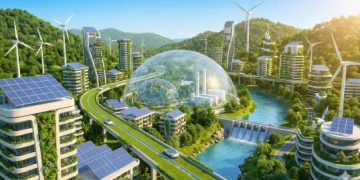
- AI-managed renewable cities
- Self-optimizing energy ecosystems
- Global environmental monitoring networks
- Predictive climate adaptation systems
In these systems, AI continuously adjusts energy distribution, predicts environmental changes, and optimizes resource usage.
This could lead to highly efficient and adaptive sustainable infrastructures.
The Future of AI-Driven Sustainability
Toward Intelligent Environmental Stewardship
The long-term vision of AI in green technology is not simply automation, but intelligent environmental stewardship.
Future AI systems may:
- Coordinate global energy systems
- Manage climate adaptation strategies
- Optimize food production worldwide
- Reduce industrial waste automatically
- Support ecological restoration efforts
However, achieving this future requires careful governance, ethical oversight, and sustainable technological design.
AI must be developed not only for efficiency, but also for environmental responsibility and social fairness.
Conclusion: Intelligence for a Sustainable Planet
Artificial intelligence is becoming one of the most powerful tools in the global effort to build a sustainable future.
It is transforming renewable energy systems, improving climate science, optimizing agriculture, reshaping transportation, and enabling smarter cities and industries.
At the same time, AI introduces new environmental and ethical challenges that must be carefully managed.
The relationship between AI and green technology is therefore not purely technological, but deeply human. It involves choices about how intelligence is used, what values guide innovation, and how societies balance progress with responsibility.
The future of sustainability may depend on whether humanity can align artificial intelligence with ecological intelligence — creating systems that not only think efficiently, but also act in harmony with the planet.
In this sense, AI is not just a tool for the future of green technology. It may become one of the defining forces that determines whether that future is sustainable at all.














Discussion about this post