


























Introduction
For thousands of years, humanity looked toward the night sky with curiosity, fear, and imagination.
Ancient civilizations studied stars to understand seasons, navigation, religion, and the mysteries of existence. The dream of reaching beyond Earth appeared in myths, literature, and philosophy long before science made such ambitions possible. During the twentieth century, however, technological innovation transformed space exploration from fantasy into reality.
The launch of satellites, the moon landing, interplanetary probes, and modern space stations fundamentally changed humanity’s understanding of the universe and its place within it. Space technology became one of the greatest symbols of scientific achievement and geopolitical competition.
Today, humanity is entering a new era of space development.
Unlike the government-dominated space race of the Cold War, modern space exploration increasingly involves private companies, commercial innovation, artificial intelligence, reusable rockets, advanced robotics, and international collaboration. Space is no longer viewed solely as a scientific frontier but also as a technological, economic, and strategic environment that could reshape civilization itself.
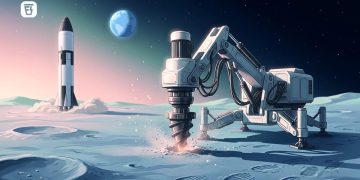
Modern space technology affects daily life in ways many people rarely notice. Satellites support communication, navigation, banking systems, weather forecasting, military operations, environmental monitoring, and global internet access. At the same time, ambitious projects involving lunar bases, Mars colonization, asteroid mining, and deep-space exploration suggest humanity may eventually become a multi-planetary species.
This article explores the rise of modern space technology, its scientific foundations, economic and political impact, emerging innovations, ethical concerns, and the future of human civilization beyond Earth.
The Origins of Space Exploration
Early Rocket Science
The foundations of space technology began with advances in rocketry.
Scientists such as Konstantin Tsiolkovsky, Robert Goddard, and Wernher von Braun developed theories and technologies that made modern rockets possible.
Rockets became powerful enough to escape Earth’s atmosphere by carrying:
- Fuel
- Scientific instruments
- Satellites
- Eventually humans
The Space Race
The Cold War accelerated space innovation dramatically.
The Soviet Union achieved several early milestones:
- First artificial satellite
- First human in space
The United States later achieved the historic Apollo moon landing.
Space exploration became both a scientific mission and a demonstration of national power.
The Legacy of Early Space Programs
Early space missions advanced:
- Telecommunications
- Computing
- Materials science
- Navigation systems
Many technologies used today originated from space research.
Satellites and Modern Civilization
The Invisible Infrastructure of Modern Life
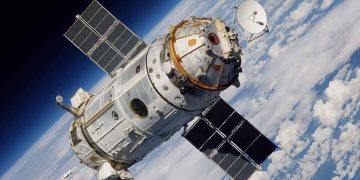
Satellites are among the most important technologies supporting modern civilization.
They enable:
- GPS navigation
- Television broadcasting
- Internet communication
- Banking transactions
- Weather prediction
Modern society depends heavily on orbital infrastructure.
Earth Observation
Satellites monitor Earth continuously.
Applications include:
- Climate tracking
- Environmental monitoring
- Disaster response
- Agricultural analysis
Space technology plays a major role in sustainability and scientific research.
Military and Strategic Importance
Satellites also support:
- National security
- Intelligence gathering
- Missile detection
- Military communication
Space increasingly functions as a strategic geopolitical domain.
Reusable Rockets and Commercial Spaceflight
The High Cost of Traditional Space Missions
Historically, space exploration was extremely expensive because rockets were discarded after launch.
This limited access to space.
The Reusable Rocket Revolution
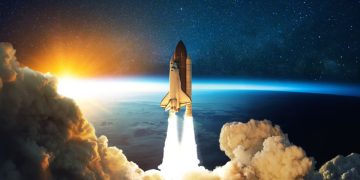
Modern companies developed reusable rocket systems capable of landing and flying again.
This innovation dramatically reduces launch costs.
Reusable technology could:
- Increase mission frequency
- Expand commercial space activity
- Support long-term exploration goals
Private Space Companies
Private companies now play major roles in:
- Satellite deployment
- Space tourism
- Lunar missions
- Mars research
Commercial competition accelerates innovation rapidly.
Democratizing Access to Space
Lower launch costs may eventually allow:
- Smaller nations
- Universities
- Startups
to participate more actively in space development.
Human Space Exploration
Living in Space
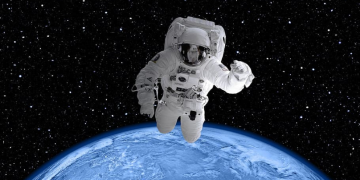
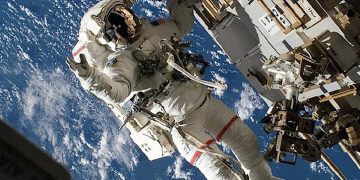
Astronauts now spend extended periods aboard space stations conducting:
- Scientific experiments
- Medical research
- Technology testing
Long-term space habitation helps scientists understand the effects of microgravity on the human body.
Challenges of Human Spaceflight
Space remains extremely dangerous.
Major challenges include:
- Radiation exposure
- Isolation
- Limited resources
- Psychological stress
- Muscle and bone deterioration
Future deep-space missions require advanced solutions.
The Return to the Moon
Many nations and companies are planning lunar missions.
The Moon may serve as:
- A research base
- A resource center
- A stepping stone to Mars
Permanent lunar settlements are increasingly discussed seriously.
The Dream of Mars Colonization
Why Mars?
Mars is considered one of the most promising planets for future human settlement because:
- It has water ice
- Day length resembles Earth
- Surface conditions are relatively manageable
Technological Challenges
Colonizing Mars requires solving enormous problems:
- Life support systems
- Food production
- Radiation protection
- Transportation
- Psychological adaptation
Multi-Planetary Civilization
Some experts argue humanity should become multi-planetary to reduce existential risks such as:
- Climate catastrophe
- Asteroid impacts
- Global conflict
Space colonization is viewed as long-term species survival strategy.
Ethical Questions About Colonization
Mars colonization also raises ethical concerns:
- Should humans alter other planets?
- Who owns extraterrestrial territory?
- How should space resources be governed?
International space law remains limited.
Artificial Intelligence and Space Technology
AI in Space Exploration
AI increasingly supports:
- Autonomous spacecraft navigation
- Data analysis
- Rover operations
- Satellite management
Space missions rely heavily on intelligent systems.
Robotic Exploration
Robots can explore environments too dangerous for humans.
Examples include:
- Mars rovers
- Deep-space probes
- Lunar robots
Robotics expands humanity’s reach into space.
AI and Astronomical Discovery
AI helps scientists analyze massive amounts of astronomical data.
This accelerates:
- Exoplanet discovery
- Galaxy mapping
- Space observation
Machine learning improves scientific efficiency dramatically.
Space Mining and Extraterrestrial Resources
Asteroid Mining
Asteroids may contain valuable resources such as:
- Rare metals
- Water
- Industrial materials
Future mining operations could support:
- Space infrastructure
- Earth industries
Water as a Strategic Resource
Water in space is extremely valuable because it can support:
- Human survival
- Oxygen production
- Rocket fuel creation
Lunar ice deposits may become critically important.
Economic Opportunities
The space economy may expand into:
- Manufacturing
- Resource extraction
- Tourism
- Research industries
Some experts predict trillion-dollar space markets in the future.
Space Tourism
The Beginning of Commercial Space Travel
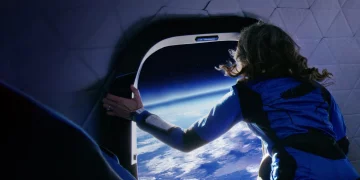
Private companies have already begun offering limited space tourism experiences.
Participants can experience:
- Weightlessness
- Earth views from space
- Suborbital flights
Luxury Versus Accessibility
Currently, space tourism is extremely expensive.
Critics argue it primarily benefits wealthy individuals.
The Future of Space Travel
As technology advances, costs may eventually decrease.
Future possibilities include:
- Orbital hotels
- Lunar tourism
- Commercial space stations
Space travel may gradually become more accessible.
Space Technology and Climate Change
Monitoring Earth’s Environment
Satellites play essential roles in studying:
- Rising temperatures
- Deforestation
- Ocean changes
- Atmospheric conditions
Space technology supports environmental science significantly.
Renewable Energy Possibilities
Future concepts include:
- Space-based solar power systems
These systems could potentially collect solar energy in orbit and transmit it to Earth.
Climate Cooperation
Global environmental monitoring increasingly depends on international space collaboration.

Cybersecurity and Space Infrastructure
Vulnerability of Satellite Systems
Modern societies depend heavily on satellites.
Cyberattacks targeting space systems could disrupt:
- Communication networks
- Navigation
- Financial systems
Space Militarization
Nations increasingly develop:
- Anti-satellite weapons
- Space defense systems
This raises concerns about conflict extending into orbit.
Protecting Orbital Infrastructure
Future space governance must address:
- Security
- Debris management
- Resource competition
International cooperation will be essential.
Space Debris and Sustainability
The Growing Debris Problem
Thousands of inactive satellites and fragments orbit Earth.
Space debris threatens:
- Active satellites
- Human missions
- Future launches
Orbital Congestion
As commercial launches increase, orbital traffic becomes more crowded.
Poor management could make certain orbits dangerous.
Sustainable Space Development
Future exploration requires responsible:
- Debris removal
- Launch regulation
- Resource management
Space sustainability is becoming a major global issue.
Space Technology and Human Identity
The Psychological Impact of Space Exploration
Viewing Earth from space often changes astronauts’ perspectives.
Many describe:
- Greater appreciation for Earth
- Sense of global unity
- Awareness of humanity’s fragility
This phenomenon is sometimes called the “Overview Effect.”
Humanity Beyond Earth
Space exploration challenges traditional ideas about:
- Borders
- National identity
- Human destiny
Human civilization may increasingly view itself as a planetary species.
Philosophical Questions
Exploration raises profound questions:
- Are humans alone in the universe?
- What responsibilities accompany expansion?
- How should extraterrestrial environments be treated?
Space technology expands not only physical frontiers but also philosophical horizons.
The Future of Space Exploration
Interplanetary Transportation
Future systems may enable:
- Faster deep-space travel
- Regular lunar transport
- Human Mars missions
Transportation innovation remains critical.
Space Habitats
Scientists explore designs for:
- Rotating space stations
- Artificial gravity habitats
- Self-sustaining colonies
Long-term space living requires advanced engineering.
Deep-Space Exploration
Future missions may target:
- Jupiter’s moons
- Saturn’s moons
- Interstellar exploration
Humanity’s exploration journey is only beginning.
Collaboration Versus Competition
The future of space may depend on balancing:
- Commercial interests
- National ambitions
- International cooperation
How humanity manages space development will shape future generations.
Conclusion
Space technology represents one of humanity’s greatest achievements and most ambitious frontiers. Through satellites, reusable rockets, robotics, AI systems, and deep-space exploration, humans are expanding beyond Earth in ways once considered impossible.
Space innovation offers extraordinary opportunities:
- Scientific discovery
- Economic growth
- Global communication
- Environmental monitoring
- Long-term species survival
At the same time, it introduces serious challenges:
- Militarization
- Space debris
- Resource competition
- Ethical uncertainty
- Technological inequality
The future of space exploration will not simply determine where humanity travels. It may ultimately reshape civilization, identity, economics, and humanity’s understanding of its place in the universe.
As technology continues advancing, space may become not only a destination for exploration, but also a new environment where the future of human civilization unfolds.












Discussion about this post