

















Introduction
For much of the digital age, technology has existed primarily behind screens.
Computers, televisions, tablets, and smartphones became the dominant interfaces connecting humans to digital information. Work, entertainment, communication, shopping, education, and social interaction increasingly moved into screen-based environments.
Over time, screens became central to modern civilization.
People wake up to smartphone alarms, spend hours on laptops during work, communicate through messaging applications, and relax through streaming platforms or social media feeds. Entire industries now depend heavily on digital interfaces.
However, the next stage of technological evolution may gradually move beyond traditional screens altogether.
Future technology is increasingly focused on immersion, integration, automation, and intelligent interaction rather than simple visual display.
Artificial intelligence, augmented reality, wearable computing, spatial computing, biotechnology, neural interfaces, smart environments, robotics, and ambient systems are redefining how humans may interact with information and machines during the coming decades.
Technology is becoming less visible yet more deeply integrated into human life.
Instead of consciously “using” devices, people may increasingly live inside digitally enhanced environments operating continuously around them.
This transformation could reshape communication, education, healthcare, transportation, work, entertainment, social behavior, and even human identity itself.
The future of technology may therefore not revolve around larger screens or faster phones.
It may involve creating entirely new relationships between humans, machines, and reality.
The End of Traditional Interfaces
The history of computing is closely tied to interface evolution.
Early computers required highly technical command-line input systems understood only by specialists. Graphical user interfaces later made computing accessible to broader populations. Touchscreens revolutionized mobile technology by allowing direct interaction with digital content through gestures.
Today, voice assistants, AI systems, and spatial computing technologies are creating new forms of interaction beyond keyboards and touchscreens.
Technology companies increasingly pursue “natural interfaces” that reduce friction between humans and digital systems.
Voice recognition allows conversational interaction with machines. Gesture controls enable hands-free navigation. AI systems interpret context and predict user intent automatically.
Future technology may rely heavily on ambient interaction.
Instead of opening applications manually, intelligent systems may anticipate needs continuously through sensors, behavioral patterns, and environmental awareness.
For example, future workspaces may automatically adjust lighting, display information contextually, and organize digital tasks according to user activity.
Technology may gradually disappear into the environment itself.
This concept is sometimes described as ubiquitous computing — a world where digital systems exist everywhere but remain largely invisible.
Augmented Reality and Spatial Computing
One of the most important emerging technological areas involves augmented reality (AR) and spatial computing.
Traditional screens separate digital information from physical reality. Augmented reality blends the two together.
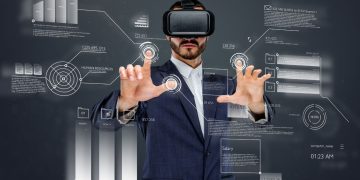
AR systems overlay digital content directly onto the physical world through glasses, headsets, or future wearable devices.
Instead of checking smartphones repeatedly, users may eventually access navigation, communication, entertainment, translation, and productivity tools directly within their visual environment.
Spatial computing extends this idea further by allowing digital objects and interfaces to interact dynamically with physical space.
This technology could transform numerous industries.
Education
Students may explore interactive historical simulations, scientific models, or virtual laboratories integrated into physical classrooms.
Healthcare
Surgeons could access real-time patient data during procedures through AR visualization systems.
Architecture and Engineering
Designers may manipulate three-dimensional digital models directly within physical environments.
Entertainment
Gaming and media experiences could become immersive mixed-reality experiences blending physical and digital worlds seamlessly.
Supporters believe spatial computing may eventually replace smartphones as the dominant personal computing platform.
If successful, the future internet may become less screen-based and more spatially integrated into daily experience.
Artificial Intelligence as an Invisible Companion
Artificial intelligence is becoming increasingly integrated into everyday life.
However, future AI systems may function less like isolated applications and more like continuous digital companions.
Modern AI already assists with recommendations, navigation, communication, scheduling, translation, and information retrieval.
Future systems may become significantly more contextual and adaptive.
AI assistants could manage calendars, summarize conversations, anticipate needs, monitor health conditions, coordinate transportation, and personalize digital environments continuously.
Rather than waiting for commands, intelligent systems may proactively support daily routines.
This creates enormous convenience potential.
Individuals may gain productivity assistance, educational support, healthcare monitoring, and personalized digital experiences.
At the same time, constant AI integration raises serious ethical concerns.
If AI systems continuously analyze behavior, speech, location, and preferences, privacy becomes increasingly complicated.
The balance between convenience and autonomy may become one of the defining technological debates of the future.
Wearable Technology and Human Enhancement
Wearable technology represents another major step toward deeper technological integration.
Smartwatches and fitness trackers already monitor heart rate, sleep patterns, physical activity, and stress levels.
Future wearable systems may become far more sophisticated.
Smart clothing could regulate temperature automatically. Biometric sensors may continuously monitor health conditions. Augmented reality glasses could replace smartphones. Neural interfaces may eventually allow direct communication between brains and digital systems.
Technology is gradually moving closer to the human body itself.
Some researchers envision a future involving human enhancement technologies capable of improving memory, communication, sensory perception, or physical ability.
Brain-computer interfaces are among the most ambitious examples.
These systems aim to create direct connections between neural activity and digital devices.
Potential medical applications include restoring mobility for paralyzed patients and improving communication for individuals with neurological disorders.
However, enhancement technologies raise profound ethical and philosophical questions.
Should humans technologically enhance cognition or physical ability?
Could enhancement technologies create new forms of inequality?
How much integration between biology and technology should society accept?
The future relationship between humans and machines may become increasingly intimate and complex.
Smart Cities and Intelligent Infrastructure
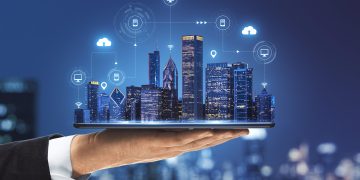
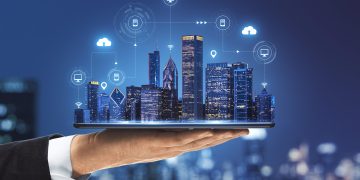
Cities are becoming technologically interconnected ecosystems.
Smart infrastructure systems already monitor traffic flow, energy usage, environmental conditions, transportation networks, and public safety systems.
Future cities may operate through highly integrated AI-driven management systems.
Traffic lights could adapt dynamically to congestion patterns. Autonomous public transportation systems may optimize routes continuously. Smart energy grids could balance renewable power distribution automatically.
Environmental monitoring systems may detect pollution and climate risks in real time.
Urban planning itself may become increasingly data-driven.
Supporters argue smart cities could improve sustainability, efficiency, and quality of life significantly.
However, intelligent urban systems also generate enormous amounts of data regarding citizen behavior and movement.
Surveillance concerns therefore become increasingly important.
Can highly connected cities maintain privacy and democratic accountability?
Who controls urban data infrastructure?
The future of smart cities may depend heavily on governance, transparency, and ethical oversight.
Biotechnology and the Digitalization of Healthcare
Healthcare technology may undergo one of the most transformative changes during the coming decades.
Artificial intelligence, biotechnology, robotics, genetic engineering, and wearable systems are converging rapidly.
Future healthcare may focus increasingly on prediction and prevention rather than treatment alone.
Continuous biometric monitoring could identify disease risks earlier. AI systems may analyze medical imaging with extraordinary precision. Personalized medicine based on genetic analysis may improve treatment effectiveness.
Remote healthcare systems could expand medical access globally.
Surgical robotics, regenerative medicine, and neural engineering may further transform healthcare capabilities.
At the same time, digital healthcare creates privacy challenges involving sensitive biological data.
Genetic information, biometric monitoring, and AI-driven diagnostics require strong ethical protections.
Technology may dramatically extend healthcare possibilities, but societies must also address questions involving accessibility, affordability, and regulation.
Automation and the Redefinition of Work
Technology is changing not only how people work but what work itself means.
Automation increasingly handles repetitive labor across manufacturing, logistics, finance, retail, and administrative industries.
Artificial intelligence is now entering knowledge-based professions as well.
AI systems assist with coding, writing, legal analysis, research, customer service, and design.
This does not necessarily mean human work will disappear entirely.
However, the structure of employment may change dramatically.
Jobs emphasizing repetition and routine may become increasingly automated, while roles involving creativity, emotional intelligence, leadership, and interdisciplinary thinking may grow more valuable.
The future economy may require constant adaptation and lifelong learning.
Remote work technologies are also transforming workplace culture globally.
Cloud computing, collaborative software, and digital communication systems allow distributed teams to operate across continents.
Physical offices may become less central in some industries.
The future workplace may become increasingly flexible, digital, and AI-assisted.
Virtual Worlds and Digital Identity
Future technology may increasingly blur distinctions between physical and digital existence.
Virtual reality environments continue becoming more immersive. Online identities already influence social interaction, business, entertainment, and culture.
Future digital spaces may evolve into persistent virtual ecosystems supporting work, education, commerce, and social communities.
Some experts describe this future as the development of interconnected digital worlds where physical and virtual experiences merge more seamlessly.
Digital identity may therefore become increasingly important.
People already manage social media profiles, digital financial systems, online reputations, and virtual communication networks.
Future generations may spend significant portions of life interacting through immersive digital environments.
This creates opportunities for creativity, collaboration, and accessibility.
It also raises concerns involving addiction, misinformation, identity fragmentation, and social isolation.
The psychological impact of highly immersive digital technology may become one of the major social issues of the century.
Environmental Technology and Sustainable Innovation
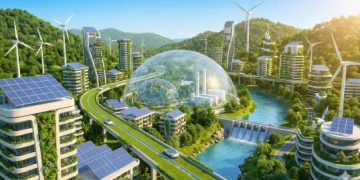
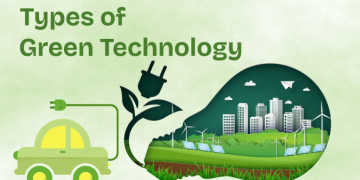
Future technology will also play a critical role in addressing environmental challenges.
Climate change, resource depletion, pollution, and energy demand require large-scale innovation.
Renewable energy systems continue advancing rapidly. AI-powered environmental monitoring improves climate analysis and resource management. Smart agriculture systems reduce waste and improve food production efficiency.
Electric transportation, advanced battery technology, carbon capture systems, and sustainable manufacturing processes may reshape industrial infrastructure globally.
Technology alone cannot solve environmental problems entirely.
However, sustainable innovation will likely become essential for long-term planetary stability.
The future of civilization may depend partly on whether technological progress can align with ecological sustainability.
Ethical Challenges of Future Technology
As technology becomes more powerful and integrated into human life, ethical challenges become increasingly urgent.
Artificial intelligence systems may reinforce biases. Surveillance technologies threaten privacy. Automation may intensify economic inequality. Deepfake systems complicate trust in information.
Biotechnology raises questions regarding genetic modification and human enhancement. Autonomous weapons introduce new military risks.
The speed of technological development often exceeds the speed of regulation and public understanding.
This creates uncertainty regarding accountability and social responsibility.
Who should govern advanced AI systems?
How much personal data should corporations collect?
Can democratic institutions effectively regulate rapidly evolving technological industries?
The future of technology may depend as much on ethics and governance as on engineering itself.
Conclusion
Human civilization is approaching a technological era that may extend far beyond traditional screens and devices.
Artificial intelligence, augmented reality, wearable systems, biotechnology, robotics, smart infrastructure, and immersive digital environments are transforming how humans interact with information, machines, and one another.
Technology is becoming increasingly integrated into physical environments, biological systems, and daily routines.
The future may involve intelligent environments operating continuously around humans rather than isolated devices requiring conscious interaction.
This transformation offers extraordinary possibilities.
Healthcare could improve dramatically. Education may become more immersive and personalized. Sustainable technologies may support environmental stability. Communication and productivity could reach unprecedented levels.
At the same time, future technology introduces profound ethical, social, psychological, and political challenges.
The future will not simply depend on what technology can achieve.
It will depend on how humanity chooses to shape the relationship between innovation, ethics, freedom, and human identity.
The next technological revolution may not happen on screens alone.
It may reshape the very structure of human civilization itself.










Discussion about this post