





















The emergence of generative artificial intelligence marks one of the most significant technological transformations of the modern era. For decades, artificial intelligence systems primarily focused on narrow tasks such as data classification, pattern recognition, prediction, and automation. These systems could analyze information, optimize processes, and improve operational efficiency, but they lacked the ability to create original content in ways resembling human creativity. Generative AI has fundamentally changed this reality.
Today, AI systems can write essays, generate realistic images, compose music, design products, create software code, simulate voices, produce videos, and engage in sophisticated conversations. What once seemed like science fiction has rapidly become part of everyday life. Businesses, artists, researchers, students, governments, and consumers are all beginning to integrate generative AI into their workflows and creative processes.
This technological shift represents more than another software innovation. Generative AI is reshaping how humans interact with information, creativity, labor, communication, and even identity itself. It challenges long-standing assumptions about the uniqueness of human intelligence and introduces profound economic, ethical, and cultural questions that societies are only beginning to understand.
The rise of generative AI may ultimately become one of the defining developments of the twenty-first century, comparable in significance to the industrial revolution, the invention of the internet, or the development of electricity. Understanding its origins, capabilities, limitations, and societal implications is essential for navigating the future of digital civilization.
The Origins of Generative Artificial Intelligence
The idea of machines generating original content has existed for decades within computer science and computational creativity research. Early experiments involved rule-based systems capable of producing simple text, music, or visual patterns. However, these systems were highly limited because they relied on explicitly programmed instructions rather than adaptive learning.
The true breakthrough emerged through machine learning and neural network research.
Neural Networks and Deep Learning
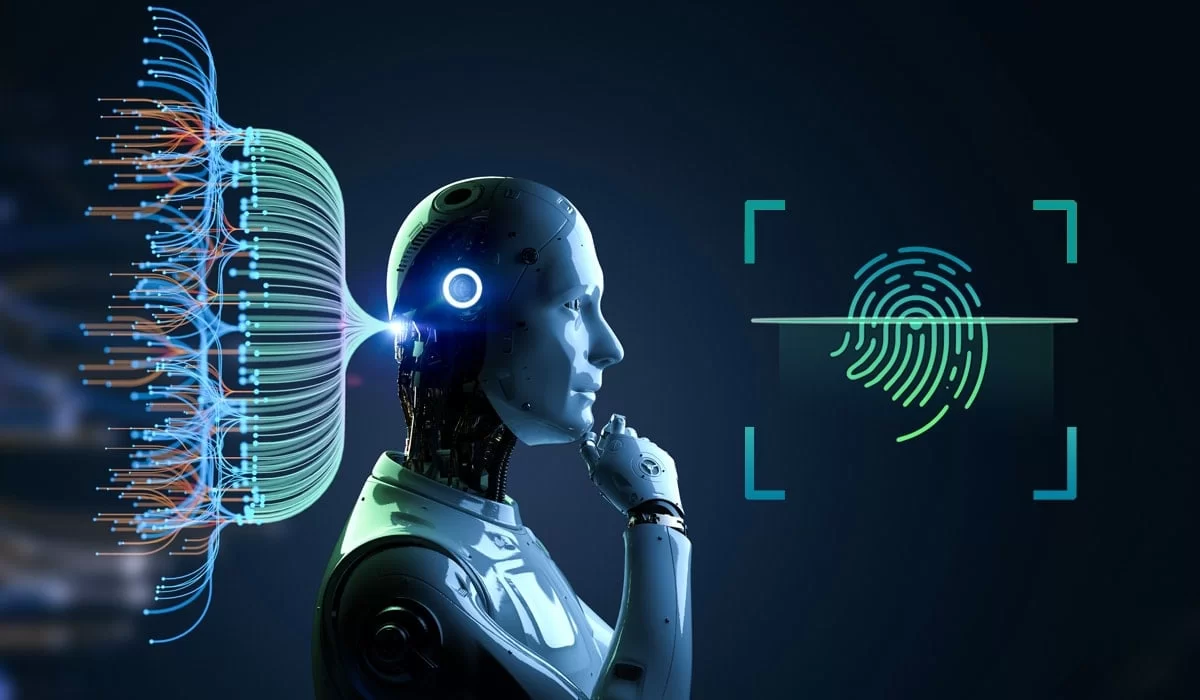
Artificial neural networks are computational models inspired loosely by biological brain structures. These systems process information through interconnected layers capable of learning complex patterns from data.
During the early twenty-first century, advances in computing power, large datasets, and algorithmic design enabled deep learning systems to achieve remarkable performance improvements.
Researchers discovered that neural networks trained on massive datasets could learn sophisticated representations of language, images, sound, and other forms of information.
Transformer Architecture
One of the most important breakthroughs in generative AI came with the development of transformer architectures. Transformers dramatically improved machine understanding of language by enabling systems to analyze relationships between words and contextual information more effectively.
This innovation allowed language models to generate coherent, contextually relevant text at unprecedented scale.
Large language models were trained on enormous collections of books, websites, articles, conversations, and digital documents. These systems learned statistical relationships within language patterns, enabling them to produce human-like responses across diverse topics.
Diffusion Models and Visual AI
Image generation systems evolved rapidly through diffusion models and generative adversarial networks. These technologies enabled AI to create highly realistic and stylistically diverse visual content based on text prompts.
Generative AI soon expanded into:
- Music generation
- Video synthesis
- Voice replication
- 3D modeling
- Animation
- Software development
The result was a technological explosion that dramatically accelerated public awareness and adoption of AI systems.
Generative AI and the Transformation of Creativity
One of the most controversial and fascinating aspects of generative AI is its impact on creativity.
For centuries, creativity was considered one of humanity’s defining characteristics. Art, literature, music, storytelling, and design were viewed as deeply human expressions shaped by emotion, culture, and imagination. Generative AI challenges this assumption by producing increasingly sophisticated creative outputs.
AI as a Creative Partner
Many artists and creators now use AI as a collaborative tool rather than a replacement.
Writers employ AI for brainstorming ideas, generating drafts, and overcoming creative blocks. Designers use image-generation systems to explore visual concepts rapidly. Musicians experiment with AI-assisted composition tools.
In many cases, AI accelerates creative workflows while expanding artistic experimentation.
Creative professionals increasingly describe generative AI as a “co-pilot” that enhances productivity rather than eliminating human contribution entirely.
Democratization of Creative Tools
Generative AI also lowers barriers to entry for creative production.
Individuals without advanced technical or artistic training can now create:
- Digital illustrations
- Music tracks
- Marketing materials
- Videos
- Websites
- Interactive experiences
This democratization may enable broader participation in creative industries while empowering independent creators.
Concerns About Authenticity
Despite these opportunities, generative AI raises concerns about authenticity and originality.
Critics argue that AI-generated content lacks genuine emotional experience or intentionality. Others worry that mass-produced synthetic content could devalue human artistry.
Questions surrounding authorship and ownership have become increasingly important:
- Who owns AI-generated work?
- Should AI systems be allowed to train on copyrighted material?
- How should artists be compensated?
- What distinguishes human art from machine-generated output?
These debates remain unresolved and will likely shape future intellectual property laws.
AI and the Automation of Knowledge Work
Earlier automation technologies primarily affected manual labor. Generative AI, however, increasingly influences intellectual and creative professions.
Software Development
AI coding assistants can generate software code, identify bugs, suggest optimizations, and automate repetitive programming tasks.
Developers now use generative AI to:
- Accelerate coding workflows
- Generate documentation
- Create prototypes
- Learn new programming languages
- Automate testing procedures
This transformation may significantly change software engineering education and labor markets.
Journalism and Media
Media organizations use AI systems for:
- Drafting reports
- Summarizing information
- Generating headlines
- Producing marketing content
- Translating languages
While AI improves efficiency, concerns about misinformation and journalistic integrity remain significant.
Legal and Administrative Work
Generative AI systems increasingly assist with:
- Contract analysis
- Document drafting
- Research summaries
- Administrative workflows
- Data organization
These capabilities may reshape office work across numerous industries.
Education and Research
Students and researchers use AI tools for:
- Idea generation
- Writing assistance
- Data analysis
- Literature review
- Language support
Educational institutions now face difficult questions about academic integrity, assessment methods, and the future role of traditional learning models.
The Economic Impact of Generative AI
Generative AI may become one of the most economically disruptive technologies in history.
Productivity Growth
Businesses across industries adopt AI systems to improve efficiency and reduce operational costs.
Generative AI enhances productivity by automating tasks involving:
- Writing
- Communication
- Data analysis
- Customer service
- Design
- Programming
Some economists believe AI could significantly increase global economic output during coming decades.
Labor Market Disruption
At the same time, generative AI threatens certain job categories, particularly those involving repetitive cognitive work.
Professions potentially affected include:
- Copywriting
- Graphic design
- Translation
- Customer support
- Administrative assistance
- Basic legal services
However, technological revolutions historically create new industries alongside disruption.
Emergence of New Careers
Generative AI is already creating new roles such as:
- Prompt engineering
- AI ethics consulting
- Synthetic media design
- AI workflow management
- Human-AI interaction design
The future labor market will likely emphasize adaptability and interdisciplinary skills.
Ethical Challenges of Generative AI
The rapid advancement of generative AI introduces major ethical concerns.
Deepfakes and Synthetic Media
AI-generated videos and voices can now imitate real individuals convincingly.
Deepfake technology creates risks involving:
- Political misinformation
- Identity fraud
- Harassment
- Social manipulation
- Reputation damage
Researchers work on detection systems and digital authentication methods to preserve trust in media.
Bias and Representation
Generative AI systems inherit patterns from training data, which may contain social biases or stereotypes.
Biased outputs can reinforce harmful assumptions related to:
- Gender
- Race
- Culture
- Religion
- Socioeconomic status
Ethical AI research focuses heavily on fairness and responsible model training.
Privacy and Data Use
Many generative models are trained on enormous datasets collected from the internet.
This raises questions regarding:
- Consent
- Data ownership
- Copyright
- Surveillance
- Personal privacy
Governments increasingly debate regulations governing AI training practices.
Dependency and Human Skill Erosion
As AI systems become more capable, some experts worry about overreliance on automation.
Heavy dependence on generative AI may weaken:
- Critical thinking
- Writing skills
- Memory retention
- Independent creativity
- Problem-solving ability
Balancing convenience with human cognitive development remains an important challenge.
Generative AI in Healthcare and Science
Generative AI is influencing scientific research and healthcare innovation in transformative ways.
Drug Discovery
AI models simulate molecular interactions and generate potential pharmaceutical compounds more efficiently than traditional methods.
This accelerates research into treatments for diseases including cancer, neurological disorders, and infectious illnesses.
Medical Imaging and Diagnostics
Generative AI assists in:
- Image reconstruction
- Diagnostic interpretation
- Medical simulation
- Surgical planning
Healthcare systems increasingly integrate AI-driven decision support tools.
Scientific Modeling
Researchers use generative systems to simulate climate systems, biological structures, and physical processes.
AI may eventually become an active collaborator in scientific discovery itself.
Education in the Generative AI Era
Education systems worldwide are adapting rapidly to generative AI technologies.
AI-Assisted Learning
Students use AI tools for tutoring, language learning, writing assistance, and research support.
Personalized AI tutors may improve educational accessibility globally.
Academic Integrity Challenges
Educators now confront questions regarding:
- AI-generated assignments
- Plagiarism detection
- Authentic assessment methods
- Critical thinking evaluation
Traditional homework models may become increasingly obsolete.
Redefining Educational Priorities
As AI automates information retrieval and routine writing, education may focus more heavily on:
- Creativity
- Interpretation
- Ethical reasoning
- Collaboration
- Communication
- Systems thinking
The role of human teachers may shift toward mentorship and conceptual guidance.
The Geopolitics of Generative AI
Generative AI has become strategically important for governments and global power competition.
AI Leadership Competition
Countries investing heavily in AI include:
- United States
- China
- United Kingdom
- Singapore
- South Korea
- Canada
AI leadership influences:
- Economic competitiveness
- Military capability
- Information control
- Cybersecurity
- Global influence
Regulation and Governance
Governments increasingly develop AI regulations addressing:
- Data privacy
- Intellectual property
- Transparency
- National security
- Consumer protection
However, international coordination remains difficult due to geopolitical competition.
Digital Sovereignty
Nations worry about dependence on foreign AI infrastructure and platforms.
Control over semiconductors, cloud computing, and AI talent has become strategically significant.
Human Identity and Synthetic Intelligence
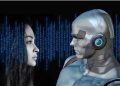
Generative AI forces societies to reconsider what distinguishes humans from machines.
If AI can write poetry, create paintings, compose music, and hold conversations, what defines human uniqueness?
Some philosophers argue that creativity involves emotional consciousness and lived experience that machines cannot replicate. Others believe intelligence and creativity may ultimately emerge from sufficiently advanced information systems.
These debates touch on deeper questions involving:
- Consciousness
- Emotion
- Meaning
- Identity
- Human value
Generative AI may ultimately reshape not only industries but also humanity’s understanding of itself.
The Future of Generative AI
The future trajectory of generative AI remains uncertain but highly influential.
Several emerging trends may shape the coming decades:
Multimodal AI Systems
Future models will integrate text, images, audio, video, robotics, and sensory data into unified systems.
Real-Time Personalized AI
Individuals may interact continuously with highly customized AI assistants adapted to their preferences and behaviors.
Autonomous Creative Systems
AI systems may increasingly generate films, games, virtual worlds, and interactive media with minimal human intervention.
AI-Human Collaboration
Rather than replacing humans entirely, future systems may augment human creativity and intelligence in increasingly sophisticated ways.
Ethical AI Frameworks
Societies will likely develop stronger governance systems to manage risks while preserving innovation.
Ultimately, generative AI represents one of the most profound technological developments in modern civilization. It challenges assumptions about labor, creativity, communication, and intelligence itself.
How humanity chooses to develop, regulate, and integrate generative AI will shape the future cultural, economic, and ethical foundations of the digital age.










Discussion about this post