

































Introduction: Humanity’s Most Powerful Energy Source
Every hour, the sun delivers more energy to Earth than human civilization consumes in an entire year. For billions of years, sunlight has sustained ecosystems, powered climate systems, and made life possible on our planet. Yet for most of modern history, humanity relied primarily on fossil fuels buried beneath the Earth rather than the enormous renewable energy source constantly shining above it.
Today, that relationship is changing dramatically.
Solar energy has become one of the fastest-growing sectors in global green technology. Once considered expensive and impractical, solar power is now transforming economies, industries, cities, transportation systems, and household lifestyles across the world. Solar panels appear on rooftops, in massive desert farms, on portable devices, and even integrated into architecture itself. Governments, corporations, and individuals increasingly view solar energy not as an experimental alternative, but as a central part of the future energy system.
This transformation is occurring because solar technology addresses several critical global challenges simultaneously. It offers cleaner energy production, reduces greenhouse gas emissions, lowers dependence on fossil fuels, increases energy independence, and creates opportunities for sustainable economic growth. In many regions, solar power has become economically competitive with traditional energy sources, accelerating its global adoption.
The rise of solar energy represents more than an environmental shift. It is also a technological revolution, a geopolitical transformation, and a cultural reimagining of how civilization produces and consumes energy. For over a century, industrial societies were built around centralized fossil fuel systems controlled by powerful corporations and resource-rich nations. Solar technology introduces the possibility of decentralized energy systems where households, communities, and smaller regions generate electricity independently.
At the same time, the solar revolution faces major challenges. Energy storage limitations, infrastructure modernization, mining demands, manufacturing emissions, land use concerns, and unequal global access remain significant issues. Critics also argue that renewable technologies alone may not fully solve environmental problems rooted in consumption-driven economic systems.
Nevertheless, solar energy is increasingly viewed as one of the most important technologies of the 21st century. It symbolizes humanity’s attempt to transition from extractive industrial systems toward more sustainable relationships with nature and energy itself.
This article explores the evolution of solar energy technology, the science behind solar power, its economic and environmental impacts, the rise of solar lifestyles, and the future of a world increasingly powered by sunlight.
The History of Solar Energy
From Scientific Curiosity to Global Industry
Human beings have used sunlight indirectly for thousands of years through agriculture, architecture, and passive heating techniques. However, converting sunlight directly into electricity became possible only through modern scientific discoveries.
The foundation of solar technology began with the discovery of the photovoltaic effect in the 19th century. Scientists observed that certain materials could generate electrical current when exposed to light.
Early solar cells were extremely inefficient and expensive, limiting practical applications.
For decades, solar energy remained primarily a scientific curiosity and niche technology used in specialized environments such as satellites and remote research stations.
The situation began changing during the late 20th century due to several factors:
- Rising environmental awareness
- Oil crises and energy insecurity
- Advances in semiconductor technology
- Government renewable energy programs
- Improvements in manufacturing efficiency
As production scaled and technological innovation accelerated, solar panel costs declined dramatically.
Today, solar power has become a major global industry driving energy transformation across multiple sectors.
How Solar Energy Works
Turning Light Into Electricity
Solar power generation relies primarily on photovoltaic (PV) technology.
Photovoltaic cells are made from semiconductor materials, usually silicon. When sunlight strikes these materials, photons transfer energy to electrons, generating electrical current.
Individual solar cells are combined into solar panels, which capture sunlight and produce electricity.
A complete solar energy system typically includes:
- Solar panels
- Inverters
- Mounting structures
- Battery storage systems
- Grid connection infrastructure
Inverters convert direct current (DC) electricity generated by panels into alternating current (AC), which powers homes and electrical systems.
Excess electricity may be stored in batteries or transferred into larger electrical grids.
Modern solar systems vary enormously in scale, from small portable chargers to massive solar farms covering thousands of acres.
The Falling Cost of Solar Power
Why Solar Became Economically Viable
One of the biggest reasons for the rapid rise of solar energy is cost reduction.
In earlier decades, solar panels were too expensive for widespread adoption. However, manufacturing improvements, technological innovation, and global production scale dramatically reduced prices.
Several factors contributed to this decline:
- Improved panel efficiency
- Automation in manufacturing
- Increased competition
- Government subsidies
- Better supply chains
- Advances in material science
As prices fell, solar energy became increasingly competitive with fossil fuels in many regions.
In some countries, solar power is now among the cheapest forms of electricity generation.
This economic shift transformed solar energy from an environmental ideal into a financially attractive investment.
Businesses, governments, and homeowners increasingly adopt solar systems not only for sustainability reasons but also for long-term economic savings.
Solar Energy and Climate Change
Reducing Carbon Emissions
Climate change is one of the most important drivers behind renewable energy expansion.
Traditional fossil fuel systems release large amounts of carbon dioxide and other greenhouse gases into the atmosphere, contributing to global warming.
Solar power generates electricity without direct emissions during operation.
By replacing coal, oil, and natural gas in energy systems, solar technology can significantly reduce carbon footprints.
Large-scale solar adoption supports:
- Cleaner air quality
- Reduced greenhouse gas emissions
- Lower dependence on fossil fuels
- More sustainable energy systems
Many governments now include solar expansion as a central part of climate policy and emissions reduction strategies.
However, solar energy is not completely emission-free across its full lifecycle. Manufacturing panels, transporting materials, and constructing infrastructure require energy and resources.
Despite this, lifecycle emissions from solar systems are generally far lower than those from fossil fuel energy production.
Solar Panels and Modern Homes
The Rise of Residential Solar Living
Solar technology is transforming household lifestyles.
Rooftop solar systems allow homeowners to generate their own electricity, reducing dependence on centralized power grids.
For many households, solar power offers:
- Lower electricity bills
- Greater energy independence
- Environmental benefits
- Long-term financial savings
Battery storage systems further enhance residential solar use by allowing homes to store excess energy for nighttime consumption or emergencies.
Smart home systems increasingly integrate solar technology with:
- Energy monitoring
- Electric vehicle charging
- Smart appliances
- Automated energy optimization
The concept of the “energy-producing home” represents a major shift from traditional consumer-only energy models.
Future homes may operate as self-sustaining energy ecosystems.
Solar Farms and Utility-Scale Energy
Powering Entire Cities
While residential solar is highly visible, utility-scale solar farms play a major role in renewable energy expansion.
Large solar farms use thousands or even millions of solar panels to generate electricity for regional or national power grids.
These facilities are often built in areas with high sunlight exposure, including deserts and open rural landscapes.
Utility-scale solar projects contribute significantly to national renewable energy targets.
However, solar farms also raise questions regarding:
- Land use
- Habitat disruption
- Ecological impact
- Visual changes to landscapes
Balancing energy production with environmental conservation remains an important challenge.
Researchers are exploring dual-use systems such as agrivoltaics, where land supports both agriculture and solar generation simultaneously.
Energy Storage and the Solar Challenge
The Problem of Intermittency
One of the main limitations of solar energy is intermittency.
Solar panels generate electricity only when sunlight is available. Weather conditions, nighttime, and seasonal variation affect production levels.
This creates challenges for stable energy supply systems.
Battery storage technologies are therefore critical to the future of solar power.
Modern batteries store excess energy generated during sunny periods for later use.
Advances in battery technology aim to improve:
- Storage capacity
- Efficiency
- Lifespan
- Safety
- Affordability
Large-scale storage systems are becoming increasingly important for renewable-powered electrical grids.
Future energy systems may rely heavily on advanced batteries, hydrogen storage, and smart grid coordination.
Smart Grids and the Future of Electricity
Intelligent Energy Networks
Traditional electrical grids were designed around centralized fossil fuel plants distributing electricity in one direction toward consumers.
Renewable energy systems require more flexible infrastructure.
Smart grids use digital technologies, sensors, AI systems, and automated management tools to optimize electricity distribution dynamically.
Smart grids can:
- Balance energy demand
- Integrate renewable sources
- Improve efficiency
- Reduce outages
- Enable decentralized production
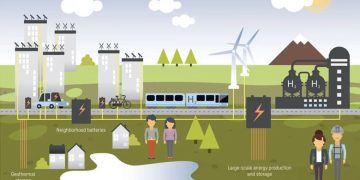
Solar-powered households may eventually function as both energy consumers and suppliers within interconnected smart energy networks.
This could fundamentally reshape national energy systems.
Solar Technology Innovation
Beyond Traditional Panels
Solar technology continues evolving rapidly.
Researchers are developing new forms of solar systems including:
- Flexible solar materials
- Transparent solar windows
- Solar roof tiles
- Lightweight portable panels
- Perovskite solar cells
- Building-integrated photovoltaics
Perovskite solar cells are especially promising because they may achieve high efficiency at lower production costs than traditional silicon panels.
Future buildings may integrate solar generation directly into walls, windows, and architectural materials.
This could make solar energy more visually seamless and accessible in urban environments.

Solar Energy and Global Inequality
Access to Power
Solar technology has enormous potential to improve energy access in developing regions.
Millions of people worldwide still lack reliable electricity infrastructure.
Because solar systems can operate independently of centralized grids, they may provide energy solutions for remote or underserved communities.
Portable solar systems can support:
- Rural electrification
- Water pumping
- Refrigeration
- Internet access
- Medical equipment
- Education systems
Solar energy therefore represents not only environmental progress but also social development opportunity.
However, unequal access to technology, financing, and infrastructure may limit adoption in lower-income regions.
Ensuring fair global access to renewable energy remains a major international challenge.
The Environmental Costs of Solar Technology
Sustainability Beyond Emissions
Although solar energy is far cleaner than fossil fuel systems, it still involves environmental costs.
Solar panel production requires mining and manufacturing processes using materials such as:
- Silicon
- Silver
- Copper
- Aluminum
- Rare minerals
Mining activities can create ecological damage and labor concerns.
There are also growing discussions surrounding solar panel recycling and electronic waste management.
As older panels reach end-of-life stages, sustainable recycling systems become increasingly important.
True sustainability requires considering the entire lifecycle of green technologies.
Solar Energy and Transportation
Charging the Electric Future
Solar technology increasingly intersects with electric transportation systems.
Solar-powered charging stations support electric vehicle infrastructure.
Some companies are developing vehicles with integrated solar surfaces capable of generating supplementary power.
Public transportation systems may also integrate solar energy into operations through solar stations and grid systems.
Future transportation ecosystems may combine:
- Electric mobility
- Renewable charging infrastructure
- Smart energy coordination
- Autonomous transportation systems
The integration of solar and electric mobility could significantly reduce transportation emissions globally.
Geopolitics and the Solar Economy
Energy Power Is Changing
For much of modern history, geopolitical power was closely tied to fossil fuel resources.
Oil-rich nations gained enormous strategic influence over global energy systems.
Solar energy may reshape these dynamics because sunlight is more widely distributed geographically than fossil fuel reserves.
Countries leading renewable technology manufacturing, battery production, and energy storage innovation may become future economic and geopolitical leaders.
The solar transition could reduce dependence on traditional energy exporters while increasing competition around rare mineral supply chains.
Energy independence may become increasingly achievable for many nations.
Solar Culture and Lifestyle Transformation
Sustainability as Identity
Solar energy is influencing cultural values and lifestyle choices.
Many people now associate solar adoption with:
- Environmental responsibility
- Technological progress
- Self-sufficiency
- Future-oriented living
Sustainable architecture, off-grid living, eco-friendly communities, and minimalist lifestyles often integrate solar systems as central components.
The idea of generating personal clean energy carries symbolic as well as practical significance.
Solar technology increasingly represents optimism about humanity’s ability to innovate responsibly.
The Future of Solar Civilization
A World Powered by Sunlight
The future of solar energy may involve far more than rooftop panels.
Emerging possibilities include:
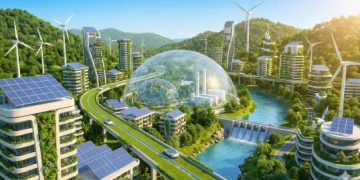
- Fully solar-powered cities
- Space-based solar collection systems
- Self-sustaining smart homes
- Solar-integrated transportation networks
- Portable global energy access systems
As technology improves, solar systems may become more efficient, affordable, flexible, and integrated into everyday environments.
The long-term vision is not simply replacing one energy source with another, but redesigning civilization around sustainable energy systems.
Conclusion: The Energy Transformation of Humanity
Solar energy represents one of the most important technological and environmental revolutions of the modern era.
Human civilization spent centuries building industrial systems powered primarily by finite fossil fuels. Today, solar technology offers an alternative path based on renewable energy, sustainability, and long-term environmental responsibility.
The solar revolution is reshaping economics, transportation, architecture, politics, and daily life itself. Falling costs and technological innovation continue accelerating global adoption.
Yet solar energy is not a perfect solution. Challenges involving storage, infrastructure, resource extraction, and equitable access remain significant.
Still, the broader importance of solar technology lies not only in electricity generation, but in what it symbolizes: humanity’s attempt to align progress with planetary limits.
The future may ultimately belong to societies capable of harnessing the oldest energy source in human history — the power of the sun — in ways that support both technological advancement and ecological balance for generations to come.













Discussion about this post