


























Introduction
For centuries, humanity dreamed of living among the stars.
Ancient civilizations imagined celestial kingdoms and floating worlds in the heavens, while science fiction writers later described giant orbital cities where humans could survive beyond Earth. During the twentieth century, technological progress transformed these dreams into scientific possibility. Rockets, satellites, and human spaceflight demonstrated that people could travel beyond Earth’s atmosphere, but surviving in space for extended periods remained one of the greatest technological challenges in history.
The International Space Station (ISS) became humanity’s answer to that challenge.
Orbiting hundreds of kilometers above Earth, the ISS represents one of the most ambitious international scientific projects ever created. It functions as:
- A research laboratory
- A technological testing ground
- A symbol of international cooperation
- A long-term human habitat in space
Astronauts aboard the ISS conduct experiments that improve understanding of biology, physics, medicine, engineering, and human survival in microgravity. The station also helps prepare humanity for future missions to the Moon, Mars, and potentially deeper regions of space.
Beyond its scientific role, the ISS represents something historically extraordinary: nations that often compete politically on Earth working together peacefully in orbit. The station demonstrates that space exploration can unite humanity around shared scientific and technological goals.
This article explores the history of the International Space Station, its technological systems, scientific importance, daily life aboard the station, international cooperation in space, and the ISS’s role in shaping the future of human exploration beyond Earth.
The Origins of Space Stations
Early Concepts of Orbital Habitats
The idea of space stations existed long before practical spaceflight.
Scientists and visionaries imagined orbital structures that could:
- Support scientific research
- Serve as transportation hubs
- Enable long-duration human habitation
These ideas inspired generations of engineers and explorers.
The Cold War and Early Space Stations
The Soviet Union launched some of the earliest space stations during the Cold War.
These stations allowed astronauts to:
- Stay in orbit for extended periods
- Conduct scientific research
- Test life-support technologies
The United States later developed its own orbital laboratory systems.
The Need for International Cooperation
By the late twentieth century, space exploration had become increasingly expensive and technologically complex.
Building a permanently inhabited orbital station required cooperation among multiple nations.
This led to the creation of the International Space Station program.
Building the International Space Station
A Massive Engineering Project
The ISS is one of the largest structures ever built in space.
Construction required:
- Dozens of rocket launches
- International engineering collaboration
- Years of orbital assembly
Astronauts and robotic systems assembled modules piece by piece in orbit.
International Partnership
The ISS was developed through collaboration involving:
- The United States
- Russia
- European nations
- Japan
- Canada
This partnership combined:
- Funding
- Technology
- Scientific expertise
Continuous Human Presence
Since the year 2000, humans have continuously lived aboard the ISS.
This represents one of the longest uninterrupted periods of human habitation beyond Earth.
The Structure of the ISS
Modular Design
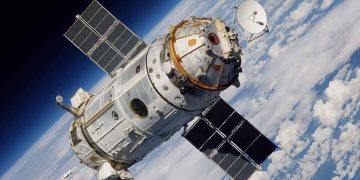
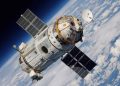
The ISS consists of interconnected modules serving different functions such as:
- Living quarters
- Research laboratories
- Storage systems
- Airlocks
This modular approach allows gradual expansion and maintenance.
Solar Power Systems
Large solar arrays provide electricity for:
- Scientific equipment
- Life-support systems
- Communication technology
Solar energy is essential for long-term orbital operation.
Docking Ports
Docking systems allow spacecraft to:
- Deliver supplies
- Transport astronauts
- Conduct crew rotations
Regular resupply missions are necessary for station operation.
Robotic Arms
Advanced robotic systems assist with:
- Equipment movement
- Maintenance
- Spacecraft docking support
Automation plays a major role in station operations.
Life in Microgravity
What Is Microgravity?
The ISS operates in microgravity conditions, where astronauts experience continuous free-fall around Earth.
Objects and people appear weightless.
Everyday Activities in Space
Simple tasks become complicated in microgravity, including:
- Eating
- Sleeping
- Exercising
- Washing
Astronauts must adapt to entirely different physical conditions.
Sleeping in Space
Astronauts sleep in small sleeping compartments attached to station walls.
Without gravity, there is no “up” or “down.”
Eating and Drinking
Food must be carefully packaged because floating crumbs and liquids can damage equipment.
Meals are specially designed for space environments.
The Human Body in Space
Muscle and Bone Loss
Microgravity causes:
- Muscle weakening
- Bone density reduction
Astronauts must exercise daily to maintain physical health.
Fluid Redistribution
Without gravity, body fluids shift upward toward the head.
This can affect:
- Vision
- Blood circulation
- Facial appearance
Radiation Exposure
Astronauts aboard the ISS experience higher radiation levels than on Earth.
Long-term exposure remains a major concern for future deep-space missions.
Psychological Challenges
Living in confined environments far from Earth can create:
- Stress
- Isolation
- Emotional fatigue
Mental health support is extremely important.
Scientific Research on the ISS
Why Conduct Research in Space?
Microgravity allows scientists to study physical and biological processes differently from Earth conditions.
Research aboard the ISS improves understanding of:
- Human biology
- Physics
- Materials science
Medical Research
ISS experiments contribute to:
- Muscle degeneration studies
- Bone loss research
- Immune system analysis
These findings may improve healthcare on Earth.
Space Agriculture
Scientists test methods for growing plants in space.
Future long-term missions may require sustainable food production systems.
Materials and Engineering Research
Microgravity affects how materials form and behave.
Experiments help scientists develop:
- Stronger materials
- Better manufacturing techniques
- Advanced technologies
Technology Development and Testing
Preparing for Deep-Space Missions
The ISS serves as a testing ground for technologies needed for:
- Lunar missions
- Mars exploration
- Long-duration space travel
Life-Support Systems
Engineers test systems for:
- Water recycling
- Oxygen generation
- Waste management
These technologies are essential for future colonies beyond Earth.
Robotics and Automation
Robotic technologies aboard the ISS help improve:
- Autonomous systems
- Remote operations
- Maintenance techniques
Future missions may rely heavily on robotic support.
International Cooperation in Space
A Symbol of Collaboration
The ISS demonstrates that nations with political disagreements can cooperate scientifically.
Astronauts from different countries live and work together in orbit.
Shared Scientific Goals
Participating nations collaborate on:
- Research
- Engineering
- Mission planning
This cooperation strengthens global scientific progress.
Diplomatic Importance
The ISS has often remained cooperative even during periods of political tension on Earth.
Space exploration sometimes functions as diplomatic bridge-building.
Daily Work of Astronauts
Scientific Experiments
Astronauts spend much of their time conducting experiments and maintaining equipment.
Schedules are highly organized and demanding.
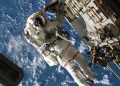
Spacewalks
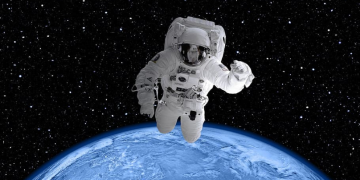
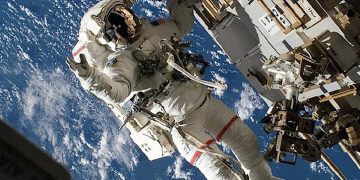
Astronauts occasionally leave the station during spacewalks to:
- Repair equipment
- Install new systems
- Conduct external maintenance
Spacewalks are dangerous and physically demanding.
Communication with Earth
Astronauts communicate regularly with:
- Mission control
- Scientists
- Family members
Modern communication systems reduce psychological isolation.
Challenges Facing the ISS
Aging Infrastructure
The ISS is aging after decades in orbit.
Maintenance becomes increasingly difficult and expensive.
Space Debris
Orbital debris poses constant danger.
Even tiny fragments traveling at high speed can damage the station.
Political and Financial Issues
International funding and political cooperation affect long-term station operations.
Future planning requires complex negotiations.
The ISS and the Future of Space Exploration
Gateway to the Moon and Mars
Knowledge gained aboard the ISS helps prepare for:
- Lunar habitats
- Mars missions
- Deep-space exploration
The station functions as stepping stone for future exploration.
Commercial Space Stations
Private companies are developing commercial orbital stations.
Future space habitats may support:
- Tourism
- Research
- Manufacturing
Permanent Human Presence Beyond Earth
The ISS proves humans can survive continuously in space for extended periods.
This experience is essential for future interplanetary civilization.
Educational and Cultural Impact
Inspiring Future Generations
The ISS inspires millions worldwide through:
- Educational programs
- Live broadcasts
- Scientific outreach
Space exploration encourages interest in science and engineering.
The “Overview Effect”
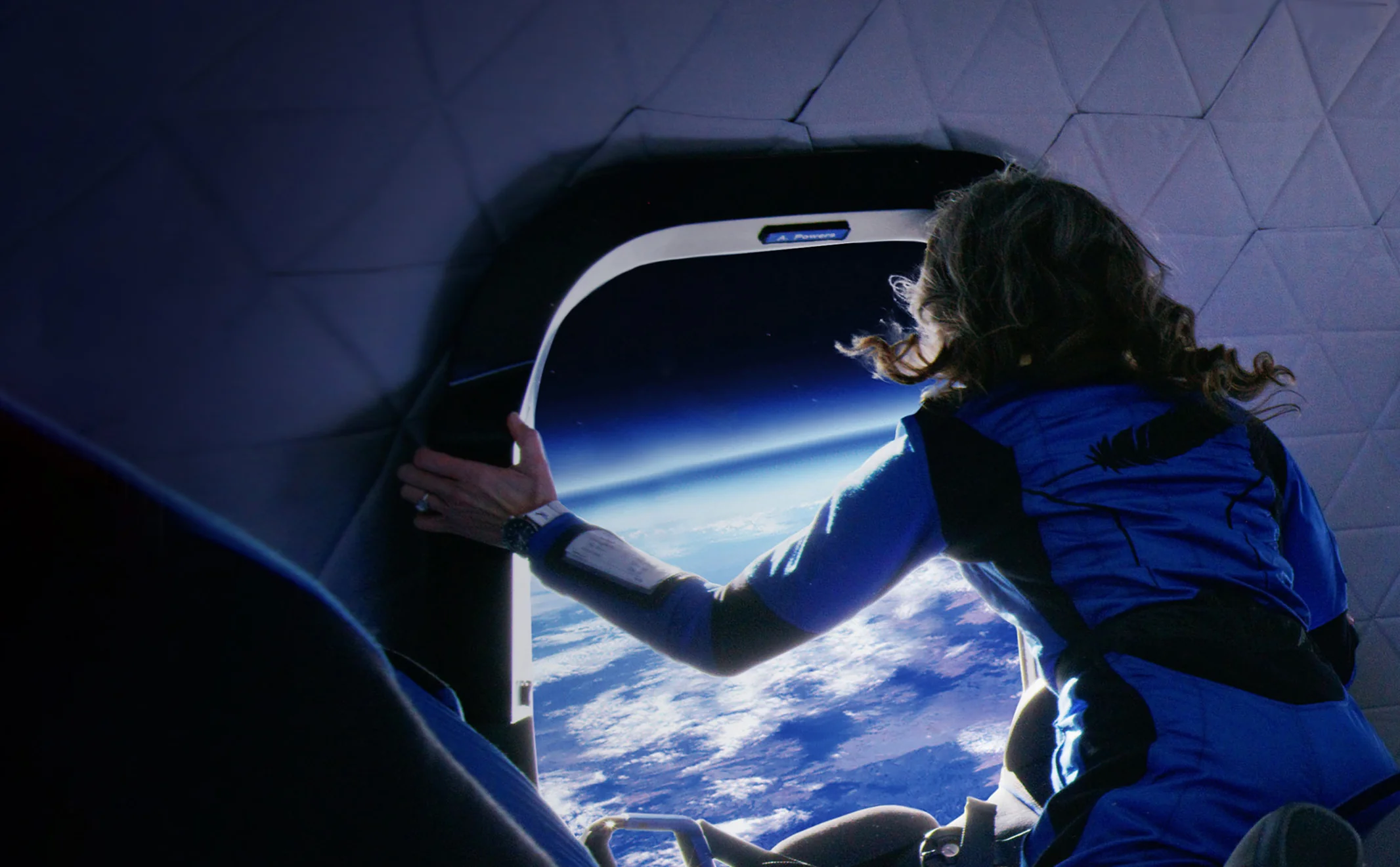
Astronauts viewing Earth from orbit often describe a profound emotional experience.
They see:
- Earth’s fragility
- Absence of borders
- Global interconnectedness
This perspective may influence humanity’s future worldview.
Space as Shared Human Achievement
The ISS represents one of the few truly global technological projects.
It symbolizes humanity’s ability to cooperate beyond national boundaries.
The Future of Orbital Habitats
Advanced Space Stations
Future stations may include:
- Artificial gravity systems
- Larger living environments
- Long-term habitation capabilities
Space Manufacturing
Microgravity may support manufacturing processes impossible on Earth.
Orbital industries could eventually emerge.
Orbital Cities
Some futurists envision:
- Large rotating habitats
- Permanent orbital communities
- Space-based civilization centers
Although highly ambitious, such ideas continue influencing long-term planning.
Conclusion
The International Space Station represents one of humanity’s greatest technological and cooperative achievements. Orbiting above Earth as a permanently inhabited laboratory, the ISS demonstrates that humans can survive, work, and conduct science beyond the planet for extended periods.
The station provides extraordinary benefits:
- Scientific discovery
- Medical research
- Technological testing
- International cooperation
- Preparation for future exploration
At the same time, it highlights important challenges:
- Human health in space
- Orbital sustainability
- Political coordination
- Long-term space habitation
The ISS is more than a research facility. It is a symbol of humanity’s expanding presence beyond Earth and a preview of what future space civilization may become.
As humanity prepares for missions to the Moon, Mars, and beyond, the lessons learned aboard the ISS will remain essential. The station represents the first major step toward a future where living and working in space becomes a normal part of human civilization rather than an extraordinary exception.












Discussion about this post