

























Introduction: Mars as Humanity’s Next Frontier
For centuries, Mars has captured human imagination. Ancient civilizations associated the red planet with war, mystery, and divine power. In modern science, Mars evolved from a distant astronomical object into one of the most important destinations for future human exploration.
Today, Mars represents far more than a scientific curiosity. It is increasingly viewed as the next major step in humanity’s expansion beyond Earth.
However, reaching Mars is one of the most difficult challenges ever attempted. Unlike missions to low Earth orbit or even the Moon, a crewed Mars mission would involve:
- Multi-year travel durations
- Extreme isolation
- Limited communication with Earth
- Radiation exposure
- Closed-loop survival systems
- Psychological stress
- Resource management under harsh conditions
Humanity cannot simply launch astronauts to Mars immediately without preparation.
This is where space stations become essential.
Modern space stations serve as testing grounds for technologies, biological adaptation, psychological endurance, and engineering systems necessary for deep-space civilization.
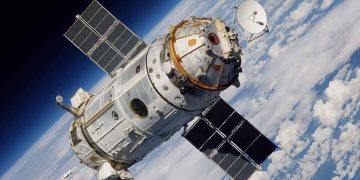
The International Space Station and future orbital habitats allow scientists to study how humans survive and function in environments that resemble future interplanetary missions.
In many ways, today’s space stations are prototypes for tomorrow’s Mars habitats.
This article explores how space stations are preparing humanity for Mars exploration, the technologies required for long-duration missions, the biological and psychological challenges of interplanetary travel, and how orbital habitats may eventually lead to permanent human civilization beyond Earth.
Why Mars Matters
Beyond Exploration
Mars is considered the most realistic target for human planetary settlement for several reasons.
Compared to other planets, Mars has:
- A relatively stable day-night cycle
- Water ice deposits
- Manageable gravity
- Accessible resources
- A surface environment that can potentially support long-term habitats
Although Mars is extremely hostile compared to Earth, it is more suitable for human exploration than most other planets in the solar system.
Mars exploration matters scientifically because it may help answer fundamental questions:
- Did life ever exist beyond Earth?
- How do planets evolve?
- Can humans survive on another world?
Mars also matters philosophically.
Many scientists and futurists argue that becoming a multi-planetary species may increase humanity’s long-term survival chances.
Space stations are critical because they help determine whether humans can physically and psychologically survive the journey to Mars itself.
Space Stations as Deep-Space Simulators
Learning Before the Journey
Space stations provide controlled environments for studying long-duration human survival beyond Earth.
Astronauts aboard stations experience conditions similar to future Mars missions, including:
- Isolation
- Confinement
- Microgravity
- Resource limitations
- Delayed communication simulations
Researchers study how humans adapt physically and mentally during extended missions.
Without orbital testing environments, deep-space missions would involve unacceptable risks.
Space stations allow engineers and scientists to identify problems before humans travel millions of kilometers from Earth.
The Challenge of Distance
Mars Is Farther Than Most People Realize
One of the biggest differences between low Earth orbit and Mars missions is distance.
The International Space Station is relatively close to Earth.
Astronauts aboard the ISS can:
- Receive supply missions
- Return to Earth relatively quickly
- Maintain real-time communication
Mars missions are completely different.
Depending on planetary positions, Mars can be:
- Tens of millions of kilometers away
- Several months of travel time from Earth
Emergency rescue missions would be impossible.
Astronauts traveling to Mars must become far more self-sufficient.
Space stations help develop the operational independence needed for these missions.
Radiation: The Invisible Threat
Space Beyond Earth’s Protection
Earth’s magnetic field protects humans from much of the dangerous radiation present in space.
Outside low Earth orbit, radiation exposure becomes significantly more severe.
Astronauts traveling to Mars would face:
- Solar radiation
- Cosmic rays
- Long-term exposure risks
Potential health effects include:
- Cancer
- Nervous system damage
- Cardiovascular problems
- Cellular mutation
Current space stations help researchers study radiation exposure and protective technologies.
Future deep-space stations may test advanced shielding systems using:
- Water shielding
- Specialized materials
- Magnetic protection concepts
Radiation remains one of the greatest barriers to human interplanetary travel.
Microgravity and Human Biology
The Body Was Not Designed for Space
Long-duration space habitation changes the human body dramatically.
Effects include:
- Muscle deterioration
- Bone density loss
- Vision problems
- Cardiovascular adaptation
- Immune system changes
A Mars mission could involve years in reduced gravity environments.
Space stations help scientists study:
- Long-term biological adaptation
- Exercise countermeasures
- Nutritional strategies
- Medical monitoring systems
Understanding these effects is essential before sending humans on interplanetary missions.
Psychological Survival in Deep Space
Isolation Beyond Earth
Psychological health is just as important as physical survival during Mars missions.
Deep-space crews may experience:
- Loneliness
- Stress
- Anxiety
- Social conflict
- Emotional fatigue
Communication delays with Earth will increase feelings of isolation.
On Mars missions, astronauts cannot rely on immediate support from mission control.
Space stations help researchers understand:
- Crew dynamics
- Conflict management
- Emotional resilience
- Long-term psychological adaptation
Future Mars crews may require extensive psychological preparation and autonomous decision-making abilities.
Closed-Loop Life Support Systems
Recycling Everything
Deep-space missions require highly efficient life support systems.
Unlike Earth, spacecraft cannot continuously access fresh supplies.
Future Mars systems must recycle:
- Water
- Air
- Waste
- Nutrients
Space stations already use advanced recycling technologies.
For example:
- Water recovery systems
- Oxygen generation systems
- Carbon dioxide removal systems
Future stations will likely improve these systems further.
Closed-loop environmental systems are essential for sustainable deep-space habitation.
Growing Food in Space
Agriculture Beyond Earth
Future Mars missions may require onboard food production.
Transporting all food from Earth would be expensive and impractical for long-duration missions.
Space stations are testing space agriculture systems including:
- Hydroponics
- Controlled-environment farming
- LED-based plant growth systems
Growing food in space offers several benefits:
- Nutritional sustainability
- Oxygen production
- Psychological comfort for crews
Successful space agriculture may eventually support permanent off-world settlements.
Artificial Gravity and Long-Term Habitation
Solving the Gravity Problem
Current space stations operate in microgravity environments.
However, long-term human survival may require artificial gravity.
Possible artificial gravity solutions include:
- Rotating habitats
- Centrifugal living modules
Artificial gravity may reduce:
- Bone loss
- Muscle deterioration
- Cardiovascular stress
Future space stations may experiment with rotating systems designed for Mars mission preparation.
Artificial gravity could become essential for interplanetary civilization.
Spacecraft Assembly in Orbit
Building Mars Vehicles in Space
Launching massive Mars spacecraft directly from Earth is extremely difficult.
Future missions may involve assembling spacecraft in orbit using space stations as construction hubs.
Orbital assembly allows:
- Larger spacecraft designs
- Modular construction
- Fuel storage systems
- Equipment integration
Space stations may evolve into orbital shipyards supporting deep-space exploration.
This represents a major shift from Earth-based launch systems toward space-based infrastructure.
Lunar Gateway Stations
The Next Step Beyond Earth Orbit
Before humans travel to Mars, many space agencies plan to establish stations around the Moon.
Lunar gateway stations could serve as:
- Transportation hubs
- Research laboratories
- Mission preparation centers
The Moon provides a closer environment for testing deep-space systems before committing to Mars missions.
Lunar orbital infrastructure may become an intermediate stage in interplanetary expansion.
Autonomous Systems and AI
Machines Supporting Human Survival
Future Mars missions will rely heavily on automation and artificial intelligence.
AI systems may assist with:
- Navigation
- Resource management
- Medical diagnosis
- Equipment repair
- Scientific analysis
Space stations already test autonomous systems and robotic technologies.
Future deep-space habitats may require highly advanced AI assistance because human crews will face communication delays and limited support from Earth.
Commercial Space Companies and Mars Ambitions
The Privatization of Deep-Space Exploration
Private aerospace companies are increasingly involved in Mars planning.
Commercial companies are developing:
- Reusable rockets
- Orbital refueling systems
- Habitat concepts
- Heavy-lift spacecraft
This commercialization may accelerate deep-space exploration.
However, it also raises questions regarding:
- Ownership
- Governance
- Resource rights
- Economic inequality in space
The future of Mars exploration may involve both governments and private corporations working together.
The Ethics of Mars Colonization
Should Humanity Become Multi-Planetary?
Mars colonization raises major ethical questions.
Critics argue that humanity should focus on solving Earth’s problems first.
Others believe becoming multi-planetary is essential for long-term species survival.
Additional ethical concerns include:
- Planetary contamination
- Environmental responsibility
- Human experimentation risks
- Resource exploitation
Space stations provide a controlled environment for studying many of these ethical and operational issues before planetary settlement begins.
The Future of Deep-Space Civilization
From Stations to Interplanetary Societies
Future orbital habitats may evolve far beyond today’s space stations.
Possible developments include:
- Deep-space transportation hubs
- Permanent orbital colonies
- Industrial manufacturing platforms
- Interplanetary trade networks
Space stations may become the infrastructure backbone of future human civilization beyond Earth.
The transition from exploration to settlement could fundamentally reshape human history.
Conclusion: Space Stations as Humanity’s Training Ground for the Stars
Space stations are far more than scientific laboratories orbiting Earth.
They are humanity’s first experiments in becoming a spacefaring civilization.
Every lesson learned aboard orbital stations — from recycling water to managing psychological stress — contributes directly to future Mars missions and long-duration interplanetary travel.
The journey to Mars will require solving challenges involving biology, engineering, psychology, energy, and governance. Space stations allow humanity to address these problems step by step before venturing deeper into space.
In many ways, modern space stations are the earliest foundations of future interplanetary society.
If humans eventually establish permanent settlements on Mars and beyond, historians may view today’s orbital habitats as the moment when humanity first learned not just how to visit space, but how to live there permanently.












Discussion about this post