



























Introduction
Since the beginning of civilization, humanity has been driven by the desire to explore the unknown.
Ancient explorers crossed oceans without knowing what existed beyond the horizon. Scientists later investigated distant continents, deep oceans, microscopic worlds, and eventually outer space. Every era of exploration expanded humanity’s understanding of existence and reshaped civilization itself.
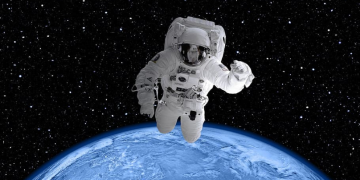
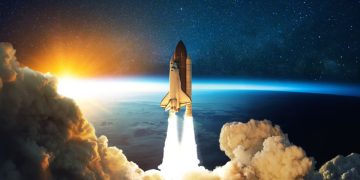
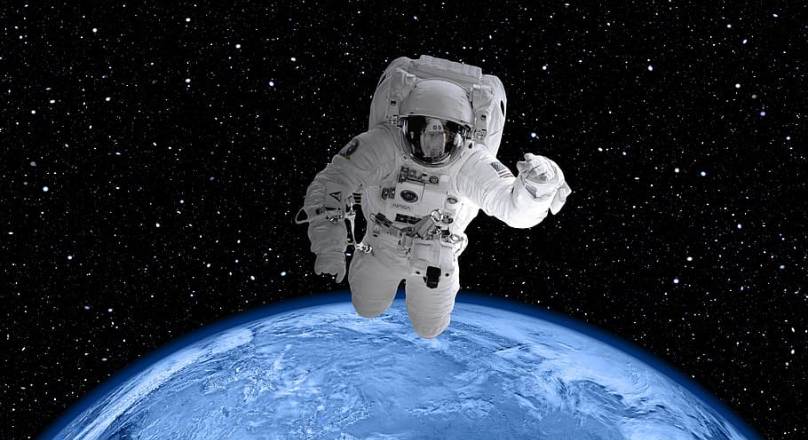
Today, humanity stands at the edge of another extraordinary frontier: deep space exploration.
Modern space technology has already allowed humans to:
- Walk on the Moon
- Build space stations
- Explore Mars with robotic rovers
- Send probes beyond the solar system
Yet these achievements represent only the earliest steps into the cosmos. The vast majority of the universe remains unexplored.
Deep space exploration refers to missions traveling far beyond Earth orbit and eventually beyond the solar system itself. Such exploration may involve:
- Interstellar probes
- Human missions to distant planets
- AI-driven spacecraft
- Generation ships
- Advanced propulsion systems
These missions could fundamentally change humanity’s understanding of:
- Life
- Physics
- Civilization
- The structure of the universe
At the same time, deep space exploration presents enormous scientific, technological, economic, and philosophical challenges. The distances between stars are so vast that current spacecraft would require thousands or even millions of years to reach many destinations.
Despite these obstacles, humanity continues investing in technologies that may one day make interstellar exploration possible.
This article explores the science and technology of deep space exploration, the challenges of traveling beyond the solar system, the role of artificial intelligence and advanced propulsion, the possibility of encountering alien life, and how deep-space exploration may shape the future destiny of humanity itself.
Humanity’s First Steps into Deep Space
Early Space Exploration
The twentieth century marked the beginning of humanity’s expansion into space.
Key milestones included:
- Artificial satellites
- Human orbital flight
- Lunar exploration
These achievements proved space travel was possible.
Robotic Spacecraft
Robotic probes became essential for exploring regions too dangerous or distant for humans.
Spacecraft investigated:
- The outer planets
- Asteroids
- Comets
- Interstellar space
Robots extended humanity’s reach across the solar system.
Voyagers and Interstellar Space
The Voyager probes became the first human-made objects to enter interstellar space.
Even decades after launch, they continue transmitting scientific data.
These missions symbolize humanity’s first attempts to explore beyond the solar system.
Why Explore Deep Space?
Scientific Discovery
Deep-space exploration may answer major scientific questions:
- How did the universe form?
- Are there habitable worlds elsewhere?
- Does extraterrestrial life exist?
The search for knowledge drives much of space exploration.
Human Survival
Some scientists argue humanity should eventually expand beyond Earth to reduce existential risks such as:
- Asteroid impacts
- Nuclear war
- Climate catastrophe
Interstellar expansion could help preserve civilization long-term.
Technological Advancement
Space exploration often accelerates innovation in:
- Computing
- Materials science
- Robotics
- Energy systems
Many technologies developed for space benefit life on Earth.
Human Curiosity
Exploration is deeply connected to human nature.
Many view deep-space missions as continuation of humanity’s long historical drive to discover the unknown.
The Enormous Challenge of Interstellar Distance
The Scale of the Universe
Space is unimaginably vast.
Even the nearest star system beyond the Sun is over four light-years away.
Limitations of Current Technology
Modern spacecraft travel far too slowly for practical interstellar missions.
At current speeds:
- Reaching nearby stars could require tens of thousands of years
Communication Delays
Signals traveling at light speed still require years to cross interstellar distances.
Future explorers may experience extreme isolation from Earth.
Psychological Impact of Distance
Long-duration missions may challenge:
- Mental health
- Social stability
- Human endurance
Deep-space travel is as much psychological challenge as engineering challenge.
Advanced Propulsion Systems
Chemical Rockets
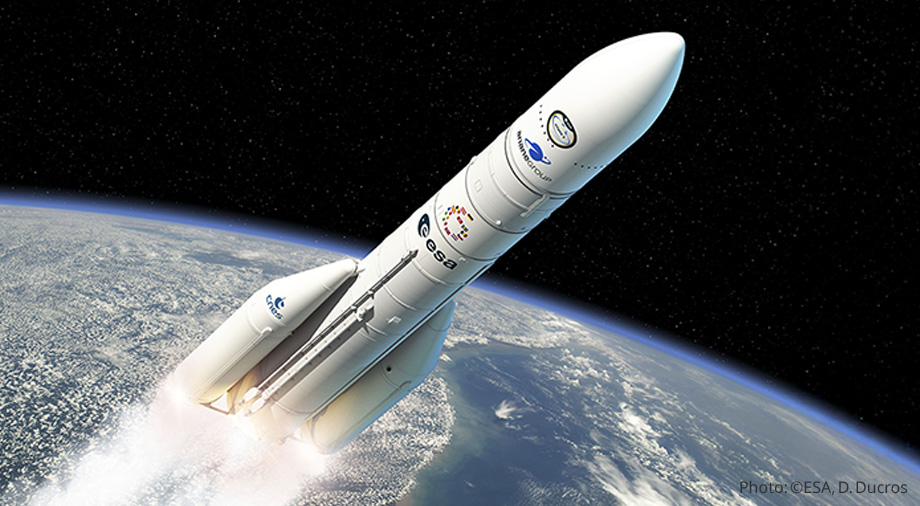
Traditional rockets rely on chemical fuel combustion.
Although effective for reaching orbit, they are too slow for interstellar exploration.
Nuclear Propulsion
Scientists explore nuclear propulsion concepts offering much greater efficiency.
Potential systems include:
- Nuclear thermal rockets
- Nuclear pulse propulsion
These technologies may significantly reduce travel times.
Fusion Engines
Fusion propulsion could potentially provide enormous energy output using reactions similar to those powering stars.
Fusion technology remains highly experimental.
Light Sails
Light sails use lasers or sunlight to propel ultra-light spacecraft.
This concept could accelerate probes to extremely high speeds.
Antimatter Propulsion
Antimatter contains extraordinary energy potential.
In theory, antimatter engines could revolutionize space travel, though practical use remains far beyond current capability.
Artificial Intelligence and Autonomous Exploration
Why AI Is Essential
Deep-space missions may operate too far from Earth for real-time human control.
AI systems are therefore critical for:
- Navigation
- Decision-making
- Repairs
- Scientific analysis
Autonomous Spacecraft
Future spacecraft may independently:
- Adjust trajectories
- Conduct experiments
- Solve technical problems
Automation improves mission survival.
AI and Robotic Exploration
Robotic explorers may reach distant planets long before humans.
Advanced AI enables robots to:
- Analyze environments
- Search for life
- Adapt to unexpected conditions
Human-AI Cooperation
Future missions may combine:
- Human creativity
- AI efficiency
- Robotic durability
This partnership may become central to exploration.
Generation Ships and Human Colonization
The Concept of Generation Ships
Generation ships are hypothetical spacecraft designed for journeys lasting centuries.
Multiple generations of humans would live and die aboard during travel.
Self-Sustaining Space Habitats
Such ships require:
- Artificial ecosystems
- Food production
- Water recycling
- Social stability
They would function as miniature civilizations.
Social and Ethical Challenges
Generation ships raise difficult questions:
- How would societies evolve in isolation?
- Would future generations consent to the mission?
- How could governance remain stable?
Cultural Transformation
Deep-space colonies may eventually develop:
- Unique cultures
- Distinct identities
- New social systems
Human civilization could diversify beyond Earth.
Searching for Habitable Worlds
Exoplanet Discovery
Astronomers have discovered thousands of planets beyond the solar system.
Some may possess conditions suitable for life.
Habitable Zones
Scientists search for planets within regions where liquid water may exist.
These environments are considered promising for biology.
Atmospheric Analysis
Future telescopes may detect:
- Oxygen
- Methane
- Chemical biosignatures
These signs could indicate living organisms.
Ocean Worlds
Some moons and exoplanets may contain deep subsurface oceans capable of supporting life.
Water-rich worlds attract major scientific interest.
The Possibility of Alien Life
Microbial Life
Many scientists believe microbial life may exist elsewhere in the universe.
Even simple organisms would represent historic discovery.
Intelligent Civilizations
The possibility of advanced extraterrestrial civilizations remains uncertain.
Scientists search for:
- Radio signals
- Technological signatures
- Artificial structures
The Fermi Paradox
If intelligent civilizations are common, why has humanity found no evidence?
Possible explanations include:
- Civilizations self-destruct
- Interstellar travel is too difficult
- Humanity is searching incorrectly
The paradox remains unresolved.
The Impact of Discovery
Discovering alien life would transform:
- Science
- Religion
- Philosophy
- Human identity
Humanity’s view of itself would change permanently.
Space Habitats and Artificial Worlds
Living Beyond Planets
Future civilizations may live in:
- Orbital habitats
- Rotating space stations
- Artificial colonies
rather than on planetary surfaces alone.
Artificial Gravity
Rotating habitats could simulate gravity through centrifugal force.
This may reduce health problems caused by weightlessness.
Space Cities
Some futurists envision massive orbital cities housing millions of people.
Although highly speculative, such concepts influence long-term planning.
Deep Space and Human Evolution
Biological Adaptation
Humans living in different gravitational environments may gradually adapt physically.
Long-term space habitation could influence:
- Bone structure
- Muscle development
- Physiology
Technological Enhancement
Future explorers may rely on:
- Genetic engineering
- Cybernetic implants
- Brain-computer interfaces
to survive harsh environments.
Post-Human Possibilities
Some thinkers speculate humanity may eventually evolve into multiple technologically enhanced forms adapted for different environments.
Ethics of Deep Space Exploration
Planetary Protection
Exploration may accidentally contaminate alien ecosystems.
Scientists aim to prevent biological interference.
Resource Exploitation
Future civilizations may mine:
- Asteroids
- Moons
- Planets
Ethical governance will become important.
Ownership of Space
Questions remain unresolved regarding:
- Territorial rights
- Resource ownership
- Governance structures
International law remains limited.
Militarization Risks
Competition over space resources and technology could increase geopolitical conflict.
Cooperation remains essential for peaceful exploration.
The Cultural Meaning of Deep Space Exploration
Humanity’s Cosmic Perspective
Exploring deep space may encourage humanity to think beyond:
- National borders
- Political divisions
- Short-term conflicts
Inspiration and Imagination
Space exploration inspires:
- Art
- Literature
- Scientific ambition
The cosmos continues shaping human creativity.
A New Era of Civilization
Deep-space exploration may represent the next major stage of human civilization.
Humanity could eventually become:
- Interplanetary
- Interstellar
- Cosmically connected
The Future of Deep Space Missions
Interstellar Probes
Future robotic probes may travel toward nearby star systems using advanced propulsion.
Human Missions Beyond Mars
Long-term visions include human exploration of:
- Jupiter’s moons
- Saturn’s moons
- Deep-space habitats
Faster Space Transportation
Breakthroughs in physics or engineering may eventually revolutionize travel speeds.
Expanding Human Presence
Human civilization may gradually expand throughout the solar system before attempting true interstellar settlement.
Conclusion
Deep space exploration represents one of humanity’s most ambitious and transformative endeavors. Through robotics, AI, advanced propulsion systems, astronomical observation, and future interstellar missions, humans are slowly extending their reach beyond Earth and even beyond the solar system itself.
This exploration offers extraordinary possibilities:
- Scientific discovery
- Technological advancement
- Contact with alien life
- Long-term survival of civilization
At the same time, it presents immense challenges:
- Vast cosmic distances
- Psychological isolation
- Ethical uncertainty
- Technological limitations
The journey into deep space is not simply about traveling farther from Earth. It is about expanding humanity’s understanding of existence, intelligence, and the universe itself.
Whether humans eventually establish civilizations among the stars or remain limited to the solar system, deep-space exploration already represents one of the most important expressions of human curiosity, ambition, and imagination.
The stars are no longer only distant lights in the sky. They are becoming possible destinations for the future of humanity.












Discussion about this post