
































Introduction: When Awareness Becomes a Burden
In previous generations, environmental issues were often distant—geographically, politically, and psychologically. Climate change, biodiversity loss, and pollution were recognized as problems, but they did not dominate daily emotional life.
Today, that has changed.
With constant access to information, individuals are exposed to a continuous stream of environmental data:
- Rising global temperatures
- Extreme weather events
- Deforestation and species extinction
- Ocean pollution
This heightened awareness has created a new psychological phenomenon:
eco-anxiety—the chronic fear of environmental collapse.
Unlike traditional anxiety, eco-anxiety is not irrational. It is rooted in real, measurable threats. But its emotional impact is complex, affecting how individuals think, feel, and live.
1. Understanding Eco-Anxiety
1.1 Defining Eco-Anxiety
Eco-anxiety refers to persistent concerns about environmental degradation and the future of the planet.
It can manifest as:
- Worry about climate change
- Fear of future instability
- Guilt about personal consumption
- Helplessness in the face of global problems
Importantly, eco-anxiety is not classified as a disorder—it is a rational response to a real situation.
1.2 The Role of Information Exposure
Digital technology plays a major role in amplifying eco-anxiety.
People are constantly exposed to:
- News updates
- Social media discussions
- Scientific reports
- Activist content
This creates a feedback loop:
More information → Increased awareness → Heightened concern → More information seeking
Without boundaries, this loop can become overwhelming.
2. The Emotional Landscape of Climate Awareness
2.1 Fear and Uncertainty
Climate change introduces long-term uncertainty:
- What will the future look like?
- How will ecosystems change?
- What risks will future generations face?
This uncertainty fuels anxiety, as humans naturally seek predictability.
2.2 Guilt and Responsibility
Individuals often feel personal responsibility for environmental impact:
- Carbon footprint
- Consumption habits
- Waste generation
This can lead to:
- Guilt
- Self-criticism
- Pressure to “do more”
While awareness can motivate action, excessive guilt can become paralyzing.
2.3 Grief and Loss
Eco-anxiety is not just about the future—it also involves grief for what is already being lost:
- Natural landscapes
- Biodiversity
- Cultural connections to nature
This form of grief is sometimes called ecological grief.
3. Digital Amplification of Environmental Emotions
3.1 The Role of Social Media
Social media platforms amplify environmental issues by:
- Highlighting dramatic events
- Spreading urgent messages
- Encouraging emotional responses
While this raises awareness, it can also intensify emotional reactions.
3.2 The Problem of Constant Exposure
Unlike traditional media, digital platforms provide continuous exposure.
There is no natural stopping point.
This leads to:
- Emotional fatigue
- Desensitization
- Heightened stress
The brain struggles to process ongoing threats without resolution.
4. Eco-Anxiety and Identity
4.1 The Rise of the “Conscious Individual”
Environmental awareness is increasingly tied to identity.
People define themselves through:
- Sustainable habits
- Ethical consumption
- Environmental values
This can be empowering—but also creates pressure to maintain consistency.
4.2 The Burden of Moral Perfection
Individuals may feel they must live perfectly sustainable lives.
This can lead to:
- Anxiety about making “wrong” choices
- Fear of judgment
- Internal conflict
Perfectionism in sustainability is often unrealistic—and mentally exhausting.
5. The Paradox of Awareness and Action
5.1 Awareness Does Not Always Lead to Action
While awareness is necessary, it does not automatically result in effective action.
In some cases, high awareness leads to:
- Overwhelm
- Inaction
- Avoidance
This is sometimes called “climate paralysis.”
5.2 Small Actions vs. Global Problems
A key challenge is the scale mismatch:
- Individual actions feel small
- Environmental problems feel massive
This gap can reduce motivation and create feelings of helplessness.
6. Coping Mechanisms and Adaptive Responses
6.1 Emotional Regulation
Managing eco-anxiety requires emotional awareness:
- Recognizing feelings
- Accepting uncertainty
- Avoiding excessive rumination
This helps prevent anxiety from becoming overwhelming.
6.2 Limiting Information Overload
Healthy engagement with environmental information includes:
- Setting boundaries on media consumption
- Choosing reliable sources
- Avoiding constant exposure
This creates space for processing and reflection.
7. From Anxiety to Agency
7.1 Reframing the Narrative
Instead of focusing only on threats, individuals can shift toward:
- Solutions
- Progress
- Innovation
This creates a more balanced perspective.
7.2 Meaningful Action
Taking action—no matter how small—can reduce anxiety.
Examples include:
- Reducing waste
- Supporting sustainable initiatives
- Participating in community efforts
Action transforms passive concern into active engagement.
8. Community and Collective Well-Being
8.1 Shared Experience
Eco-anxiety is not experienced in isolation. Many individuals share similar concerns.
This creates opportunities for:
- Community support
- Collective action
- Shared understanding
8.2 The Power of Collective Effort
When individuals act together, the impact increases—and so does the sense of agency.
Collective action reduces feelings of isolation and helplessness.
9. The Role of Green Technology in Reducing Anxiety
9.1 Visible Progress
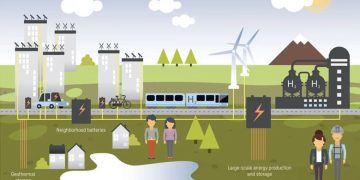
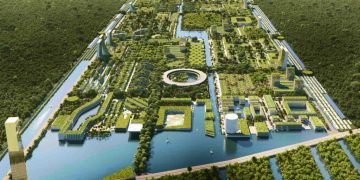
Green technologies provide tangible evidence of progress:
- Renewable energy adoption
- Sustainable infrastructure
- Environmental innovation
This can counter feelings of hopelessness.
9.2 Restoring a Sense of Control
When individuals see solutions being implemented, they feel:
- More hopeful
- More engaged
- Less powerless
Technology becomes not just a solution, but a source of psychological reassurance.
10. Toward a Healthy Relationship with the Future
10.1 Accepting Uncertainty
Uncertainty is unavoidable. Learning to live with it is essential for mental well-being.
This involves:
- Letting go of total control
- Focusing on what can be influenced
- Maintaining perspective
10.2 Balancing Awareness and Well-Being
The goal is not to ignore environmental issues—but to engage with them in a sustainable way.
This balance includes:
- Staying informed
- Taking action
- Protecting mental health
Conclusion: Caring Without Collapsing
Eco-anxiety reflects something important:
people care deeply about the future of the planet.
This concern is not a weakness—it is a sign of awareness and empathy.
But caring must be sustainable.
To build a healthy relationship with environmental challenges, individuals must learn to:
- Stay informed without becoming overwhelmed
- Act without expecting perfection
- Care without collapsing under the weight of responsibility
Because the future will not be shaped by those who are paralyzed by fear—but by those who can hold concern and hope at the same time.













Discussion about this post