











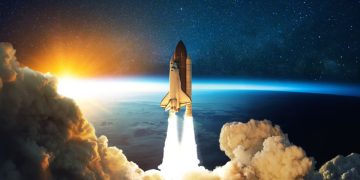




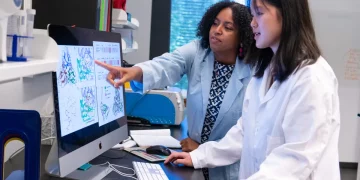








Opening Perspective: Why Space Still Matters
At first glance, space exploration can seem like a luxury—an expensive pursuit detached from the urgent challenges on Earth. Climate change, healthcare, economic inequality—these issues demand immediate attention. So why invest billions in rockets, satellites, and missions to distant planets?
Because space is not separate from Earth. It is an extension of it.
The technologies developed for space exploration have historically reshaped life on Earth—from satellite communications to GPS navigation, from weather forecasting to advanced materials. More importantly, space represents the ultimate testing ground for innovation: an environment where failure is not an option, constraints are extreme, and creativity is pushed to its limits.
Today, space research is entering a new era—one defined not only by national agencies, but by private companies, global collaboration, and the convergence of multiple technological disciplines.
This is not just about exploring space. It is about redefining the boundaries of innovation itself.
I. From Government Monopoly to Commercial Ecosystem
1.1 The Early Era of Space Exploration
The first phase of space exploration was dominated by governments, particularly during the Cold War. Milestones such as:
- The Apollo 11 Moon Landing
- Early satellite launches
- Human spaceflight missions
were driven by geopolitical competition and national prestige.
1.2 The Rise of Private Space Companies
In recent decades, the landscape has shifted dramatically. Companies like SpaceX and Blue Origin have transformed space into a commercial domain.
Key innovations include:
- Reusable rockets
- Cost reduction in launches
- Rapid iteration cycles
This shift has made space more accessible than ever before.
1.3 A New Space Economy
The emergence of a “space economy” includes:
- Satellite services
- Space tourism
- Resource exploration
- Orbital infrastructure
This ecosystem is expected to grow into a multi-trillion-dollar industry.
II. Satellites: The Invisible Infrastructure
2.1 Everyday Dependence on Space
Satellites are deeply embedded in modern life. They enable:
- Navigation systems
- Communication networks
- Weather forecasting
- Earth observation
Without them, many aspects of daily life would cease to function.
2.2 Earth Observation and Climate Science
Satellites provide critical data for understanding our planet, including:
- Deforestation tracking
- Ice cap monitoring
- Ocean temperature analysis
This data is essential for addressing climate change.
2.3 The Rise of Mega-Constellations
Projects involving thousands of satellites aim to provide:
- Global internet coverage
- Low-latency communication
- Increased connectivity in remote areas
However, they also raise concerns about space debris and orbital congestion.
III. Deep Space Exploration and Scientific Discovery
3.1 Expanding Human Knowledge
Space missions continue to push the boundaries of what we know about the universe. Telescopes and probes allow us to:
- Study distant galaxies
- Analyze planetary atmospheres
- Search for signs of life
3.2 Mars and Beyond
Mars has become a focal point for exploration due to its:
- Potential for past or present life
- Similarities to Earth
- Feasibility for future human missions
Research on Mars informs our understanding of planetary evolution and habitability.
3.3 The Search for Life
One of the most profound questions in science is whether life exists beyond Earth. Space research explores:
- Exoplanets
- Microbial life possibilities
- Habitability conditions
The discovery of extraterrestrial life would fundamentally reshape our understanding of existence.
IV. Space as a Laboratory for Innovation
4.1 Extreme Conditions Drive Breakthroughs
Space presents unique challenges:
- Microgravity
- Radiation exposure
- Vacuum conditions
These constraints force researchers to develop novel solutions.
4.2 Materials Science and Engineering
Research conducted in space leads to:
- Stronger, lighter materials
- Advanced manufacturing techniques
- New insights into physical processes
These innovations often find applications on Earth.
4.3 Biomedical Research
Microgravity environments allow scientists to study:
- Cell behavior
- Bone density loss
- Disease mechanisms
This research contributes to medical advancements.
V. The Economics of Space Innovation
5.1 Cost Reduction as a Catalyst
Lower launch costs have opened new opportunities for:
- Startups
- Universities
- Emerging economies
This democratization is accelerating innovation.
5.2 Investment and Venture Capital
Space has become an attractive sector for investors due to:
- Long-term growth potential
- Strategic importance
- Technological spillovers
5.3 New Business Models
Companies are exploring innovative models such as:
- Satellite-as-a-service
- Data monetization
- In-orbit manufacturing
These models are redefining how value is created in space.
VI. Governance and Ethical Considerations
6.1 Who Owns Space?
Space is governed by international agreements, including Outer Space Treaty, which establishes that:
- Space is the province of all humankind
- No nation can claim sovereignty over celestial bodies
However, new activities raise complex legal questions.
6.2 Space Debris and Sustainability
The increasing number of satellites creates risks:
- Collisions
- Orbital debris
- Long-term usability of space
Managing space traffic is becoming a critical issue.
6.3 Militarization Concerns
As space becomes more strategic, concerns about its militarization are growing. Ensuring peaceful use is a major challenge.
VII. Human Spaceflight and the Future of Civilization
7.1 The Return to the Moon
New missions aim to establish a sustained human presence on the Moon, serving as a stepping stone for deeper space exploration.
7.2 Mars Colonization
Ambitions to colonize Mars raise questions about:
- Feasibility
- Ethics
- Long-term survival
While still speculative, research is actively addressing these challenges.
7.3 Becoming a Multi-Planetary Species
The idea of humanity expanding beyond Earth is both inspiring and controversial. It represents:
- A backup for civilization
- A new frontier for exploration
- A philosophical shift in how we view our place in the universe
VIII. Technology Convergence in Space Research
8.1 AI and Autonomous Systems
AI is essential for:
- Navigation
- Data analysis
- Autonomous decision-making
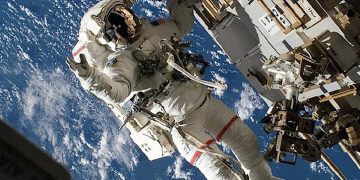
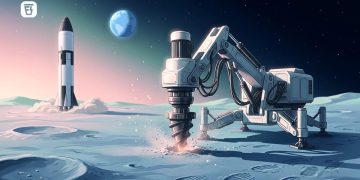
8.2 Robotics and Remote Operations
Robots perform tasks that are too dangerous or impractical for humans, including:
- Planetary exploration
- Satellite maintenance
- Construction in space
8.3 Advanced Propulsion Systems
Research into new propulsion methods aims to:
- Reduce travel time
- Increase efficiency
- Enable deeper exploration
IX. Challenges on the Frontier
9.1 Technical Barriers
Space exploration faces numerous technical challenges, including:
- Life support systems
- Radiation protection
- Long-duration missions
9.2 Economic Risks
High costs and uncertain returns make space a risky investment.
9.3 International Competition
As more nations and companies enter the space domain, competition intensifies, potentially leading to conflict.
X. The Future of Space Innovation
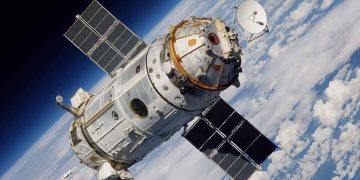
10.1 Orbital Infrastructure
Future developments may include:
- Space stations
- Manufacturing hubs
- Energy generation systems
10.2 Space-Based Resources
Asteroid mining and lunar resources could:
- Provide rare materials
- Support space missions
- Reduce reliance on Earth-based resources
10.3 A New Innovation Paradigm
Space research represents the ultimate convergence of science, engineering, and imagination. It pushes innovation beyond traditional limits and challenges us to think on a planetary—and even cosmic—scale.
Conclusion: Innovation Without Boundaries
Space is more than a destination—it is a catalyst for innovation. It forces us to solve problems in new ways, to collaborate across borders, and to imagine possibilities beyond our current reality.
As humanity stands on the threshold of a new space age, the question is not whether we will explore further, but how we will do so—responsibly, sustainably, and inclusively.
The frontier of innovation is no longer confined to Earth. It extends outward, into the vast expanse of space, where the next great breakthroughs await.












Discussion about this post