






















Opening Question: What Does It Mean to Live in Space?
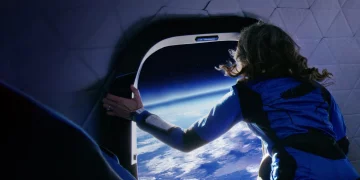
Imagine waking up and floating.
There is no “up” or “down.” Your body drifts gently, unanchored by gravity. A simple act like drinking water requires careful control, as droplets form spheres and hover in midair. Your muscles feel weaker with each passing day. Your bones slowly lose density. Even your sense of balance begins to fade.
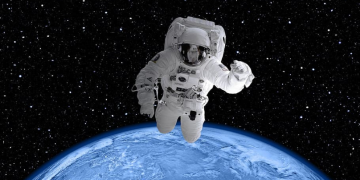
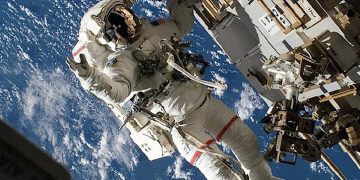
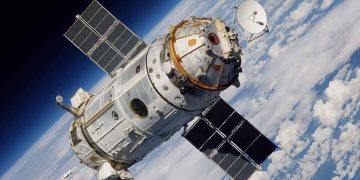
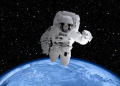
This is not a simulation. This is daily life aboard the International Space Station.
Living in space is not just about surviving harsh conditions—it is about redefining what human life means outside the environment it evolved in. Every system in the human body, every habit we take for granted, is challenged in space.
The science of survival beyond Earth is one of the most complex and interdisciplinary fields of research today. It sits at the intersection of biology, engineering, medicine, and psychology—and it is essential for the future of space exploration.
I. Microgravity: The Fundamental Challenge
1.1 What Is Microgravity?
In orbit, astronauts experience what is commonly called “zero gravity,” but more accurately described as microgravity. Objects are in continuous free fall around Earth, creating the sensation of weightlessness.
1.2 Immediate Effects on the Human Body
Within hours of entering microgravity, the body begins to adapt:
- Fluids shift toward the head
- Faces appear puffier
- Legs become thinner
This redistribution affects cardiovascular function and intracranial pressure.
1.3 Long-Term Physiological Changes
Extended exposure leads to more serious effects:
- Muscle atrophy
- Bone density loss
- Reduced cardiovascular efficiency
Astronauts must exercise daily to counteract these changes, yet even with rigorous routines, the body continues to degrade over time.
II. Bone and Muscle Loss: A Biological Crisis
2.1 Bone Density Reduction
In microgravity, bones no longer bear weight, leading to a condition similar to osteoporosis. Astronauts can lose:
- Up to 1–2% of bone mass per month
This poses significant risks for long-duration missions.
2.2 Muscle Atrophy
Without gravity, muscles are underutilized. This results in:
- Loss of strength
- Reduced endurance
- Impaired mobility upon return to Earth
2.3 Countermeasures
To mitigate these effects, space missions employ:
- Resistance exercise devices
- Nutritional strategies
- Pharmacological research
Despite these efforts, fully preventing degradation remains a challenge.
III. Radiation: The Invisible Threat
3.1 Space Radiation Environment
Outside Earth’s protective magnetic field, astronauts are exposed to high levels of cosmic radiation.
Sources include:
- Solar radiation
- Galactic cosmic rays
3.2 Health Risks
Radiation exposure increases the risk of:
- Cancer
- DNA damage
- Neurological effects
3.3 Shielding Strategies
Current approaches include:
- Spacecraft shielding materials
- Mission timing (avoiding solar storms)
- Research into biological protection
However, long-term solutions are still under development.
IV. Psychological and Social Dimensions
4.1 Isolation and Confinement
Space missions involve:
- Limited social interaction
- Physical confinement
- Distance from Earth
These conditions can lead to stress, anxiety, and cognitive fatigue.
4.2 Team Dynamics
Small crews must maintain:
- Cooperation
- Communication
- Conflict resolution
Even minor interpersonal issues can escalate in isolated environments.
4.3 Mental Health Support
Strategies include:
- Structured schedules
- Communication with family
- Psychological training
Maintaining mental health is as critical as physical survival.
V. Life Support Systems: Engineering Survival
5.1 Air, Water, and Food
Spacecraft must provide all essential resources:
- Oxygen generation
- Carbon dioxide removal
- Water recycling
- Food storage and preparation
5.2 Closed-Loop Systems
Future missions require systems that can:
- Recycle waste
- Regenerate resources
- Operate autonomously
These are known as closed-loop life support systems.
5.3 Reliability and Redundancy
Failure is not an option. Systems must be:
- Highly reliable
- Redundant
- Self-repairing when possible
VI. Food in Space: More Than Nutrition
6.1 Challenges of Eating in Microgravity
Food must be designed to:
- Prevent crumbs (which can damage equipment)
- Be easy to consume
- Maintain nutritional value
6.2 Psychological Importance
Food also plays a role in:
- Morale
- Cultural identity
- Emotional well-being
6.3 Future Solutions
Research is exploring:
- Growing food in space
- 3D-printed meals
- Algae-based nutrition
VII. Reproduction and Long-Term Survival
7.1 The Unknowns of Human Reproduction
One of the least understood areas is how reproduction works in space:
- Effects on fertility
- Embryonic development
- Genetic stability
7.2 Animal Studies
Experiments with animals have shown mixed results, highlighting the complexity of biological systems in microgravity.
7.3 Implications for Colonization
Understanding reproduction is essential for:
- Long-term space habitation
- Multi-generational missions
- Permanent settlements
VIII. Habitats: Designing for Life Beyond Earth
8.1 Spacecraft vs. Settlements
Short missions use spacecraft, but long-term survival requires:
- Space stations
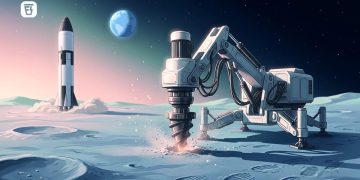
- Lunar bases
- Martian habitats
8.2 Design Considerations
Habitats must address:
- Radiation protection
- Structural integrity
- Psychological comfort
8.3 Artificial Gravity
One proposed solution to many health issues is artificial gravity, created through:
- Rotating habitats
This could mitigate the effects of microgravity.
IX. Lessons for Earth
9.1 Medical Insights
Research in space contributes to:
- Understanding osteoporosis
- Muscle degeneration
- Aging processes
9.2 Technology Transfer
Innovations developed for space often benefit Earth, including:
- Water purification systems
- Medical devices
- Advanced materials
9.3 Sustainability Models
Closed-loop systems in space can inspire sustainable practices on Earth.
X. The Future of Human Life in Space
10.1 Toward Long-Duration Missions
Future missions aim to send humans to Mars and beyond, requiring:
- Advanced life support systems
- Improved health countermeasures
- Autonomous operations
10.2 Space Habitation
The concept of living permanently in space is moving from theory to possibility.
10.3 Redefining Humanity
Living in space challenges fundamental assumptions about:
- Biology
- Society
- Identity
It forces us to reconsider what it means to be human.
Conclusion: Survival as Innovation
The science of living in space is not just about overcoming challenges—it is about transforming them into opportunities for innovation.
Every obstacle—microgravity, radiation, isolation—pushes the boundaries of what we know and what we can create. In solving these problems, we are not only preparing for life beyond Earth, but also gaining insights that can improve life on it.
Space is unforgiving. It demands precision, resilience, and creativity.
And in meeting those demands, humanity is evolving.










Discussion about this post