















Introduction: The Invisible Shift
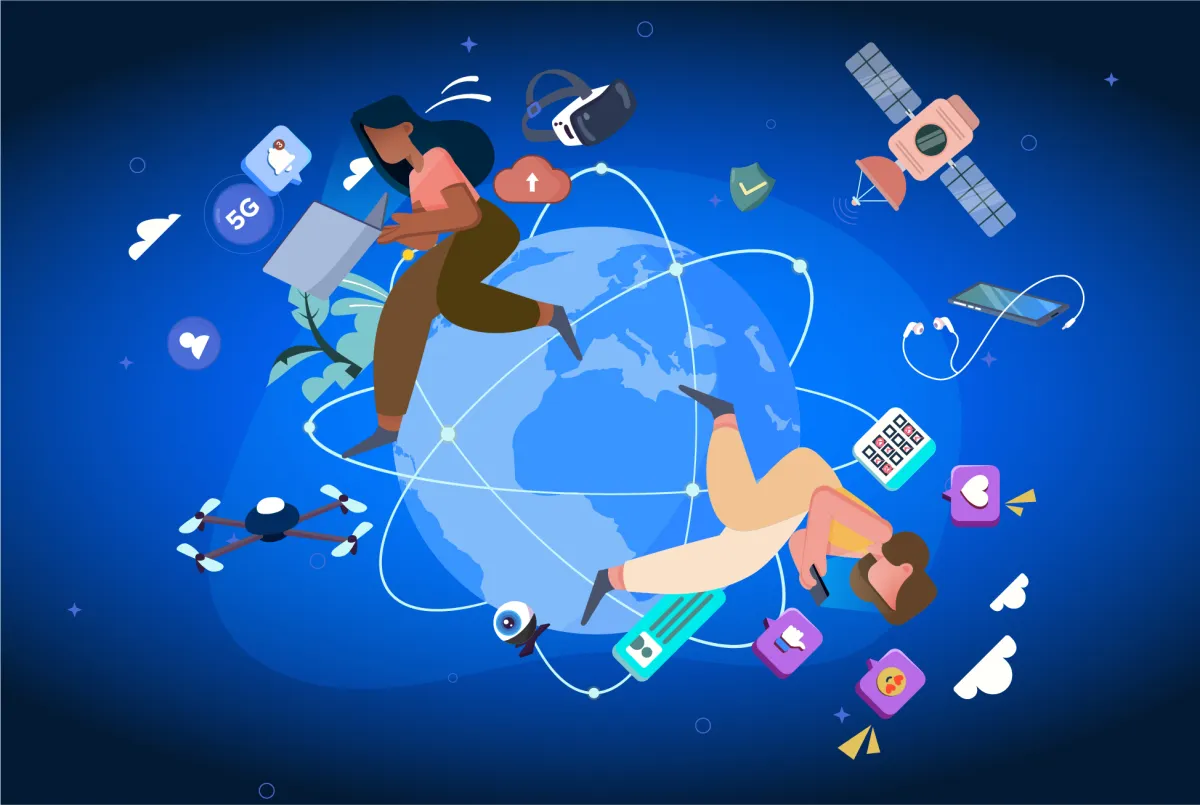
The digital lifestyle is no longer a trend—it is the environment in which modern life unfolds. From the moment we wake up to the glow of a smartphone screen to the final scroll before sleep, digital tools mediate our experiences, decisions, relationships, and even identities. Unlike previous technological revolutions, which primarily transformed industries, the digital revolution has reshaped the texture of everyday life.
A digital lifestyle is not just about using devices; it is about living in a system where information flows constantly, boundaries blur, and human behavior adapts to algorithms. This transformation has created unprecedented convenience and efficiency—but it has also introduced new psychological, social, and cultural complexities.
This article explores how digital lifestyle is redefining human existence across multiple dimensions: daily routines, work, social interaction, consumption, identity, and mental health.
1. The Digitization of Daily Routines
1.1 Morning: The Algorithmic Wake-Up
The modern day often begins not with sunlight, but with a notification. Smart alarms track sleep cycles, apps suggest optimal wake times, and news feeds immediately present curated information.
This seemingly small shift reveals something deeper: our routines are increasingly guided by invisible systems.
- Calendar apps dictate schedules
- Fitness trackers influence physical activity
- Smart assistants automate decision-making
The result is a life where efficiency replaces spontaneity.
1.2 Micro-Decisions and Cognitive Offloading
Digital tools reduce the need for memory and decision-making:
- Navigation apps eliminate spatial thinking
- Recommendation engines replace choice exploration
- Reminders substitute internal discipline
While this reduces cognitive load, it also changes how the brain functions. Humans are gradually outsourcing thinking, remembering, and even judging to digital systems.
2. Work in the Digital Lifestyle Era
2.1 Remote Work and the Collapse of Boundaries
The digital lifestyle has dissolved the traditional separation between work and personal life. Remote work tools enable productivity anywhere—but they also create permanent accessibility.
Work is no longer a place; it is a condition.
This shift leads to:
- Flexible schedules
- Increased autonomy
- Blurred work-life boundaries
The danger lies in the expectation of constant availability, where “online” becomes synonymous with “working.”
2.2 Productivity vs. Presence
Digital tools promise productivity, but they often fragment attention:
- Multitasking becomes the norm
- Notifications interrupt deep work
- Meetings multiply without necessity
This creates a paradox:
We are more connected but less focused.
True productivity increasingly depends not on using more tools, but on managing digital distraction.
3. Social Interaction in a Digital World
3.1 From Physical Presence to Digital Presence
Human connection has shifted from physical proximity to digital interaction. Messaging apps, social platforms, and video calls allow constant communication—but change its nature.
Key transformations include:
- Asynchronous conversations
- Reduced non-verbal cues
- Increased communication volume
The result is a form of interaction that is continuous but fragmented.
3.2 The Performance of Identity
Social media turns identity into something that is:
- Curated
- Measured (likes, shares, views)
- Optimized for engagement
People are no longer just living their lives—they are documenting and presenting them.
This creates a subtle psychological shift:
Life becomes content.
4. Digital Consumption: From Choice to Prediction
4.1 The Rise of Algorithmic Consumption
In a digital lifestyle, consumption is no longer driven purely by desire—it is shaped by algorithms.
Streaming platforms, e-commerce sites, and social media feeds use data to:
- Predict preferences
- Suggest products
- Influence decisions
Consumers move from active choosers to guided participants.
4.2 Infinite Options, Limited Satisfaction
Paradoxically, more choice does not lead to more satisfaction. Instead:
- Decision fatigue increases
- Attention spans decrease
- Commitment weakens
The digital environment encourages constant switching, reducing the ability to fully engage with any single experience.
5. The Psychological Impact of Digital Living
5.1 Dopamine Loops and Habit Formation
Digital platforms are designed to capture attention. Notifications, likes, and updates trigger dopamine responses, creating habit loops.
This leads to behaviors such as:
- Compulsive checking
- Fear of missing out (FOMO)
- Reduced ability to disconnect
The challenge is not lack of discipline—it is the intentional design of addictive systems.
5.2 Attention as the New Scarce Resource
In the digital age, attention becomes the most valuable commodity. Every app competes for it.
Consequences include:
- Reduced deep thinking
- Fragmented focus
- Increased mental fatigue
The ability to concentrate becomes a competitive advantage.
6. Digital Lifestyle and Identity Formation
6.1 Multiple Selves Across Platforms
Individuals often maintain different identities across platforms:
- Professional identity (LinkedIn)
- Social identity (Instagram)
- Personal communication (WhatsApp)
This fragmentation creates a more complex sense of self.
6.2 Authenticity vs. Optimization
The tension between being authentic and being optimized for engagement defines modern identity.
People ask:
- Should I share what is real?
- Or what performs well?
This tension shapes how individuals see themselves and others.
7. Health and Well-Being in a Digital Lifestyle
7.1 Physical Health Implications
Digital lifestyles are often sedentary:
- Increased screen time
- Reduced physical movement
- Disrupted sleep patterns
However, technology also provides solutions:
- Fitness tracking
- Guided workouts
- Health monitoring
The same system that creates problems also offers tools to solve them.
7.2 Mental Health Challenges
Constant connectivity can lead to:
- Anxiety
- Burnout
- Social comparison
Yet digital platforms also provide:
- Mental health resources
- Online communities
- Access to support
The impact depends on how technology is used, not just its presence.
8. The Economics of Digital Lifestyle
8.1 The Attention Economy
Digital platforms operate on capturing and monetizing attention.
Users are not just consumers—they are products.
Their data is used to:
- Target advertisements
- Train algorithms
- Optimize engagement
8.2 The Gig and Creator Economy
Digital lifestyle enables new forms of work:
- Freelancing
- Content creation
- Online entrepreneurship
Individuals can monetize skills, creativity, and influence—but often face:
- Income instability
- Platform dependency
- Algorithmic uncertainty
9. Balancing Digital and Real Life
9.1 Digital Minimalism
Some individuals respond by intentionally reducing digital usage:
- Limiting social media
- Turning off notifications
- Creating device-free zones
This approach focuses on intentional use rather than total rejection.
9.2 Designing a Healthy Digital Lifestyle
A balanced approach includes:
- Setting boundaries
- Prioritizing offline experiences
- Using technology as a tool, not a default
The goal is not to escape the digital world, but to engage with it consciously.
10. The Future of Digital Lifestyle
10.1 Integration with AI
Artificial intelligence will further personalize digital experiences:
- Smarter assistants
- Predictive decision-making
- Automated workflows
This could increase convenience—but also reduce human agency.
10.2 The Blurring of Reality
Technologies like augmented reality (AR) and virtual reality (VR) will merge physical and digital environments.
The question is no longer:
“Are we online or offline?”
But:
“What is reality?”
Conclusion: Living Intentionally in a Digital World
The digital lifestyle is not inherently good or bad—it is a powerful system that amplifies human behavior. It offers convenience, connection, and opportunity, but also introduces distraction, dependency, and complexity.
The challenge of modern life is not to reject digital technology, but to use it with awareness.
Ultimately, the quality of a digital lifestyle depends on a simple question:
Are we controlling technology, or is it controlling us?











Discussion about this post