

































Prologue: The Noise We No Longer Notice
There was a time when silence was the default state of human life. Moments of stillness were not something to be scheduled or protected—they simply existed. Today, silence feels unnatural. The absence of notifications can trigger unease, even anxiety, as if something is missing rather than restored.
This shift reveals a profound truth about the digital lifestyle:
we are no longer just connected—we are saturated.
Digital minimalism emerges not as a rejection of technology, but as a response to this saturation. It is a philosophy that asks a deceptively simple question:
What technology truly adds value to our lives—and what merely fills the space?
1. Understanding Digital Excess
1.1 The Architecture of Overload
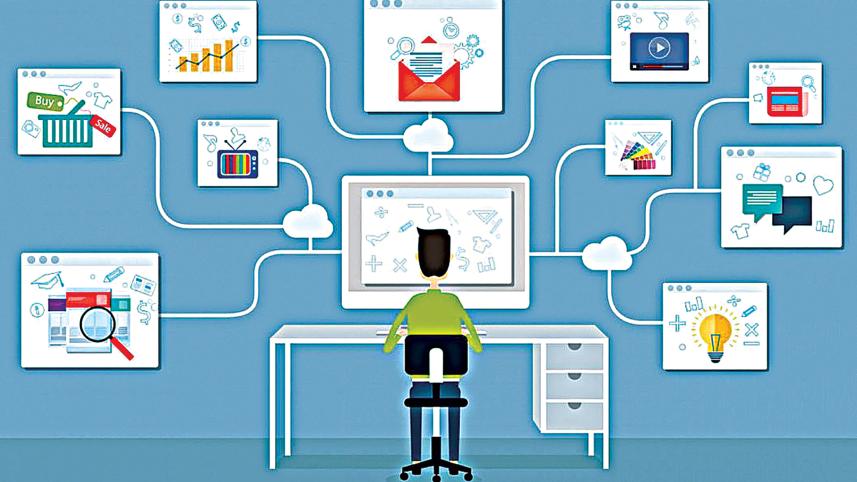
Modern digital environments are not neutral. They are carefully engineered ecosystems designed to maximize engagement. Every scroll, tap, and refresh is part of a system that rewards attention and discourages disengagement.
Consider the average day:
- Dozens of notifications
- Multiple messaging platforms
- Endless content feeds
- Background media consumption
The result is not just busyness, but cognitive fragmentation.
We are rarely fully present because our attention is constantly being divided into smaller and smaller pieces.
1.2 The Illusion of Necessity
One of the most powerful aspects of digital overload is that it feels necessary. Each app, each platform, each connection seems important in isolation. Together, they create an ecosystem that feels indispensable.
But digital minimalism challenges this assumption.
It asks:
- Do you really need five social platforms?
- Do all notifications deserve immediate attention?
- Is constant connectivity actually improving your life?
Often, the answer is no—but recognizing this requires stepping outside the system.
2. The Philosophy of Digital Minimalism
2.1 Less, But Better
Digital minimalism is not about deprivation. It is about intentional selection.
Instead of asking, “What can I add?”
It asks, “What can I remove without losing value?”
This shift mirrors broader minimalist philosophies in design, art, and lifestyle:
- Focus on essentials
- Eliminate the unnecessary
- Create space for what matters
In a digital context, this means using technology as a tool, not as an environment.
2.2 High-Value vs. Low-Value Digital Activities
Not all digital activities are equal.
High-value activities might include:
- Learning new skills
- Maintaining meaningful relationships
- Creating content or ideas
Low-value activities often involve:
- Passive scrolling
- Repetitive checking
- Consuming without reflection
The goal is not to eliminate digital use, but to shift the balance.
3. Reclaiming Attention
3.1 Attention as a Finite Resource
Attention is not unlimited. It is a resource that can be spent wisely or wasted unconsciously.
Digital environments are designed to extract this resource continuously. Without boundaries, attention becomes fragmented and depleted.
This leads to:
- Difficulty focusing
- Reduced creativity
- Shallow thinking
Reclaiming attention is central to digital minimalism.
3.2 The Practice of Deep Focus
Deep focus is the ability to engage fully with a single task for an extended period. It is increasingly rare—and increasingly valuable.
Practices that support deep focus include:
- Turning off notifications
- Creating dedicated work periods
- Limiting multitasking
Over time, these practices rebuild the brain’s capacity for sustained attention.
4. The Role of Solitude
4.1 Solitude vs. Isolation
Digital minimalism emphasizes the importance of solitude—not as loneliness, but as time alone with one’s thoughts.
In a constantly connected world, solitude is often replaced by low-level interaction:
- Checking messages
- Browsing feeds
- Consuming media
True solitude allows for:
- Reflection
- Emotional processing
- Creative thinking
4.2 The Loss of Inner Dialogue
When every idle moment is filled with digital input, the internal dialogue weakens. People become less comfortable being alone with their thoughts.
This has subtle but significant consequences:
- Reduced self-awareness
- Increased dependence on external validation
- Difficulty making independent decisions
Reintroducing solitude restores a sense of internal clarity.
5. Redesigning Digital Habits
5.1 Intentional Friction
Convenience is one of the defining features of digital life—but it can also be a trap.
Digital minimalism introduces intentional friction:
- Logging out of apps
- Removing shortcuts
- Using grayscale screens
These small barriers reduce impulsive behavior and encourage conscious use.
5.2 Scheduled Connectivity
Instead of constant access, digital minimalists often adopt structured usage patterns:
- Checking email at specific times
- Limiting social media sessions
- Creating offline periods
This transforms technology from a constant presence into a controlled tool.
6. Social Relationships in a Minimalist Framework
6.1 Quantity vs. Quality
Digital platforms encourage maintaining large networks of weak connections. While this increases reach, it often reduces depth.
Digital minimalism prioritizes:
- Fewer, stronger relationships
- Meaningful conversations
- Real-world interaction
6.2 The Return to Presence
Being physically present with others—without digital interruption—becomes a deliberate act.
Simple changes can have significant impact:
- Phone-free meals
- Undistracted conversations
- Shared offline activities
These practices restore the richness of human connection.
7. Consumption vs. Creation
7.1 The Passive Trap
Digital environments make consumption effortless. Creating, on the other hand, requires effort and intention.
Most people fall into a pattern of:
- Consuming content
- Reacting to content
- Rarely creating
This imbalance can lead to a sense of passivity and lack of fulfillment.
7.2 The Power of Creation
Creating—whether writing, designing, building, or thinking—shifts the role from passive user to active participant.
Benefits include:
- Increased satisfaction
- Stronger sense of identity
- Greater control over digital experience
Digital minimalism encourages a creator mindset.
8. Technology and Identity
8.1 Escaping the Performance Loop
Social media often turns identity into performance. Individuals present curated versions of themselves, optimized for engagement.
Digital minimalism disrupts this cycle by:
- Reducing exposure to metrics
- Limiting posting frequency
- Focusing on authenticity
8.2 Rediscovering the Offline Self
When digital noise decreases, space opens for rediscovering identity outside of platforms.
This includes:
- Personal interests
- Offline hobbies
- Independent thinking
Identity becomes less reactive and more self-defined.
9. The Emotional Landscape of Digital Minimalism
9.1 Initial Discomfort
Reducing digital usage often feels uncomfortable at first:
- Boredom
- Anxiety
- Fear of missing out
These reactions are natural—they reflect the body adjusting to a different rhythm.
9.2 Gradual Clarity
Over time, this discomfort gives way to:
- Calmness
- Focus
- Emotional stability
The absence of constant stimulation allows the mind to settle.
10. A Sustainable Digital Lifestyle
10.1 Integration, Not Rejection
Digital minimalism is not about abandoning technology. It is about aligning it with personal values.
The goal is to create a system where:
- Technology supports goals
- Attention is protected
- Life is not dominated by screens
10.2 Designing Your Own Rules
There is no universal formula. Each individual must define:
- What tools to use
- How often to use them
- What boundaries to set
This personalization is key to sustainability.
Epilogue: The Quiet Revolution
Digital minimalism is a quiet revolution. It does not rely on new technologies or external changes. Instead, it begins with a shift in awareness.
In a world that constantly demands more attention, choosing less becomes a powerful act.
Not less connection, but more meaningful connection.
Not less technology, but more intentional technology.
Not less life—but a deeper experience of it.













Discussion about this post