



























Prologue: From Tool to Collaborator
For centuries, research has been a fundamentally human endeavor. Tools have always played a role—from microscopes to supercomputers—but they were ultimately extensions of human capability. Today, that paradigm is undergoing a profound transformation.
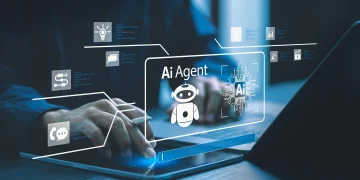
Artificial intelligence is no longer just a tool. It is becoming a collaborator.
Unlike previous technologies, AI does not merely accelerate computation or expand storage; it participates in pattern discovery, hypothesis generation, and even experimental design. In doing so, it is reshaping not only how research is conducted, but also what it means to conduct research at all.
This shift—from intelligence as a uniquely human trait to intelligence as a distributed system—marks one of the most significant turning points in the history of innovation.
I. The Evolution of Research Methodologies
1.1 Classical Research Paradigm
Traditional research follows a relatively linear process:
- Observation
- Hypothesis formation
- Experimentation
- Analysis
- Conclusion
While effective, this model has inherent limitations:
- Human bias in hypothesis generation
- Limited capacity to process large datasets
- Time-intensive experimentation cycles
1.2 The Computational Shift
The introduction of computers transformed research into a more data-driven discipline. Scientists could:
- Run simulations
- Analyze large datasets
- Automate repetitive calculations
However, computers remained deterministic—they executed instructions but did not generate insights independently.
1.3 The AI Paradigm
Artificial intelligence introduces a non-linear, iterative, and often exploratory approach:
- Hypotheses can be generated algorithmically
- Patterns can be identified without predefined models
- Systems can learn and adapt over time
Research is no longer a strictly human-driven process—it becomes a co-evolution between human intuition and machine intelligence.
II. AI as a Discovery Engine
2.1 Pattern Recognition Beyond Human Limits
AI excels at identifying patterns in high-dimensional data—something humans struggle with. Applications include:
- Genomic sequencing
- Climate modeling
- Financial market analysis
These systems can detect subtle correlations that might otherwise remain invisible.
2.2 Hypothesis Generation
One of the most transformative aspects of AI is its ability to propose new hypotheses. By analyzing vast datasets, AI can suggest:
- Potential drug targets
- New materials with specific properties
- Unexplored scientific relationships
This shifts the role of researchers from idea generators to idea evaluators and curators.
2.3 Autonomous Experimentation
In some fields, AI systems are now capable of:
- Designing experiments
- Running simulations
- Adjusting parameters in real time
This leads to significantly faster research cycles and more efficient resource utilization.
III. Case Studies: AI in Action
3.1 Drug Discovery
AI has dramatically reduced the time required to identify potential drug candidates. Traditional drug discovery can take over a decade; AI-driven approaches can:
- Screen millions of compounds in days
- Predict molecular interactions
- Optimize chemical structures
This has profound implications for global health.
3.2 Materials Science
AI is enabling the discovery of new materials with tailored properties, such as:
- High-efficiency solar cells
- Lightweight alloys
- Advanced semiconductors
By simulating atomic interactions, researchers can explore possibilities without physical experimentation.
3.3 Climate Science
Climate models are incredibly complex. AI helps by:
- Improving prediction accuracy
- Identifying key variables
- Optimizing mitigation strategies
This supports more informed policy decisions.
IV. Human-AI Collaboration: A New Research Dynamic
4.1 Complementary Strengths
Humans and AI excel in different areas:
| Humans | AI |
|---|---|
| Creativity | Pattern recognition |
| Contextual understanding | Data processing |
| Ethical reasoning | Speed and scalability |
The most effective research environments leverage both.
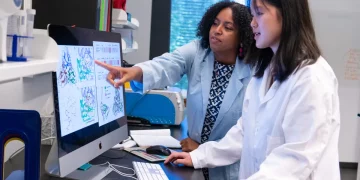
4.2 The Rise of “Centaur” Models
Borrowing a term from chess, “centaur” systems combine human and AI capabilities. In research, this means:
- AI generates possibilities
- Humans interpret and validate results
This hybrid approach often outperforms either humans or AI alone.
4.3 Redefining Expertise
As AI handles more technical tasks, the definition of expertise is shifting toward:
- Critical thinking
- Interdisciplinary knowledge
- Ethical judgment
Researchers must adapt to this new landscape.
V. Infrastructure for AI-Driven Research
5.1 Data as the New Foundation
AI systems rely on large, high-quality datasets. Key challenges include:
- Data availability
- Data standardization
- Privacy and security
Without robust data infrastructure, AI cannot function effectively.
5.2 Computing Power
High-performance computing is essential for training AI models. This includes:
- GPUs and specialized chips
- Cloud computing platforms
- Distributed systems
Access to these resources often determines research competitiveness.
5.3 Platforms and Ecosystems
Modern research increasingly takes place on integrated platforms that combine:
- Data storage
- Analytical tools
- Collaboration features
These platforms enable seamless workflows and global collaboration.
VI. Ethical and Philosophical Implications
6.1 Bias and Fairness
AI systems can inherit biases from their training data. In research, this can lead to:
- Skewed results
- Misinterpretation of data
- Inequitable outcomes
Addressing bias is critical for maintaining scientific integrity.
6.2 Transparency and Explainability
Many AI models operate as “black boxes.” This raises questions about:
- Trust in results
- Reproducibility
- Accountability
Developing explainable AI is a major area of ongoing research.
6.3 The Role of Human Judgment
As AI becomes more autonomous, the role of human oversight becomes more important—not less. Researchers must ensure that:
- Ethical standards are upheld
- Results are interpreted correctly
- Technology is used responsibly
VII. Challenges and Limitations
7.1 Overreliance on AI
There is a risk that researchers may become overly dependent on AI, leading to:
- Reduced critical thinking
- Blind trust in algorithmic outputs
Maintaining a balance is essential.
7.2 Data Limitations
AI is only as good as the data it is trained on. Poor data quality can lead to:
- Inaccurate predictions
- Misleading conclusions
7.3 Accessibility
Not all researchers have access to advanced AI tools. This creates disparities in:
- Research capabilities
- Innovation potential
Bridging this gap is a key challenge.
VIII. The Future of AI in Research
8.1 Autonomous Science
We are moving toward a future where AI systems can conduct entire research cycles with minimal human intervention. This includes:
- Formulating questions
- Designing experiments
- Publishing findings
While still in early stages, this concept—often called autonomous science—could revolutionize research.
8.2 Interdisciplinary Convergence
AI is breaking down barriers between disciplines. For example:
- Biology and computer science → bioinformatics
- Physics and AI → computational physics
- Art and AI → generative design
This convergence leads to new fields and opportunities.
8.3 Democratization of Research
AI tools are becoming more accessible, enabling:
- Smaller institutions to compete
- Independent researchers to contribute
- Global collaboration at unprecedented scale
This democratization could accelerate innovation worldwide.
IX. Strategic Implications for Organizations
9.1 Rethinking R&D
Organizations must adapt their research strategies to incorporate AI. This includes:
- Investing in data infrastructure
- Hiring interdisciplinary talent
- Building AI capabilities
9.2 Competitive Advantage
AI-driven research can provide significant advantages:
- Faster innovation cycles
- Lower costs
- Better decision-making
Companies that fail to adapt risk falling behind.
9.3 Cultural Transformation
Adopting AI requires a shift in organizational culture toward:
- Experimentation
- Collaboration
- Continuous learning
X. Conclusion: Intelligence as an Ecosystem
Artificial intelligence is not replacing human researchers—it is redefining the research landscape. By augmenting human capabilities, AI enables new forms of discovery that were previously unimaginable.
The future of innovation lies not in choosing between human and machine intelligence, but in integrating them into a cohesive system. This system—an ecosystem of distributed intelligence—has the potential to unlock solutions to some of humanity’s most pressing challenges.
As we stand at this intersection, one thing is clear: research is no longer just a human endeavor. It is a shared journey between minds—both biological and artificial.













Discussion about this post