


























Introduction: The End of the Old Growth Model
For over two centuries, human progress has been fueled by a simple equation: economic growth powered by resource consumption. Fossil fuels, industrial expansion, and mass production enabled unprecedented prosperity—but at a cost that is now impossible to ignore.
Climate change, biodiversity loss, and environmental degradation are no longer distant threats; they are present realities. The old model of growth—extract, consume, discard—is reaching its limits.
In response, a new paradigm is emerging: green innovation.
This is not merely about reducing harm. It is about fundamentally rethinking how we produce energy, manufacture goods, design cities, and live our lives. At the center of this transformation lies research—scientific, technological, and systemic.
Green innovation is not a single breakthrough. It is a vast, interconnected effort to redesign the foundations of modern civilization.
I. The Science of Sustainability
1.1 Understanding the Climate System
At the core of sustainability research is a deep understanding of Earth’s systems. Climate science integrates:
- Atmospheric physics
- Oceanography
- Ecology
- Data modeling
This interdisciplinary approach allows scientists to simulate future scenarios and assess the impact of human activity.
1.2 The Role of the Greenhouse Effect
The greenhouse effect is a natural process that regulates Earth’s temperature. However, human activities—particularly the burning of fossil fuels—have intensified this effect, leading to global warming.
Understanding this mechanism is essential for developing mitigation strategies.
1.3 From Knowledge to Action
Scientific understanding alone is not enough. The challenge lies in translating knowledge into:
- Technological solutions
- Policy frameworks
- Behavioral change
This is where innovation ecosystems become critical.
II. Energy Transition: The Core Battleground
2.1 From Fossil Fuels to Renewables
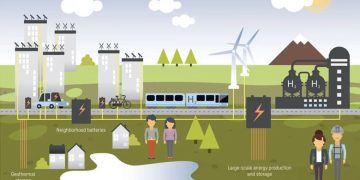
The transition from fossil fuels to renewable energy sources is central to sustainability efforts. Key technologies include:
- Solar power
- Wind energy
- Hydropower
- Geothermal systems
Each comes with its own advantages and challenges.
2.2 Advances in Solar Technology
Solar energy has seen rapid innovation, including:
- Higher-efficiency photovoltaic cells
- Flexible and lightweight panels
- Integration into building materials
Costs have dropped dramatically, making solar one of the most competitive energy sources.
2.3 Energy Storage Revolution
One of the biggest challenges with renewables is intermittency. Energy storage technologies—especially batteries—are crucial.
Breakthroughs in:
- Lithium-ion technology
- Solid-state batteries
- Grid-scale storage
are enabling more reliable renewable energy systems.
III. Decarbonizing Industry
3.1 The Hard-to-Abate Sectors
Industries such as steel, cement, and chemicals are particularly difficult to decarbonize due to:
- High energy requirements
- Chemical processes that emit CO₂
- Infrastructure constraints
3.2 Carbon Capture and Storage
Technologies like Carbon Capture and Storage aim to capture emissions before they reach the atmosphere.
Applications include:
- Power plants
- Industrial facilities
- Direct air capture systems
3.3 Green Hydrogen
Hydrogen produced using renewable energy—often called green hydrogen—has the potential to:
- Replace fossil fuels in industry
- Serve as an energy carrier
- Enable long-term storage
This is one of the most promising areas of research and investment.
IV. Circular Economy: Redefining Waste
4.1 From Linear to Circular Systems
Traditional economies follow a linear model:
Take → Make → Dispose
The circular economy seeks to create closed-loop systems where:
- Materials are reused
- Waste is minimized
- Products are designed for longevity
4.2 Material Innovation
Research is enabling the development of:
- Biodegradable plastics
- Recyclable composites
- Sustainable textiles
These innovations reduce environmental impact across product lifecycles.
4.3 Digital Tracking and Optimization
Technologies such as IoT and blockchain allow for:
- Tracking material flows
- Optimizing resource use
- Enhancing transparency
This supports more efficient and sustainable systems.
V. Agriculture and Food Systems
5.1 The Challenge of Feeding a Growing Population
Global population growth increases demand for food, while climate change threatens agricultural productivity.
5.2 Precision Agriculture
Modern farming uses:
- Sensors
- Drones
- AI analytics
to optimize resource use and improve yields.
5.3 Alternative Proteins
Research into alternative proteins includes:
- Plant-based meats
- Cultured (lab-grown) meat
- Insect protein
These innovations aim to reduce the environmental footprint of food production.
VI. Urban Innovation: Cities as Living Laboratories
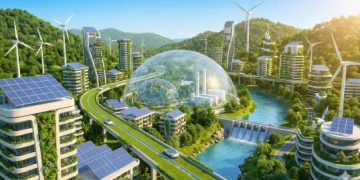
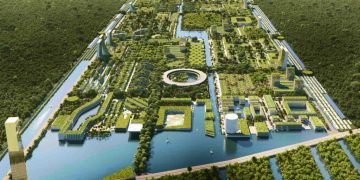
6.1 The Rise of Smart Cities
Cities are responsible for a significant portion of global emissions. Smart city initiatives focus on:
- Energy-efficient buildings
- Intelligent transportation systems
- Waste management optimization
6.2 Green Architecture
Innovations in architecture include:
- Net-zero buildings
- Green roofs and walls
- Passive design strategies
These approaches reduce energy consumption and improve quality of life.
6.3 Mobility Transformation
Transportation is undergoing a shift toward:
- Electric vehicles
- Shared mobility
- Autonomous systems
These changes are critical for reducing urban emissions.
VII. Policy, Markets, and Innovation
7.1 The Role of Government
Governments play a key role through:
- Subsidies and incentives
- Regulations and standards
- Public investment in research
Policy frameworks can accelerate or hinder green innovation.
7.2 Carbon Pricing
Mechanisms such as carbon taxes and emissions trading systems aim to:
- Internalize environmental costs
- Encourage low-carbon technologies
- Drive behavioral change
7.3 Private Sector Leadership
Companies are increasingly investing in sustainability due to:
- Regulatory pressure
- Consumer demand
- Long-term risk management
Sustainability is becoming a competitive advantage.
VIII. Challenges and Trade-Offs
8.1 Economic Costs
Transitioning to sustainable systems requires significant investment. Short-term costs can be a barrier.
8.2 Technological Uncertainty
Not all technologies will succeed. Research involves:
- Experimentation
- Failure
- Iteration
8.3 Social Equity
The benefits and costs of green innovation are not evenly distributed. Ensuring a just transition is essential.
IX. The Role of Innovation Ecosystems
9.1 Collaboration Across Sectors
Green innovation requires coordination between:
- Governments
- Academia
- Industry
- Civil society
9.2 Global Cooperation
Climate change is a global problem that demands:
- International agreements
- Knowledge sharing
- Coordinated action
9.3 Scaling Solutions
Research breakthroughs must be scaled to have real impact. This involves:
- Infrastructure development
- Market adoption
- Policy support
X. The Future of Green Innovation
10.1 Systems Thinking
Future innovation will focus on entire systems rather than isolated technologies.
10.2 Integration of Technologies
Combining:
- AI
- IoT
- Renewable energy
will create more efficient and adaptive systems.
10.3 Cultural Transformation
Sustainability is not just a technical challenge—it is a cultural one. Changes in behavior and values are essential.
Conclusion: Innovation for Survival
Green innovation is no longer optional—it is essential. The challenges we face are unprecedented, but so are the tools at our disposal.
Research is the engine driving this transformation, turning scientific understanding into actionable solutions. But success will depend on more than technology. It will require vision, collaboration, and a willingness to rethink the foundations of modern life.
The transition to a sustainable future is not just about preserving the planet—it is about redefining progress itself.













Discussion about this post