













Introduction: When Machines Begin to Think Alongside Scientists
For centuries, scientific research has followed a familiar pattern.
A researcher forms a hypothesis, designs an experiment, collects data, and draws conclusions. This process—careful, methodical, and often slow—has driven humanity’s greatest discoveries, from the laws of physics to modern medicine.
But today, something fundamental is changing.
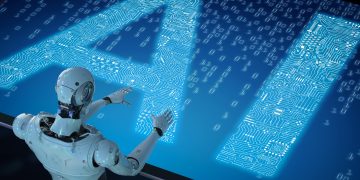
Artificial intelligence is no longer just a tool for analyzing results—it is becoming an active participant in the scientific process itself. It can generate hypotheses, design experiments, simulate outcomes, and uncover patterns that would be impossible for humans to detect alone.
We are entering a new era of discovery—one in which machines do not replace scientists, but collaborate with them.
This transformation raises profound questions:
- What does it mean to “do science” in the age of AI?
- How will research processes evolve?
- And what new possibilities—and risks—will emerge?
This article explores how AI is reshaping scientific research, from laboratory automation to theoretical discovery, and what this means for the future of knowledge itself.
Section 1: The Traditional Model of Scientific Research
1.1 The Hypothesis-Driven Framework
Classical science is built on:
- Observation
- Hypothesis formulation
- Experimentation
- Validation
This structured approach ensures rigor and reproducibility.
1.2 Human Limitations
Despite its strengths, traditional research faces constraints:
- Limited cognitive capacity
- Time-intensive experimentation
- Bias in hypothesis selection
- Difficulty processing massive datasets
These limitations slow the pace of discovery.
Section 2: AI as a Research Partner
2.1 From Tool to Collaborator
Early uses of AI focused on:
- Data analysis
- Pattern recognition
- Statistical modeling
Today, AI systems can:
- Generate research questions
- Propose hypotheses
- Suggest experimental designs
2.2 Machine Learning in Discovery
Machine learning excels at:
- Identifying hidden patterns
- Making predictions
- Handling complex, high-dimensional data
This makes it particularly valuable in fields like:
- Genomics
- Climate science
- Materials research
2.3 AI-Generated Hypotheses
AI can analyze vast datasets and suggest:
- New correlations
- Unexpected relationships
- Novel research directions
This expands the scope of inquiry beyond human intuition.
Section 3: Automation of the Laboratory
3.1 Robotic Experimentation
Automated labs use:
- Robotic arms
- AI-controlled workflows
- Continuous experimentation systems
These labs can operate:
- 24/7
- With minimal human intervention
- At high precision
3.2 Self-Driving Laboratories
“Self-driving labs” combine AI and automation to:
- Design experiments
- Execute them
- Analyze results
- Adjust parameters in real time
This creates a closed-loop system of discovery.
3.3 Speed and Efficiency Gains
Automation dramatically increases:
- Experiment throughput
- Data generation
- Reproducibility
Section 4: Data-Driven Science
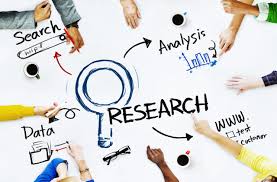
4.1 The Explosion of Scientific Data
Modern research generates enormous amounts of data:
- Genomic sequences
- Satellite imagery
- Sensor networks
4.2 AI for Data Interpretation
AI enables:
- Rapid data processing
- Pattern detection
- Insight generation
4.3 From Data to Knowledge
The challenge is no longer collecting data—it is:
- Interpreting it
- Integrating it
- Making it meaningful
Section 5: Transforming Key Scientific Fields
5.1 Medicine and Drug Discovery
AI accelerates:
- Drug development
- Disease diagnosis
- Personalized medicine
5.2 Materials Science
AI helps discover:
- New materials
- Improved properties
- Efficient manufacturing methods
5.3 Climate Science
AI improves:
- Climate modeling
- Prediction accuracy
- Environmental monitoring
Section 6: Collaboration Between Humans and AI
6.1 Complementary Strengths
Humans provide:
- Creativity
- Intuition
- Ethical judgment
AI provides:
- Speed
- Scale
- Pattern recognition
6.2 Augmented Intelligence
The goal is not replacement, but augmentation:
- Enhancing human capabilities
- Expanding research possibilities
Section 7: Challenges and Risks
7.1 Bias and Data Quality
AI systems depend on:
- High-quality data
- Representative datasets
Bias can lead to:
- Misleading conclusions
- Reinforcement of errors
7.2 Interpretability
Many AI models are “black boxes,” making it difficult to:
- Understand decisions
- Validate results
7.3 Ethical Considerations
Issues include:
- Data privacy
- Responsible use
- Accountability
Section 8: The Changing Role of Scientists
8.1 New Skill Sets
Future researchers will need:
- Data science skills
- Interdisciplinary knowledge
- Ability to work with AI systems
8.2 From Experimenters to Orchestrators
Scientists may shift toward:
- Designing research frameworks
- Interpreting AI outputs
- Guiding discovery processes
Section 9: Rethinking Scientific Methodology
9.1 From Hypothesis-Driven to Data-Driven
AI enables:
- Exploration without predefined hypotheses
- Discovery through pattern recognition
9.2 Continuous Discovery Systems
Research may become:
- Iterative
- Automated
- Continuous
Section 10: The Future of Knowledge Creation
10.1 Accelerated Discovery
AI could dramatically shorten:
- Research cycles
- Time to breakthroughs
10.2 Democratization of Research
AI tools may make research:
- More accessible
- Less resource-intensive
10.3 New Philosophical Questions
As AI contributes to discovery, we must ask:
- Who owns knowledge?
- What counts as understanding?
Conclusion: A New Era of Scientific Exploration
The integration of AI into scientific research marks one of the most significant transformations in the history of knowledge creation.
It challenges traditional methods, expands possibilities, and accelerates discovery in ways previously unimaginable.
Yet, it also requires careful consideration—of ethics, responsibility, and the role of human judgment.
The future of science will not be defined by humans or machines alone, but by their collaboration.
And in that collaboration lies the potential to unlock discoveries that could reshape our understanding of the world—and our place within it.










Discussion about this post