

















Introduction: The End of the Screen Era
For decades, the digital lifestyle has revolved around screens—phones, laptops, tablets, televisions. These rectangular interfaces have been our primary portals into the digital world.
But this model is beginning to break.
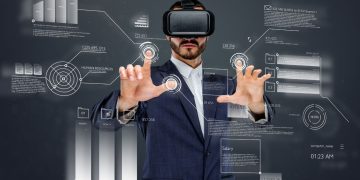
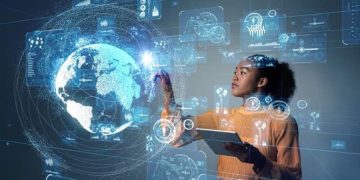
Emerging technologies such as virtual reality (VR), augmented reality (AR), mixed reality (MR), and spatial computing are reshaping how we interact with digital environments. Instead of looking at screens, we are starting to exist inside digital spaces.
At the same time, identity itself is evolving. Digital personas, avatars, and virtual representations are becoming extensions of who we are. Work, social life, entertainment, and commerce are increasingly blending across physical and digital boundaries.
This convergence is giving rise to a new paradigm:
👉 The hybrid digital lifestyle — where reality is not replaced, but expanded.
This article explores the future of digital living, focusing on immersive environments, virtual identity, digital economies, and the profound implications of living between worlds.
1. The Rise of Spatial Computing
1.1 From Flat Interfaces to Immersive Environments
Traditional computing is two-dimensional:
- Windows
- Icons
- Touchscreens
Spatial computing introduces three-dimensional interaction:
- Digital objects exist in space
- Interfaces respond to movement
- Users interact through gesture, voice, and presence
This shift changes not just how we use technology—but how we experience it.
1.2 Virtual Reality: Fully Digital Worlds
Virtual reality creates fully immersive environments where users can:
- Explore simulated spaces
- Interact with digital objects
- Engage with others in real time
Applications include:
- Gaming
- Education
- Training simulations
- Virtual collaboration
In VR, the physical world is temporarily replaced by a digital one.
1.3 Augmented Reality: Enhancing the Physical World
Augmented reality overlays digital elements onto the real world.
Examples:
- Navigation directions on streets
- Virtual furniture in homes
- Real-time translations
AR represents a more integrated approach—enhancing reality rather than replacing it.
1.4 Mixed Reality and Seamless Blending
Mixed reality combines elements of both VR and AR.
In MR:
- Digital and physical objects interact
- Boundaries become fluid
- Experiences feel continuous
This is the foundation of the hybrid digital lifestyle.
2. The Metaverse Concept
2.1 What Is the Metaverse?
The metaverse is often described as:
- A persistent digital universe
- Shared by multiple users
- Accessible through immersive technologies
It is not a single platform, but a network of interconnected environments.
2.2 Characteristics of the Metaverse
Key features include:
- Persistence (it continues to exist even when you log off)
- Interoperability (assets and identities can move across platforms)
- Real-time interaction
- User-generated content
2.3 Beyond Hype: Practical Applications
While often associated with gaming, the metaverse has broader potential:
- Virtual offices
- Digital classrooms
- Healthcare simulations
- Cultural experiences
It represents a new layer of digital infrastructure.
3. Virtual Identity and the Self
3.1 The Evolution of Identity
In the digital lifestyle, identity is no longer singular.
Individuals may have:
- Social media personas
- Professional profiles
- Anonymous online identities
- Avatars in virtual worlds
3.2 Avatars as Extensions of Self
Avatars allow users to:
- Customize appearance
- Express identity creatively
- Experiment with different personas
They can reflect:
- Real-world identity
- Idealized versions
- Completely fictional representations
3.3 Psychological Implications
Virtual identity can:
- Enhance self-expression
- Increase confidence
- Enable exploration
But it can also:
- Create identity fragmentation
- Blur boundaries between real and virtual selves
- Encourage escapism
4. Digital Economies and Virtual Ownership
4.1 The Rise of Digital Goods
In the future digital lifestyle, ownership extends beyond physical objects.
Users may own:
- Virtual clothing
- Digital real estate
- In-game assets
- NFTs (non-fungible tokens)
4.2 Value in Virtual Worlds
Digital goods have value because they:
- Represent identity
- Enable participation
- Provide status within communities
4.3 Work and Income in Digital Spaces
The digital economy enables new forms of work:
- Creating virtual assets
- Designing experiences
- Managing online communities
People may earn income entirely within digital environments.
5. Social Life in Hybrid Reality
5.1 Redefining Presence
Presence is no longer limited to physical proximity.
In hybrid environments, people can:
- Meet in virtual spaces
- Collaborate across distances
- Share immersive experiences
5.2 The Future of Communication
Communication may evolve beyond text and video into:
- Spatial interaction
- Body language simulation
- Real-time shared environments
5.3 Community Without Geography
Digital lifestyles enable:
- Global communities
- Niche interest groups
- Cross-cultural interaction
Geography becomes less relevant.
6. Challenges of the Future Digital Lifestyle
6.1 Reality vs. Escapism
As digital environments become more immersive, the risk of escapism increases.
Key question:
- Will people prefer virtual worlds over physical reality?
6.2 Inequality and Access
Advanced technologies may not be equally accessible.
This could create:
- Digital divides
- Unequal opportunities
- Technological inequality
6.3 Privacy and Control
In immersive environments, data collection becomes more extensive:
- Movement tracking
- Biometric data
- Behavioral patterns
This raises significant privacy concerns.

6.4 Psychological and Social Effects
Potential risks include:
- Addiction to virtual environments
- Identity confusion
- Reduced physical-world engagement
7. Designing a Human-Centered Future
7.1 Ethical Technology Development
Developers must consider:
- User well-being
- Transparency
- Data protection
7.2 Balancing Digital and Physical Life
The future is not purely digital—it is hybrid.
Healthy lifestyles will include:
- Physical activity
- Real-world relationships
- Digital engagement
7.3 Digital Literacy and Awareness
Users must understand:
- How systems work
- How data is used
- How to maintain control
8. The Long-Term Vision
8.1 The Blended Reality Paradigm
The future digital lifestyle is not about replacing reality—but expanding it.
We will live in:
- Physical environments enhanced by digital layers
- Digital environments grounded in real-world identity
8.2 Continuous Connectivity
Connectivity will become:
- Seamless
- Invisible
- Always available
8.3 Redefining Human Experience
Ultimately, digital lifestyle evolution will redefine:
- Work
- Identity
- Relationships
- Reality itself
Conclusion: Living Between Worlds
We are moving toward a future where the distinction between online and offline disappears.
The digital lifestyle will no longer be something we “log into.” It will be something we live within.
This transformation brings extraordinary possibilities:
- Limitless creativity
- Global connection
- Expanded identity
But it also demands responsibility.
The question is no longer whether technology will shape our lives—it already does.
The real challenge is:
👉 How do we shape technology so that it enhances, rather than diminishes, what it means to be human?
Because in the end, the future digital lifestyle is not just about innovation.
It is about designing a world—both physical and digital—where human experience remains at the center.









Discussion about this post