

























Introduction: The Device That Defined a Generation
There are very few products in history that can claim to have reshaped human civilization.
The smartphone is one of them.
It is not just a device. It is a camera, a map, a communication hub, a wallet, a workplace, a theater, a library, and, increasingly, an extension of the human mind.
For over a decade, it has been the center of the digital universe.
And yet—quietly, almost imperceptibly—the era of the smartphone is beginning to plateau.
Innovation has slowed. Annual upgrades feel incremental. The excitement that once surrounded new releases has faded into routine.
This does not mean the smartphone is disappearing.
It means something else is beginning.
1. The Peak of the Slab: When Hardware Stops Being the Story
The modern smartphone has reached a kind of maturity.
Screens are sharp enough. Cameras are powerful enough. Processors are fast enough for most use cases. Battery life, while still imperfect, is manageable.
In other words, the core problems have largely been solved.
When a technology reaches this stage, differentiation becomes difficult. Companies shift from breakthrough innovation to refinement:
- Slightly better cameras
- Slightly faster chips
- Slightly thinner designs
But “slightly better” does not change behavior.
And when behavior stops changing, the platform begins to stagnate.
The smartphone is no longer evolving at the pace of user expectations.
So the question is not whether it will be replaced—but what will replace its role as the primary interface between humans and technology.
2. The Interface Shift: From Screens to Environments
The smartphone is fundamentally a screen-based interface.
You look at it. You touch it. You interact with a rectangle.
But the next wave of computing is moving away from screens toward environments.
Instead of pulling information into a device, information will be projected into the world around you.
This shift is already visible in early forms:
- Voice assistants removing the need for screens
- Wearables providing ambient data
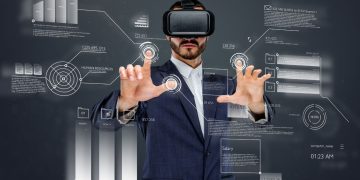
- Augmented reality layering digital content onto physical space
The key idea is simple but powerful:
The interface is no longer a place you go—it becomes something that surrounds you.
3. Wearables: The First Step Beyond the Phone
Wearables are often underestimated because they appear as accessories.
But historically, accessories have a way of becoming primary devices.
Watches became smart. Glasses are becoming connected. Earbuds are turning into always-on assistants.
What makes wearables important is not their current capability—but their trajectory.
They move technology closer to the body:
- Always accessible
- Context-aware
- Less intrusive than pulling out a phone
Over time, this proximity allows for deeper integration with daily life.
The phone requires attention. Wearables require less of it.
And in a world saturated with information, less attention is more valuable than more features.
4. Spatial Computing: When Digital Becomes Physical
If smartphones defined the era of mobile computing, the next era may be defined by spatial computing.
Spatial computing treats digital objects as if they exist in physical space.
Instead of looking at a screen, you might:
- Place a virtual screen on your wall
- Interact with 3D objects in your room
- Collaborate with others in shared virtual environments
This is not just a change in display—it is a change in how we think about computing.
Information is no longer confined to a device.
It becomes part of the environment.
And once that happens, the concept of a “primary device” begins to dissolve.
5. AI as the New Interface
Perhaps the most important shift is not hardware—but intelligence.
In the smartphone era, apps were the interface.
You opened an app to do something.
In the next era, AI may replace apps as the primary layer of interaction.
Instead of navigating menus, you simply express intent:
- “Book me a flight next week”
- “Summarize this document”
- “Plan my day”
The system interprets, decides, and executes.
This changes everything.
The interface becomes conversational, predictive, and personalized.
And in such a system, the device itself matters less than the intelligence behind it.
6. The Fragmentation of the “One Device” Model
The smartphone succeeded because it consolidated many functions into a single device.
But the future may reverse that trend.
Instead of one device doing everything, we may have multiple devices working together:
- Glasses for visual augmentation
- Earbuds for communication
- Wearables for health and context
- Ambient systems embedded in homes and cities
This creates a distributed ecosystem.
No single device is central.
The experience is continuous, moving seamlessly across contexts.

7. Attention as the Ultimate Constraint
One of the biggest problems with smartphones is not technical—it is psychological.
They demand attention.
Notifications, apps, and endless content compete for focus.
This has led to widespread concerns about distraction, addiction, and mental well-being.
The next generation of devices will need to address this.
And that likely means:
- Fewer interruptions
- More contextual awareness
- Better filtering of information
The goal is not to give users more—but to give them only what matters, when it matters.
8. Privacy in an Always-On World
As devices become more integrated into daily life, they also become more intrusive.
Always-on microphones, cameras, and sensors raise significant privacy concerns.
Who owns the data?
How is it used?
Who has access?
In a post-smartphone world, privacy cannot be an afterthought.
It must be built into the system.
Otherwise, the very technologies designed to enhance life may erode trust.
9. The Business Battle for the Next Platform
The transition beyond smartphones is not just technological—it is competitive.
The companies that define the next platform will shape the future of the digital economy.
In the smartphone era, control of the platform meant control of:
- App ecosystems
- Distribution channels
- Revenue streams
The same will be true in the next era.
But the rules may change.
If AI replaces apps, traditional app stores may lose relevance.
If interfaces become ambient, branding and visibility will take new forms.
The winners will not just build devices.
They will define ecosystems.
10. The Slow Disappearance of the Phone
Contrary to popular belief, the smartphone will not disappear overnight.
It will fade.
Gradually, its functions will be absorbed by other technologies.
At first, it will remain the hub—the fallback device.
But over time, it will become less central.
Less necessary.
Less used.
Until one day, it is no longer the first thing you reach for.
And that is how technological eras end—not with a dramatic replacement, but with a quiet transition.
Conclusion: Beyond the Rectangle
The smartphone was never the final form of personal technology.
It was a phase.
A highly successful, deeply transformative phase—but still a step in a longer evolution.
What comes next will not be defined by a single device.
It will be defined by a new relationship between humans and technology:
- More seamless
- More intelligent
- More integrated
- And, ideally, more humane
The rectangle in your pocket changed the world.
The technologies that replace it may change something even deeper:
How we experience reality itself.













Discussion about this post