


























Introduction: From Exploration to Economy
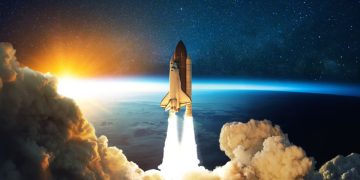
For much of human history, space exploration was an endeavor driven by governments, fueled by political ambition, national pride, and scientific curiosity. It was expensive, risky, and largely inaccessible to anyone outside elite institutions. However, over the past two decades, a profound shift has occurred. Space is no longer just a domain of exploration—it is becoming an economic ecosystem.
This transformation marks the emergence of the “space economy,” a rapidly expanding sector that encompasses everything from satellite communications and Earth observation to space tourism, in-orbit manufacturing, and even the prospect of extraterrestrial resource extraction.
The commercialization of space is not merely an extension of previous exploration efforts; it represents a fundamental redefinition of humanity’s relationship with the cosmos. Space is evolving from a distant frontier into an integrated part of the global economy.
This article explores the structure, drivers, opportunities, and challenges of the modern space economy, offering a comprehensive look at how commercialization is reshaping the future of space exploration.
1. Defining the Space Economy
1.1 What Is the Space Economy?
The space economy refers to all economic activities related to the exploration, understanding, and utilization of space. It includes both upstream and downstream sectors.
- Upstream activities involve the design, manufacturing, and launch of spacecraft, rockets, and satellites.
- Downstream activities include services that rely on space-based infrastructure, such as GPS navigation, satellite television, and climate monitoring.
This dual structure makes the space economy uniquely interconnected with nearly every aspect of modern life.
1.2 Current Market Size and Growth
The global space economy has grown rapidly, reaching hundreds of billions of dollars in value. Analysts predict that it could exceed one trillion dollars within the next two decades.
This growth is driven by several factors:
- Increased demand for data and connectivity
- Lower launch costs
- Advances in miniaturization
- Expanding private sector participation
2. The Rise of Private Sector Dominance
2.1 From Contractors to Innovators
Historically, private companies served primarily as contractors for government space agencies. Today, they are leading innovation and setting ambitious agendas.
Companies are developing their own launch systems, spacecraft, and business models, often operating independently of government programs.
2.2 Disruptive Business Models
The private sector has introduced new approaches that challenge traditional assumptions:
- Reusable rockets dramatically reduce costs
- Vertical integration streamlines production
- Agile development cycles accelerate innovation
These strategies have made space more accessible and competitive.
2.3 Competition and Collaboration
While competition drives innovation, collaboration remains essential. Partnerships between private companies and government agencies are common, combining public funding with private efficiency.
3. Satellite Industry: The Backbone of the Space Economy
3.1 Communications and Connectivity
Satellites play a critical role in global communications. They enable internet access in remote areas, support mobile networks, and facilitate international broadcasting.
The demand for connectivity is increasing, particularly in underserved regions, making satellite networks a key growth area.
3.2 Earth Observation and Data Services
Earth observation satellites provide valuable data for agriculture, weather forecasting, disaster response, and environmental monitoring.
This data-driven approach is transforming industries by enabling more informed decision-making.
3.3 Navigation and Positioning Systems
Global navigation satellite systems (GNSS) are essential for transportation, logistics, and everyday smartphone use.
These systems illustrate how deeply space technology is embedded in modern society.
4. The Emerging Markets: Tourism, Manufacturing, and Mining
4.1 Space Tourism
Space tourism is transitioning from concept to reality. Suborbital flights are already offering brief experiences of weightlessness and views of Earth from space.
Orbital tourism and even lunar visits are being planned, targeting high-net-worth individuals in the early stages.
4.2 In-Orbit Manufacturing
Microgravity environments enable unique manufacturing processes that are impossible on Earth. These include the production of advanced materials, pharmaceuticals, and fiber optics.
As technology improves, in-orbit manufacturing could become a significant industry.
4.3 Asteroid Mining
Asteroids contain vast quantities of valuable resources, including rare metals and water. Mining these resources could support space infrastructure and reduce reliance on Earth-based materials.
Although still theoretical, asteroid mining has attracted significant interest and investment.
5. Investment and Financing in Space Ventures
5.1 Venture Capital and Private Equity
Investment in space startups has surged in recent years. Venture capital firms are increasingly funding innovative companies in areas such as launch services, satellite technology, and data analytics.
5.2 Government Support and Incentives
Governments continue to play a crucial role by providing funding, contracts, and regulatory frameworks.
Public investment reduces risk and encourages private participation.
5.3 Risk and Return Dynamics
Space ventures are inherently risky due to high costs and technical challenges. However, the potential returns are equally significant.
Investors must balance long-term vision with short-term viability.
6. Regulatory and Legal Frameworks
6.1 International Space Law
Space activities are governed by international treaties that emphasize peaceful use and shared benefits.
However, these frameworks were established before the rise of commercial space activities, creating gaps and ambiguities.
6.2 Property Rights in Space
One of the most complex issues is ownership of space resources. Can companies claim ownership of materials extracted from asteroids?
Different countries have adopted varying policies, leading to potential conflicts.
6.3 Managing Orbital Congestion
The increasing number of satellites raises concerns about congestion and collisions in orbit.
Effective regulation and coordination are essential to ensure sustainability.
7. Challenges Facing the Space Economy
7.1 Technical Barriers
Despite progress, many technologies are still in development. Reliability and safety remain critical concerns.
7.2 Environmental Impact
Space activities can have environmental consequences, including rocket emissions and orbital debris.
Sustainable practices are becoming a priority.
7.3 Inequality and Access
There is a risk that the benefits of the space economy may be concentrated among a few countries and corporations.
Ensuring equitable access is a significant challenge.
8. The Future Outlook: A Trillion-Dollar Ecosystem
8.1 Integration with Earth’s Economy
The space economy is becoming increasingly integrated with terrestrial industries. Data from space is driving innovation in agriculture, transportation, and urban planning.
8.2 Infrastructure in Space
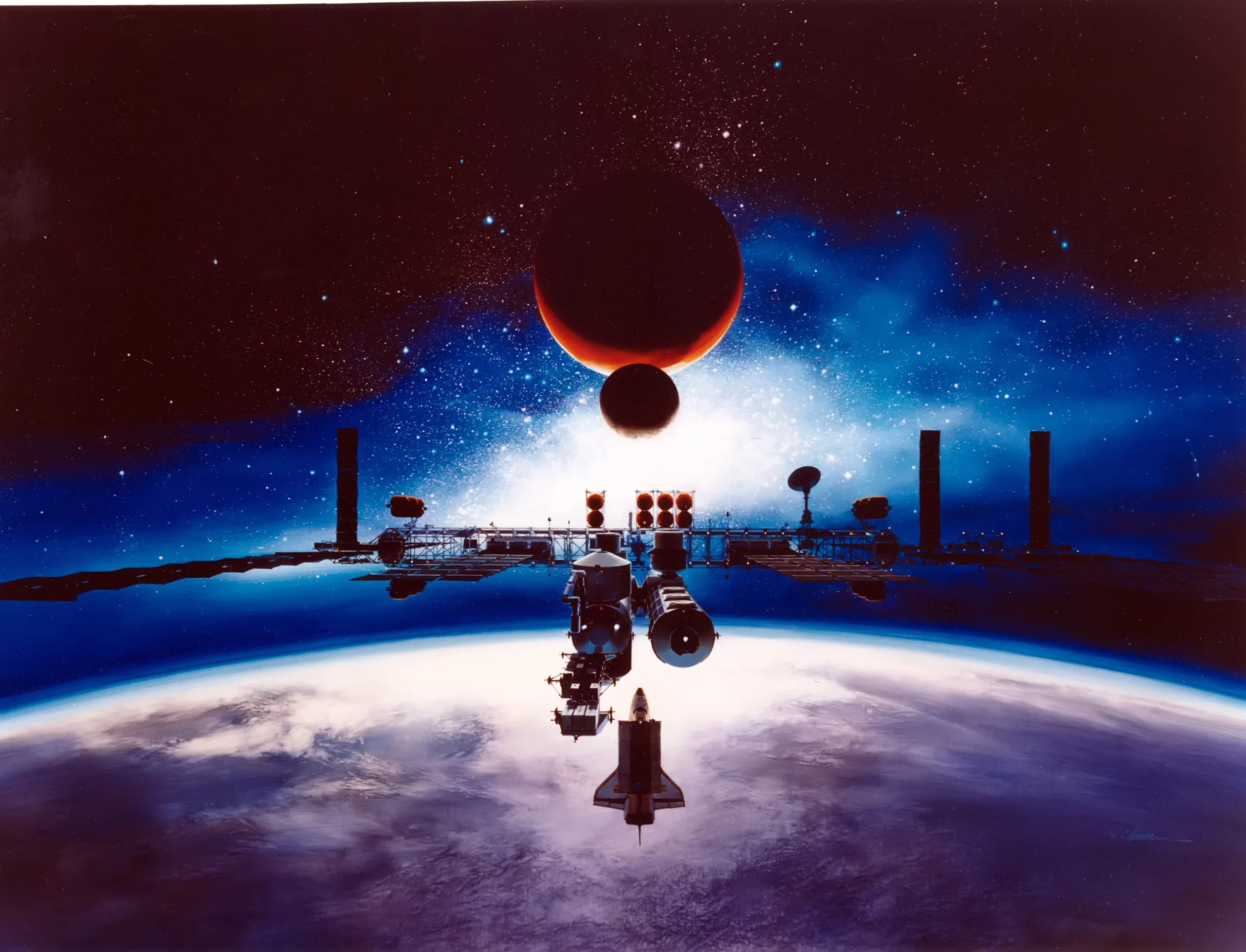
Future developments may include space stations, fuel depots, and logistics networks.
These infrastructures will support long-term exploration and commercialization.
8.3 A New Frontier for Entrepreneurship
Space is emerging as a frontier for entrepreneurs. Startups are exploring novel ideas, from space-based solar power to debris removal services.
Conclusion: The Commercial Frontier
The commercialization of space marks a turning point in human history. What was once the exclusive domain of governments is now a dynamic and competitive marketplace.
The space economy is not just about profits—it is about expanding human capability, enabling scientific discovery, and redefining our place in the universe.
As technology advances and investment grows, space will become an increasingly integral part of the global economy. The question is no longer whether space will be commercialized, but how we will shape this new frontier.












Discussion about this post