








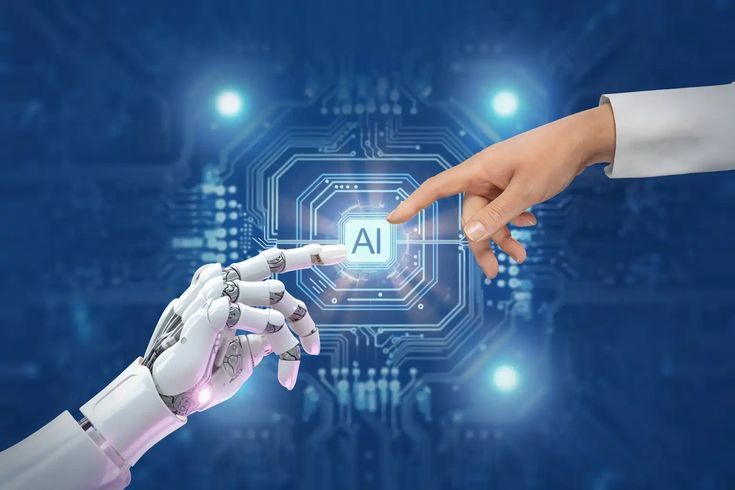
Introduction: The End of Human-Only Creativity?
For centuries, creativity has been considered one of the defining traits of humanity. Art, music, literature, and design were seen not just as outputs, but as expressions of human emotion, culture, and consciousness. Creativity was something deeply personal—something machines, no matter how advanced, could never replicate.
That assumption is now being challenged.
Artificial Intelligence systems can compose symphonies, generate paintings, write poetry, design products, and even produce entire films. What once required years of training and human intuition can now be accomplished in seconds by algorithms trained on vast datasets.
This raises a fundamental question:
If a machine can produce something indistinguishable from human-created art, is it truly creative—or merely imitative?
This article explores the intersection of AI and creativity, examining how intelligent systems are transforming artistic production, redefining authorship, and reshaping the creative economy.
1. What Is Creativity? A Philosophical Starting Point
1.1 Creativity as Novelty and Value
Traditionally, creativity has been defined by two key elements:
- Novelty (something new or original)
- Value (something meaningful or useful)
AI systems are increasingly capable of meeting both criteria.
1.2 The Role of Intent and Consciousness
Human creativity is often tied to:
- Intent
- Emotion
- Experience
AI, however, does not “intend” or “feel.” It generates outputs based on patterns in data.
This raises a philosophical dilemma:
- Is creativity about the process, or the result?
1.3 Combinational vs Transformational Creativity
Some theories suggest that creativity is largely about recombining existing ideas in novel ways.
If this is true, AI systems may not be fundamentally different from humans—just faster and more scalable.
2. AI in Visual Arts: Redefining Aesthetics
2.1 Generative Art Systems
AI models can generate images in virtually any style:
- Classical painting
- Photorealism
- Abstract art
- Concept design
These systems are trained on millions of images, learning patterns of composition, color, and form.
2.2 Style, Originality, and Imitation
AI can mimic the styles of famous artists with remarkable accuracy.
This raises questions:
- Is this innovation or imitation?
- Does style belong to an individual?
2.3 Democratization of Art
AI tools allow anyone to create high-quality visual content, regardless of skill level.
This lowers barriers—but also increases competition.
3. AI in Writing and Storytelling
3.1 Language Generation
AI can produce:
- Articles
- Short stories
- Scripts
- Marketing copy
These systems understand context, tone, and structure at a sophisticated level.
3.2 Narrative Intelligence
Storytelling involves more than grammar—it requires:
- Character development
- Emotional arcs
- Thematic depth
AI is improving in these areas, but still faces limitations.
3.3 The Role of the Human Writer
Writers are increasingly becoming:
- Editors
- Curators
- Idea directors
Rather than creating from scratch, they guide AI-generated content.
4. AI in Music and Audio Creation
4.1 Composition and Production
AI can compose music across genres, from classical to electronic.
It can also:
- Generate lyrics
- Create sound effects
- Assist in production
4.2 Emotional Expression
Music is deeply emotional. AI-generated music can evoke emotion—but does it understand it?
4.3 The Future of Musicians
Musicians may shift from performers to:
- Creative directors
- Brand builders
- Experience designers
5. Design and Innovation: AI as a Creative Partner
5.1 Generative Design
AI can generate thousands of design variations based on constraints.
This is used in:
- Architecture
- Product design
- Engineering
5.2 Human-AI Co-Creation
The most powerful model is collaboration:
- Humans define goals
- AI explores possibilities
5.3 Speed vs Depth
AI accelerates the creative process, but may lack deeper conceptual thinking.
6. Authorship, Ownership, and Copyright
6.1 Who Is the Creator?
If an AI generates a painting:
- Is the creator the user?
- The developer?
- The dataset?
6.2 Intellectual Property Challenges
AI-generated content challenges existing copyright frameworks.
Key issues:
- Training data usage
- Ownership rights
- Attribution
6.3 Legal and Ethical Debates
Different jurisdictions are approaching these issues in different ways.
7. The Creative Economy in the Age of AI
7.1 Supply Explosion
AI dramatically increases the volume of content that can be produced.
This leads to:
- Content saturation
- Reduced scarcity
7.2 Value Shift
Value may shift from:
- Creation → Curation
- Skill → Taste
- Execution → Concept
7.3 The Rise of the “Creative Director Economy”
Individuals who can guide AI effectively may become the new creative elite.
8. The Risk of Homogenization
8.1 Training Data Limitations
AI models are trained on existing data, which may limit true originality.
8.2 Cultural Feedback Loops
If AI-generated content becomes dominant, future AI models may train on AI-generated data, creating a feedback loop.
8.3 Preserving Diversity
Ensuring diversity in creative expression is a key challenge.
9. Can AI Be Truly Creative?
9.1 The Argument for “Yes”
- Produces novel outputs
- Adapts to new inputs
- Surprises even its creators
9.2 The Argument for “No”
- Lacks consciousness
- Has no intention
- Does not experience meaning
9.3 A New Definition of Creativity
Perhaps creativity should be redefined as:
The ability to generate valuable novelty—regardless of origin.
Conclusion: Creativity Is Evolving, Not Disappearing
AI is not the end of human creativity—it is a transformation of it.
The tools we use shape how we create. Just as photography changed painting and digital tools changed design, AI is redefining the creative process.
The future of creativity will not be human vs machine.
It will be human + machine.
And in that collaboration, entirely new forms of expression may emerge—forms we cannot yet imagine.





Discussion about this post