

























Introduction: From Prestige to Profit
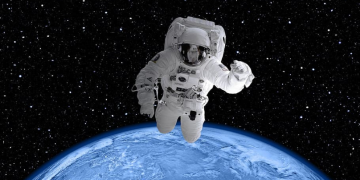
For most of the 20th century, space exploration was driven by politics, not profit. The early missions—culminating in milestones like the Apollo 11 Moon Landing—were symbols of national power, technological superiority, and ideological competition.
Space was expensive, risky, and largely inaccessible to anyone outside government agencies.
Today, that reality is changing.
Space is becoming an economy.
What was once a domain of superpowers is now a rapidly expanding marketplace, populated by private companies, venture capital, startups, and new business models. The shift from prestige-driven exploration to profit-driven innovation is redefining not only the space industry, but also the future of global economic systems.
I. Defining the Space Economy
1.1 What Is the Space Economy?
The space economy encompasses all economic activities related to:
- Manufacturing and launching spacecraft
- Satellite operations
- Data services derived from space
- Infrastructure supporting space missions
It is not limited to rockets and astronauts. In fact, the majority of its value lies in services on Earth enabled by space technologies.
1.2 The Scale of Opportunity
Estimates suggest that the space economy could grow into a multi-trillion-dollar sector within the coming decades. This growth is driven by:
- Decreasing launch costs
- Expanding applications of satellite data
- Increased private sector participation
Space is no longer a niche industry—it is becoming foundational.
II. The Cost Revolution
2.1 The Problem of Cost
Historically, the biggest barrier to space activity was cost. Launching payloads into orbit required:
- Massive infrastructure
- Highly specialized engineering
- Significant financial risk
This limited participation to a handful of governments.
2.2 Reusable Rockets
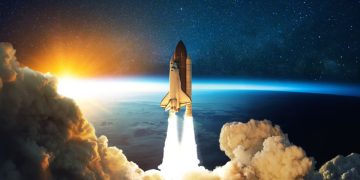
The introduction of reusable rocket technology—pioneered by companies like SpaceX—has fundamentally changed the economics.
Key impacts include:
- Dramatic cost reductions
- Increased launch frequency
- Faster iteration cycles
2.3 Lower Barriers to Entry
As costs decrease, new players can enter the market:
- Startups
- Universities
- Smaller nations
This democratization is accelerating innovation.
III. Satellites: The Backbone of Revenue
3.1 The Real Money Is in Orbit
While rockets get the attention, satellites generate the majority of revenue in the space economy.
Applications include:
- Telecommunications
- Navigation systems
- Earth observation
- Financial data services
3.2 Data as a Commodity
Satellite data has become a valuable asset. Companies monetize:
- Agricultural insights
- Climate monitoring
- Urban development analytics
This data-driven model is one of the fastest-growing segments.
3.3 Global Connectivity
Projects like satellite internet constellations aim to provide:
- Worldwide broadband access
- Connectivity in remote regions
- New digital markets
This could reshape global economic participation.
IV. New Business Models in Space
4.1 Space-as-a-Service
Instead of owning infrastructure, companies can now access space capabilities as services:
- Launch services
- Satellite hosting
- Data analytics platforms
This reduces capital requirements and encourages innovation.
4.2 In-Orbit Economy
Emerging concepts include:
- In-orbit manufacturing
- Satellite servicing
- Space-based data centers
These activities could create entirely new industries.
4.3 Space Tourism
Companies like Blue Origin are exploring commercial human spaceflight.
While currently limited, space tourism represents:
- A new luxury market
- A testing ground for broader human space travel

V. Investment Landscape
5.1 Venture Capital and Startups
Space has become a hot sector for venture capital due to:
- High growth potential
- Technological breakthroughs
- Strategic importance
5.2 Government as Catalyst
Governments still play a crucial role by:
- Funding research
- Providing contracts
- Creating regulatory frameworks
Public-private partnerships are essential.
5.3 Risk and Return
Investing in space involves:
- High upfront costs
- Long timelines
- Uncertain outcomes
However, successful ventures can yield transformative returns.
VI. Strategic Importance and Geopolitics
6.1 Space as Infrastructure
Space is now critical infrastructure for:
- National security
- Communication
- Economic stability
6.2 Competition Between Nations
Countries are investing heavily in space to:
- Secure strategic advantages
- Develop technological leadership
- Expand influence
6.3 Regulation and Governance
The legal framework—such as the Outer Space Treaty—is being tested by new commercial activities.
VII. Challenges to Growth
7.1 Space Debris
Increasing satellite launches create risks of:
- Collisions
- Orbital congestion
- Long-term sustainability issues
7.2 Market Uncertainty
Some business models remain unproven, including:
- Asteroid mining
- Large-scale space manufacturing
7.3 Technical Complexity
Space remains inherently difficult and risky, requiring:
- Advanced engineering
- Rigorous testing
- Long development cycles
VIII. The Next Phase of the Space Economy
8.1 Integration with Earth Economies
Space will become increasingly integrated with terrestrial industries, including:
- Agriculture
- Logistics
- Finance
8.2 Infrastructure Expansion
Future developments may include:
- Orbital stations
- Lunar bases
- Space-based energy systems
8.3 Long-Term Vision
The ultimate trajectory of the space economy points toward:
- Self-sustaining off-Earth systems
- Resource extraction beyond Earth
- Expansion of human economic activity into space
Conclusion: The Final Frontier of Capitalism
The commercialization of space marks a turning point in human history. For the first time, economic activity is extending beyond Earth.
This is not just an industry—it is a new domain of civilization.
As costs decrease and capabilities expand, space will become an integral part of the global economy. The companies and nations that lead this transformation will shape the future in profound ways.
The question is no longer whether space will become a marketplace.
It is who will dominate it.











Discussion about this post