






























Opening: Leaving Earth Is No Longer Fiction
For most of history, space was something to observe.
Now, it is something we are preparing to enter.
What was once the domain of governments and astronauts is rapidly becoming a field shaped by private companies, new technologies, and long-term visions of human survival beyond Earth.
At the center of this shift is a simple but radical idea:
Humanity may become a multi-planetary species.
And the first destination is clear: Mars.
1. Why Mars?
Among all the planets in our solar system, Mars stands out as the most viable candidate for human colonization.
It is not ideal—but it is possible.
Mars offers:
- A day length similar to Earth
- Evidence of past water
- Polar ice caps
- Manageable gravity (about 38% of Earth’s)
Compared to extremes like Venus or the outer planets, Mars presents a balance between challenge and feasibility.
It is close enough to reach, yet different enough to test humanity’s limits.
2. The New Space Race
The 20th-century space race was driven by national competition.
Today’s space race is different.
It is driven by a mix of:
- Governments
- Private companies
- Commercial incentives
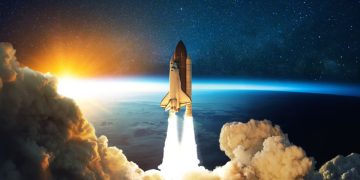
Companies like SpaceX, founded by Elon Musk, aim to drastically reduce the cost of space travel.
Reusable rockets, such as the Starship, represent a fundamental shift:
Space is no longer a one-way expense—it becomes an infrastructure.
Lower costs mean more launches.
More launches mean more experimentation.
More experimentation accelerates progress.
3. The Economics of Space
Colonizing Mars is not just a scientific challenge—it is an economic one.
Every kilogram sent to space is expensive.
To make colonization viable, costs must drop dramatically.
This is why reusability matters.
In addition, long-term sustainability requires:
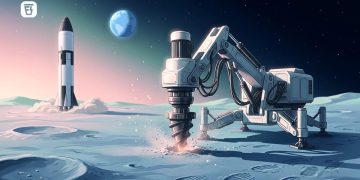
- Local resource utilization (using Martian materials)
- Energy generation (likely solar)
- Closed-loop life support systems
The goal is not just to reach Mars, but to stay there.
4. Living on Mars: The Reality
Life on Mars would be harsh.
Challenges include:
- Thin atmosphere (mostly carbon dioxide)
- Extreme temperatures
- High radiation levels
- Limited liquid water
Humans would need:
- Pressurized habitats
- Radiation shielding
- Artificial food systems
- Advanced medical support
This is not exploration—it is survival engineering.
5. The Psychological Frontier
The physical challenges of Mars are immense.
But the psychological challenges may be even greater.
Consider:
- Isolation from Earth
- Communication delays (up to 20 minutes one-way)
- Confined living environments
- No possibility of quick return
Mars colonists would not just be explorers.
They would be pioneers in a completely new form of human existence.
6. From Exploration to Settlement
Space exploration has historically been temporary.
Astronauts go, conduct missions, and return.
Colonization changes this model.
It requires:
- Permanent infrastructure
- Self-sustaining systems
- Generational planning
The shift is from:
Visiting space → Living in space
This is a fundamentally different challenge.
7. The Role of AI in Space Colonization
Artificial intelligence will play a critical role in enabling human life beyond Earth.
AI can:
- Optimize resource usage
- Manage life support systems
- Assist in autonomous construction
- Support decision-making in isolation
On Mars, where human resources are limited, AI becomes a force multiplier.
It allows small groups of humans to operate complex systems efficiently.
8. Terraforming: Changing a Planet
One long-term idea is terraforming—altering Mars to make it more Earth-like.
This could involve:
- Thickening the atmosphere
- Increasing temperature
- Introducing water cycles
However, terraforming is:
- Technologically uncertain
- Extremely time-consuming
- Ethically debated
It represents the ultimate expression of human ambition:
Not just adapting to environments—but reshaping them.
9. Who Owns Mars?
As humans move toward colonization, legal and ethical questions emerge.
According to current treaties, no nation can claim ownership of celestial bodies.
But reality may be more complex.
Questions include:
- Can companies own resources on Mars?
- Who governs a Martian colony?
- What laws apply?
The answers will shape not just Mars, but the future of space governance.
10. Why Colonize Space at All?
Critics argue that resources should be focused on solving problems on Earth.
Supporters argue that space colonization is essential for:
- Long-term survival of humanity
- Scientific advancement
- Technological innovation
There is also a deeper motivation:
Exploration is part of human nature.
From oceans to continents to space, humanity has always expanded its frontier.
11. The Timeline: How Close Are We?
Mars colonization is no longer a distant dream, but it is not imminent either.
Current projections suggest:
- Robotic missions will continue to expand knowledge
- Human missions may occur within decades
- Permanent settlements could take much longer
Progress will likely be incremental:
Step by step, mission by mission.
12. Beyond Mars
Mars is only the beginning.
Future possibilities include:
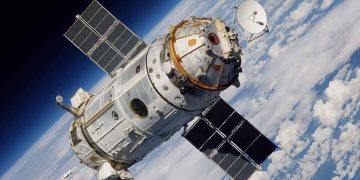
- Lunar bases as staging points
- Asteroid mining
- Habitats in orbit
- Exploration of outer planets
Each step extends human presence further into the cosmos.
Conclusion: A New Chapter of Humanity
Mars represents more than a destination.
It represents a turning point.
For the first time, humanity is seriously considering life beyond Earth—not as a temporary mission, but as a permanent reality.
This shift forces us to rethink:
- What it means to be human
- What defines a home
- How far we are willing to go
Space colonization is not just about technology.
It is about identity.
Final Thought
If history has shown anything, it is this:
Humans do not stay within boundaries for long.
And now, for the first time, the boundary is not a continent or an ocean.
It is a planet.













Discussion about this post