




























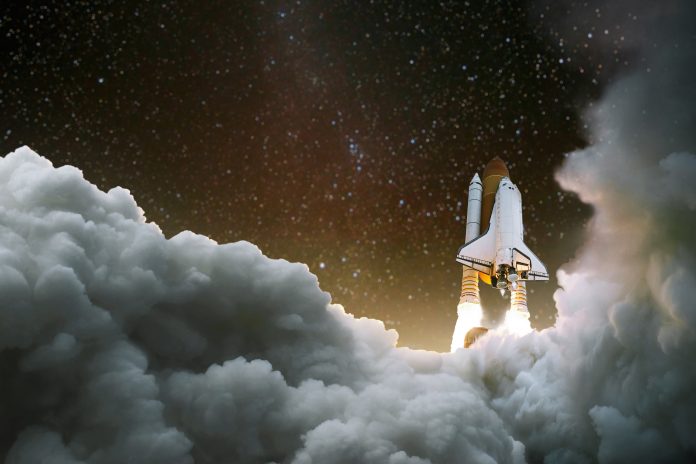
Introduction: Humanity’s Oldest Dream, Reimagined
For as long as humans have gazed up at the night sky, space has represented both mystery and possibility. Ancient civilizations mapped constellations, philosophers speculated about other worlds, and early scientists laid the groundwork for astronomy. Yet it was not until the 20th century that humanity truly began to reach beyond Earth.
The era of space exploration began as a geopolitical contest, driven by national pride and Cold War rivalries. The launch of Sputnik in 1957 and the Apollo Moon landings of the late 1960s symbolized technological triumph and ideological competition. However, today’s space exploration landscape has evolved into something far more complex and ambitious.
We are now entering a new age—one defined not only by governments but also by private companies, international collaboration, and long-term visions of human settlement beyond Earth. This transformation is reshaping how we explore space, why we do it, and what the future might hold.
This article explores the modern era of space exploration, examining technological breakthroughs, commercial involvement, scientific goals, and the philosophical implications of becoming a multi-planetary species.
1. The Transition from Cold War Competition to Global Collaboration
1.1 The Space Race Era
The early decades of space exploration were dominated by the rivalry between two superpowers. The Soviet Union’s early successes—including the first artificial satellite and the first human in space—were quickly followed by American achievements culminating in the Apollo 11 Moon landing in 1969.
These missions were driven less by scientific curiosity and more by political signaling. Space became a stage upon which technological superiority was demonstrated.
1.2 The Rise of International Cooperation
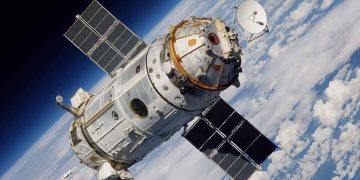
Following the end of the Cold War, space exploration gradually shifted toward collaboration. One of the most significant examples of this is the International Space Station (ISS), a joint project involving multiple nations.
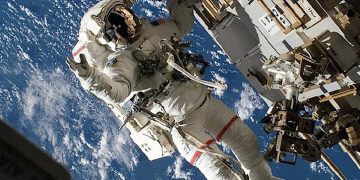
The ISS represents more than just a research facility; it is a symbol of what humanity can achieve when working together. Scientists from around the world conduct experiments in microgravity, advancing knowledge in fields such as medicine, materials science, and climate research.
1.3 Emerging Space Nations
Today, space exploration is no longer limited to a few dominant countries. Nations across Asia, the Middle East, and Africa are developing their own space programs. This diversification is expanding the global reach of space science and fostering new partnerships.
2. The Rise of Private Space Companies
2.1 A New Industry Takes Flight
One of the most transformative developments in recent years has been the emergence of private space companies. Organizations such as SpaceX, Blue Origin, and others have introduced new business models and accelerated innovation.
These companies are not merely contractors for government agencies; they are pioneers in their own right, setting ambitious goals such as reusable rockets, space tourism, and even colonization.
2.2 Reusability and Cost Reduction
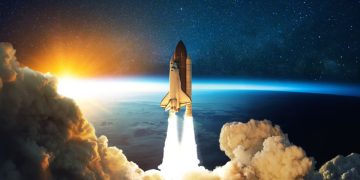
Historically, space travel has been extraordinarily expensive. Rockets were single-use, and each launch required massive financial investment. The development of reusable rocket technology has dramatically reduced costs.
Reusable boosters can land vertically and be refurbished for future missions, significantly increasing efficiency. This innovation is making space more accessible than ever before.
2.3 Commercialization of Space
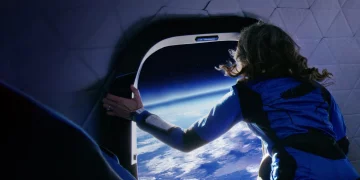
The commercialization of space extends beyond launch services. Satellite deployment, Earth observation, telecommunications, and even space tourism are becoming viable industries.
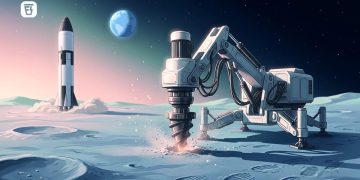
Private companies are also exploring resource extraction, such as mining asteroids for valuable materials. While still in its infancy, this concept has the potential to revolutionize global economics.
3. Technological Innovations Driving Exploration
3.1 Advanced Propulsion Systems
Traditional chemical rockets are powerful but limited. New propulsion technologies are being developed to enable faster and more efficient travel.
Ion propulsion, nuclear thermal engines, and solar sails are among the concepts being explored. These technologies could significantly reduce travel time to distant planets.
3.2 Robotics and Artificial Intelligence
Robotic missions have played a crucial role in space exploration. From Mars rovers to deep-space probes, robots can operate in environments too hostile for humans.
Artificial intelligence is enhancing these missions by enabling autonomous decision-making. Future spacecraft may be capable of navigating and conducting experiments with minimal human intervention.
3.3 Miniaturization and CubeSats
Advances in electronics have led to the development of small satellites known as CubeSats. These compact devices are cost-effective and versatile, allowing universities and smaller organizations to participate in space research.
CubeSats are being used for Earth observation, communication, and even interplanetary missions.
4. The Quest for Mars and Beyond
4.1 Why Mars?
Mars has long been a focal point of space exploration. Its similarities to Earth, including a day-night cycle and seasonal changes, make it a prime candidate for human settlement.
Scientists are particularly interested in the possibility of past or present microbial life. Discovering life on Mars would have profound implications for our understanding of biology and the universe.
4.2 Human Missions to Mars
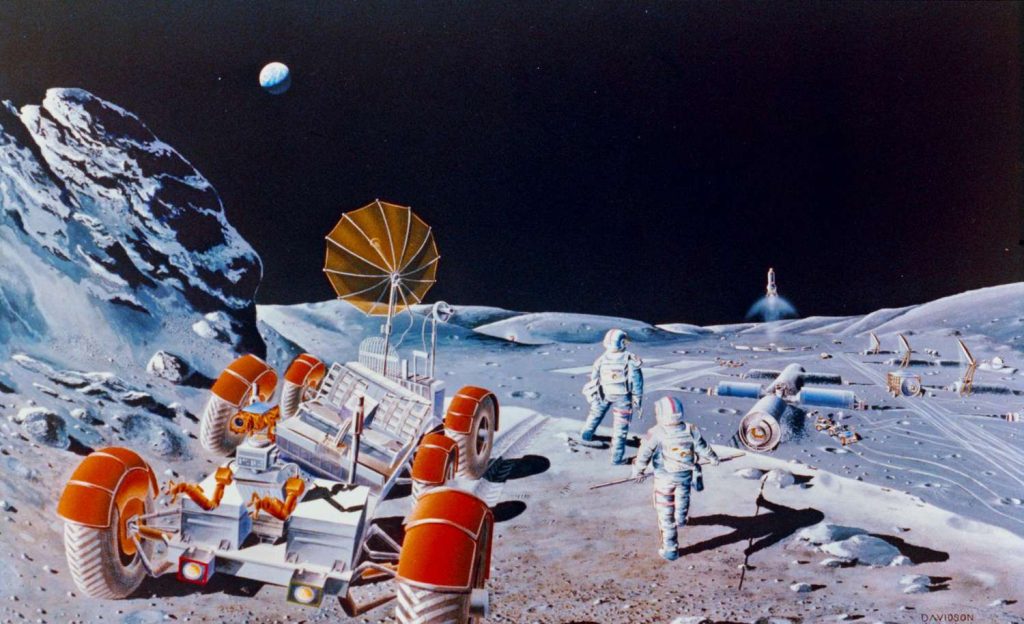
Plans for human missions to Mars are advancing rapidly. These missions present significant challenges, including long-duration space travel, radiation exposure, and life support systems.
Despite these obstacles, progress is being made. Technologies for habitat construction, food production, and water extraction are under development.
4.3 Beyond Mars: The Outer Solar System
While Mars is a primary target, exploration is extending to the outer solar system. Missions to Jupiter’s moons, Saturn’s rings, and beyond are providing valuable insights.
Some of these moons, such as Europa and Enceladus, are believed to have subsurface oceans that could potentially harbor life.
5. The Search for Extraterrestrial Life
5.1 Astrobiology: A Growing Field
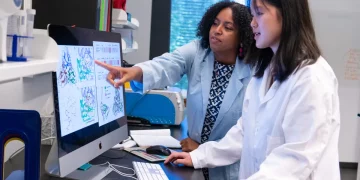
Astrobiology is the study of life beyond Earth. It combines biology, chemistry, and astronomy to explore the conditions necessary for life.
Researchers are investigating extreme environments on Earth to understand how life might գոյ in space.
5.2 Exoplanets and Habitability
The discovery of exoplanets—planets orbiting other stars—has revolutionized our understanding of the universe. Thousands of these planets have been identified, some of which lie within the habitable zone.
Future telescopes will be capable of analyzing the atmospheres of these planets, searching for signs of life.
5.3 The Implications of Discovery
Finding extraterrestrial life would be one of the most significant discoveries in human history. It would challenge our understanding of biology, evolution, and our place in the universe.
6. Challenges and Risks of Space Exploration
6.1 Technical and Financial Barriers
Space missions are complex and expensive. Failures can result in significant financial losses and setbacks.
6.2 Space Debris
The increasing number of satellites has led to concerns about space debris. Collisions in orbit can create dangerous fragments, posing risks to spacecraft.
6.3 Ethical Considerations
As we expand into space, ethical questions arise. Should we alter other planets? Who owns space resources? How do we ensure equitable access?
7. The Future: Becoming a Multi-Planetary Species
7.1 Long-Term Vision
The idea of humans living on multiple planets is no longer purely science fiction. Advances in technology are bringing this vision closer to reality.
7.2 Space Habitats
In addition to planetary colonization, space habitats could provide alternative living environments. These structures could orbit Earth or other celestial bodies.
7.3 The Role of Humanity
Ultimately, space exploration is about more than technology. It reflects humanity’s desire to explore, learn, and expand.
Conclusion: A Journey Without End
Space exploration is entering a transformative era. What began as a competition between nations has evolved into a global and increasingly commercial endeavor.
The challenges are immense, but so are the opportunities. From scientific discovery to economic growth and the potential for human expansion beyond Earth, the possibilities are vast.
As we continue to explore the cosmos, we are not only discovering new worlds—we are also redefining what it means to be human.












Discussion about this post