





























techfusionnews
  • Home
  • Digital Lifestyle
    Always On — The Psychology of Living a Fully Connected Life

    Hybrid Reality — The Future of Digital Lifestyle in an AI-Driven World

    Always On — The Psychology of Living a Fully Connected Life

    Digital Minimalism vs Digital Addiction — The Battle for Attention and Control

    Always On — The Psychology of Living a Fully Connected Life

    The Home as a Digital Hub — Smart Living and the Rise of Invisible Technology

    Curated Reality — Social Media, Identity, and the Performance of Life

    Curated Reality — Social Media, Identity, and the Performance of Life

    Always On — The Psychology of Living a Fully Connected Life

    Always On — The Psychology of Living a Fully Connected Life

    Digital Consumption, AI Economy, and the Future of Human Choice

    Digital Consumption, AI Economy, and the Future of Human Choice

  • Green Tech & Wellness
    The Environmental Impact of Modern AI

    Biohacking and Everyday Wellness: Optimizing the Human Body in a Tech-Driven World

    The Environmental Impact of Modern AI

    Digital Detox in the Age of Hyperconnectivity: Reclaiming Mental Space

    The Environmental Impact of Modern AI

    From Solar to Storage: The New Era of Renewable Energy Innovation

    The Environmental Impact of Modern AI

    Smart Cities and the Green Revolution: How Technology is Redesigning Urban Life

    The Environmental Impact of Modern AI

    The Environmental Impact of Modern AI

    Green Technology and the New Definition of Wellness in the 21st Century

    Future Wellness — Longevity, Climate Adaptation, and the Evolution of Human Living

  • AI
    The Future of Artificial General Intelligence: Will Machines Surpass Human Intelligence?

    The Future of Artificial General Intelligence: Will Machines Surpass Human Intelligence?

    Artificial Intelligence in the Age of Transformation: Redefining Intelligence, Work, and Human Potential

    AI Ethics and Existential Risk: Alignment, Control, and the Future of Humanity

    Artificial Intelligence in the Age of Transformation: Redefining Intelligence, Work, and Human Potential

    AI in Business and the Global Economy: Power, Monopoly, and the New Rules of Capitalism

    Artificial Intelligence in the Age of Transformation: Redefining Intelligence, Work, and Human Potential

    AI and Creativity: When Machines Become Artists, Writers, and Designers

    Artificial Intelligence in the Age of Transformation: Redefining Intelligence, Work, and Human Potential

    Artificial Intelligence in the Age of Transformation: Redefining Intelligence, Work, and Human Potential

    The Invisible Revolution: How AI Is Reshaping Everyday Life

    Trust, Power, and Control: Who Owns the Age of AI?

  • Space Exploration
    The New Age of Space Exploration: From Government Missions to a Multi-Planetary Future

    The Philosophy and Ethics of Space Exploration: Who Owns the Universe?

    The New Age of Space Exploration: From Government Missions to a Multi-Planetary Future

    Life Beyond Earth: Human Survival, Space Habitats, and the Biology of Living in Space

    The New Age of Space Exploration: From Government Missions to a Multi-Planetary Future

    Deep Space Technologies: The Engineering Breakthroughs That Will Take Humanity Beyond the Solar System

    The New Age of Space Exploration: From Government Missions to a Multi-Planetary Future

    The Space Economy Revolution: How Commercialization is Redefining Humanity’s Final Frontier

    The New Age of Space Exploration: From Government Missions to a Multi-Planetary Future

    The New Age of Space Exploration: From Government Missions to a Multi-Planetary Future

    The Economics of Space — How Exploration Is Becoming the Next Trillion-Dollar Industry

    Why We Explore — The Human Drive Behind Space Exploration

  • Innovation & Research
    Open Science and Global Collaboration: The New Research Ecosystem

    Open Science and Global Collaboration: The New Research Ecosystem

    The Innovation Paradox: Why More Technology Doesn’t Always Mean More Progress

    Slow Science vs Fast Innovation: Rethinking the Pace of Discovery

    The Innovation Paradox: Why More Technology Doesn’t Always Mean More Progress

    The Future of Scientific Research in the Age of AI

    The Innovation Paradox: Why More Technology Doesn’t Always Mean More Progress

    From Idea to Impact: How Breakthrough Innovations Actually Happen

    The Innovation Paradox: Why More Technology Doesn’t Always Mean More Progress

    The Innovation Paradox: Why More Technology Doesn’t Always Mean More Progress

    The Architecture of Innovation: How Research Ecosystems Shape the Future of Human Progress

    Beyond Earth — Space Research and the Next Frontier of Innovation

  • All Tech
    The Invisible Architecture of Modern Life — How Technology Quietly Rewrites Human Existence

    The Next Civilization — Technology, Power, and the Future of Being Human

    The Invisible Architecture of Modern Life — How Technology Quietly Rewrites Human Existence

    The Illusion of Productivity — How Technology Is Reshaping Time, Focus, and Human Efficiency

    The Invisible Architecture of Modern Life — How Technology Quietly Rewrites Human Existence

    The Emotional Machine — How Technology Is Rewiring Human Feelings and Relationships

    The Invisible Architecture of Modern Life — How Technology Quietly Rewrites Human Existence

    The Age of Intelligent Systems — How Technology Is Rebuilding Society from the Ground Up

    The Invisible Architecture of Modern Life — How Technology Quietly Rewrites Human Existence

    The Invisible Architecture of Modern Life — How Technology Quietly Rewrites Human Existence

    Will AI Ever Truly Understand Human Consciousness?

    Will AI Ever Truly Understand Human Consciousness?

techfusionnews
  • Home
  • Digital Lifestyle
    Always On — The Psychology of Living a Fully Connected Life

    Hybrid Reality — The Future of Digital Lifestyle in an AI-Driven World

    Always On — The Psychology of Living a Fully Connected Life

    Digital Minimalism vs Digital Addiction — The Battle for Attention and Control

    Always On — The Psychology of Living a Fully Connected Life

    The Home as a Digital Hub — Smart Living and the Rise of Invisible Technology

    Curated Reality — Social Media, Identity, and the Performance of Life

    Curated Reality — Social Media, Identity, and the Performance of Life

    Always On — The Psychology of Living a Fully Connected Life

    Always On — The Psychology of Living a Fully Connected Life

    Digital Consumption, AI Economy, and the Future of Human Choice

    Digital Consumption, AI Economy, and the Future of Human Choice

  • Green Tech & Wellness
    The Environmental Impact of Modern AI

    Biohacking and Everyday Wellness: Optimizing the Human Body in a Tech-Driven World

    The Environmental Impact of Modern AI

    Digital Detox in the Age of Hyperconnectivity: Reclaiming Mental Space

    The Environmental Impact of Modern AI

    From Solar to Storage: The New Era of Renewable Energy Innovation

    The Environmental Impact of Modern AI

    Smart Cities and the Green Revolution: How Technology is Redesigning Urban Life

    The Environmental Impact of Modern AI

    The Environmental Impact of Modern AI

    Green Technology and the New Definition of Wellness in the 21st Century

    Future Wellness — Longevity, Climate Adaptation, and the Evolution of Human Living

  • AI
    The Future of Artificial General Intelligence: Will Machines Surpass Human Intelligence?

    The Future of Artificial General Intelligence: Will Machines Surpass Human Intelligence?

    Artificial Intelligence in the Age of Transformation: Redefining Intelligence, Work, and Human Potential

    AI Ethics and Existential Risk: Alignment, Control, and the Future of Humanity

    Artificial Intelligence in the Age of Transformation: Redefining Intelligence, Work, and Human Potential

    AI in Business and the Global Economy: Power, Monopoly, and the New Rules of Capitalism

    Artificial Intelligence in the Age of Transformation: Redefining Intelligence, Work, and Human Potential

    AI and Creativity: When Machines Become Artists, Writers, and Designers

    Artificial Intelligence in the Age of Transformation: Redefining Intelligence, Work, and Human Potential

    Artificial Intelligence in the Age of Transformation: Redefining Intelligence, Work, and Human Potential

    The Invisible Revolution: How AI Is Reshaping Everyday Life

    Trust, Power, and Control: Who Owns the Age of AI?

  • Space Exploration
    The New Age of Space Exploration: From Government Missions to a Multi-Planetary Future

    The Philosophy and Ethics of Space Exploration: Who Owns the Universe?

    The New Age of Space Exploration: From Government Missions to a Multi-Planetary Future

    Life Beyond Earth: Human Survival, Space Habitats, and the Biology of Living in Space

    The New Age of Space Exploration: From Government Missions to a Multi-Planetary Future

    Deep Space Technologies: The Engineering Breakthroughs That Will Take Humanity Beyond the Solar System

    The New Age of Space Exploration: From Government Missions to a Multi-Planetary Future

    The Space Economy Revolution: How Commercialization is Redefining Humanity’s Final Frontier

    The New Age of Space Exploration: From Government Missions to a Multi-Planetary Future

    The New Age of Space Exploration: From Government Missions to a Multi-Planetary Future

    The Economics of Space — How Exploration Is Becoming the Next Trillion-Dollar Industry

    Why We Explore — The Human Drive Behind Space Exploration

  • Innovation & Research
    Open Science and Global Collaboration: The New Research Ecosystem

    Open Science and Global Collaboration: The New Research Ecosystem

    The Innovation Paradox: Why More Technology Doesn’t Always Mean More Progress

    Slow Science vs Fast Innovation: Rethinking the Pace of Discovery

    The Innovation Paradox: Why More Technology Doesn’t Always Mean More Progress

    The Future of Scientific Research in the Age of AI

    The Innovation Paradox: Why More Technology Doesn’t Always Mean More Progress

    From Idea to Impact: How Breakthrough Innovations Actually Happen

    The Innovation Paradox: Why More Technology Doesn’t Always Mean More Progress

    The Innovation Paradox: Why More Technology Doesn’t Always Mean More Progress

    The Architecture of Innovation: How Research Ecosystems Shape the Future of Human Progress

    Beyond Earth — Space Research and the Next Frontier of Innovation

  • All Tech
    The Invisible Architecture of Modern Life — How Technology Quietly Rewrites Human Existence

    The Next Civilization — Technology, Power, and the Future of Being Human

    The Invisible Architecture of Modern Life — How Technology Quietly Rewrites Human Existence

    The Illusion of Productivity — How Technology Is Reshaping Time, Focus, and Human Efficiency

    The Invisible Architecture of Modern Life — How Technology Quietly Rewrites Human Existence

    The Emotional Machine — How Technology Is Rewiring Human Feelings and Relationships

    The Invisible Architecture of Modern Life — How Technology Quietly Rewrites Human Existence

    The Age of Intelligent Systems — How Technology Is Rebuilding Society from the Ground Up

    The Invisible Architecture of Modern Life — How Technology Quietly Rewrites Human Existence

    The Invisible Architecture of Modern Life — How Technology Quietly Rewrites Human Existence

    Will AI Ever Truly Understand Human Consciousness?

    Will AI Ever Truly Understand Human Consciousness?

No Result
View All Result
Plugin Install : Cart Icon need WooCommerce plugin to be installed.
techfusionnews
No Result
View All Result
Home Space Exploration

Deep Space Technologies: The Engineering Breakthroughs That Will Take Humanity Beyond the Solar System

May 3, 2026
in Space Exploration
The New Age of Space Exploration: From Government Missions to a Multi-Planetary Future

Introduction: The Distance Problem

Space exploration within our solar system is already a monumental challenge. Traveling to Mars takes months. Reaching the outer planets requires years, even decades. But when we turn our attention to interstellar space—the vast regions between stars—the scale becomes almost incomprehensible.

The nearest star system, Alpha Centauri, is over four light-years away. Using current propulsion technologies, it would take tens of thousands of years for a spacecraft to reach it.

This stark reality defines what engineers call the “distance problem.” It is the single greatest barrier to deep space exploration.

Solving this problem requires not just incremental improvements, but revolutionary breakthroughs in propulsion, energy systems, materials science, and autonomous technologies. In this article, we explore the cutting-edge innovations that may one day enable humanity to journey beyond the solar system.


1. The Limits of Chemical Rockets

1.1 The Physics of Conventional Propulsion

Traditional rockets operate based on Newton’s Third Law: for every action, there is an equal and opposite reaction. By expelling mass at high velocity, rockets generate thrust.

While this principle is simple, it imposes severe limitations:

  • Fuel mass grows exponentially with mission distance
  • Efficiency is relatively low
  • Acceleration is constrained

1.2 The Tyranny of the Rocket Equation

At the heart of these limitations lies the Tsiolkovsky rocket equation, which describes how much velocity a rocket can achieve based on its mass and exhaust velocity.

Δv=veln⁡(m0mf)\Delta v = v_e \ln \left( \frac{m_0}{m_f} \right)Δv=ve​ln(mf​m0​​)

This equation reveals a harsh truth: achieving higher speeds requires exponentially more fuel. For interstellar missions, this becomes impractical.

1.3 Why Chemical Rockets Won’t Take Us to the Stars

Even the most advanced chemical rockets cannot reach a significant fraction of the speed of light. This makes them unsuitable for deep space missions beyond our solar system.


2. Electric Propulsion: Efficiency Over Power

2.1 Ion Thrusters

Ion propulsion systems use electric fields to accelerate charged particles, producing thrust. While the thrust is extremely low, the efficiency is much higher than chemical rockets.

Advantages:

  • High fuel efficiency
  • Long operational lifetimes
  • Ideal for deep space probes

Limitations:

  • Low thrust makes them unsuitable for launching from Earth
  • Acceleration is slow

2.2 Hall Effect Thrusters

A variation of ion propulsion, Hall thrusters are already being used in satellites and spacecraft.

They offer a balance between efficiency and thrust, making them suitable for long-duration missions.

2.3 The Role in Deep Space Missions

Electric propulsion is likely to play a key role in future exploration, particularly for cargo transport and robotic missions.


3. Nuclear Propulsion: Unlocking High-Energy Travel

3.1 Nuclear Thermal Rockets (NTR)

Nuclear thermal propulsion uses a nuclear reactor to heat propellant, which is then expelled to generate thrust.

Compared to chemical rockets, NTR systems can achieve significantly higher efficiency and thrust.

3.2 Nuclear Electric Propulsion (NEP)

In this system, a nuclear reactor generates electricity to power ion thrusters.

This combines the high efficiency of electric propulsion with the sustained power of nuclear energy.

3.3 Challenges and Risks

  • Radiation safety
  • Political and regulatory concerns
  • Engineering complexity

Despite these challenges, nuclear propulsion is considered one of the most promising pathways for deep space travel.


4. Breakthrough Concepts: Pushing the Boundaries of Physics

4.1 Solar Sails and Light Propulsion

Solar sails use radiation pressure from sunlight to propel spacecraft. While the force is small, it is continuous and requires no fuel.

Laser-driven sails could dramatically increase speed by using powerful ground-based lasers.

4.2 Fusion Propulsion

Fusion propulsion aims to replicate the energy processes of stars. By fusing atomic nuclei, enormous amounts of energy can be released.

Potential benefits:

  • Extremely high exhaust velocity
  • Reduced travel time to distant stars

However, controlled fusion remains one of the greatest challenges in physics.

4.3 Antimatter Engines

Antimatter annihilation produces the highest energy density known. In theory, antimatter propulsion could enable near-light-speed travel.

Major obstacles:

  • Production and storage of antimatter
  • Extreme costs
  • Safety concerns

4.4 Warp Drives and Spacetime Engineering

The concept of a warp drive involves bending spacetime to allow faster-than-light travel without violating relativity.

While still theoretical, research into spacetime metrics suggests that such concepts may not be entirely impossible.
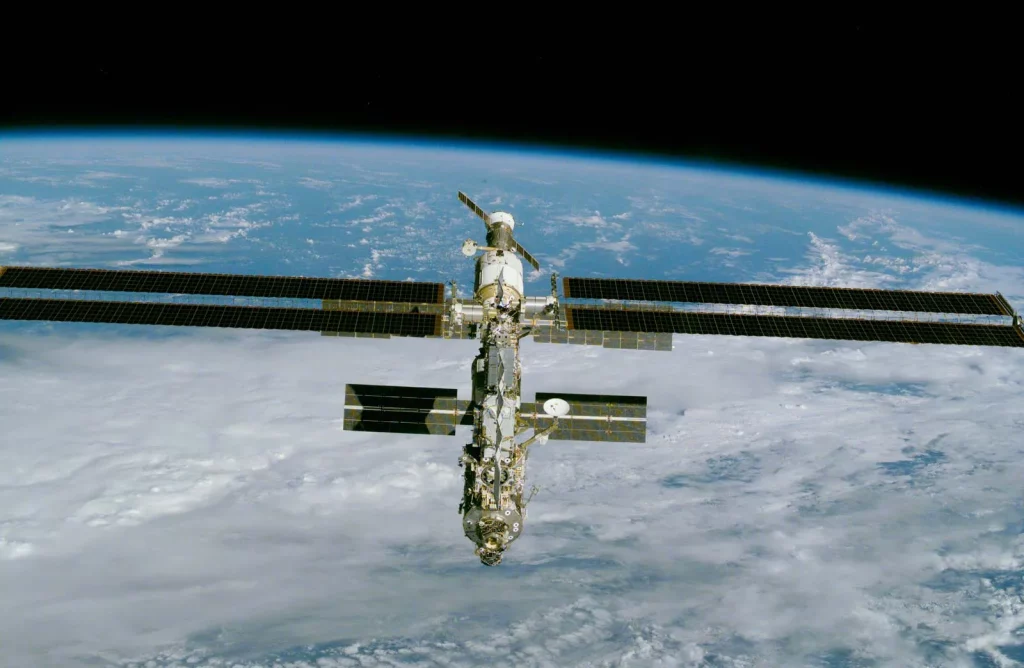

5. Energy Systems for Deep Space Missions

5.1 The Need for Long-Term Power

Deep space missions require reliable power sources that can operate for decades.

Solar energy becomes less effective as distance from the Sun increases.

5.2 Radioisotope Thermoelectric Generators (RTGs)

RTGs convert heat from radioactive decay into electricity. They have powered many deep space missions.

Advantages:

  • Long lifespan
  • Reliability

Limitations:

  • Limited power output

5.3 Advanced Nuclear Reactors

Future missions may rely on compact nuclear reactors capable of providing high levels of power for propulsion and onboard systems.


6. Autonomous Systems and Artificial Intelligence

6.1 Communication Delays

As distance increases, communication delays become significant. For interstellar missions, real-time control is impossible.

6.2 AI-Driven Navigation and Decision-Making

Spacecraft must be capable of autonomous operation, including:

  • Navigation
  • System maintenance
  • Scientific experimentation

6.3 Self-Repairing Systems

Future spacecraft may incorporate self-healing materials and robotic repair systems to ensure long-term survival.


7. Materials Science and Spacecraft Design

7.1 Radiation Shielding

Cosmic radiation poses a major threat to both electronics and human passengers.

Advanced shielding materials are being developed to mitigate these risks.

7.2 Lightweight Structures

Reducing mass is critical for improving efficiency. New materials such as carbon composites and metamaterials are enabling lighter, stronger spacecraft.

7.3 Thermal Management

Extreme temperature variations in space require sophisticated thermal control systems.


8. Human Factors in Deep Space Travel

8.1 Life Support Systems

Long-duration missions require closed-loop life support systems that recycle air, water, and waste.

8.2 Psychological Challenges

Isolation, confinement, and distance from Earth can have significant psychological effects.

8.3 Generational Ships

For interstellar travel, missions may span multiple generations. This raises complex social and ethical questions.


9. Interstellar Mission Concepts

9.1 Robotic Precursors

Robotic missions are likely to precede human exploration, gathering data and testing technologies.

9.2 Breakthrough Starshot

Concepts involving laser-driven nanocraft aim to reach nearby stars within decades.

9.3 Long-Term Human Missions

Human interstellar travel remains a distant goal, but research continues to explore its feasibility.


Conclusion: Engineering the Impossible

Deep space exploration represents one of the greatest challenges in human history. It requires us to rethink propulsion, energy, materials, and even the limits of physics itself.

While many of the technologies discussed are still in development—or even purely theoretical—they represent the foundation of a future in which humanity is no longer confined to a single star system.

The journey to the stars will not happen overnight. It will be the result of decades, perhaps centuries, of innovation and perseverance. But each breakthrough brings us one step closer to answering one of humanity’s most profound questions:

Are we alone—and if not, how do we reach the others?

Tags: Space Exploration
ShareTweetShare

Related Posts

The New Age of Space Exploration: From Government Missions to a Multi-Planetary Future
Space Exploration

The Philosophy and Ethics of Space Exploration: Who Owns the Universe?

May 3, 2026
The New Age of Space Exploration: From Government Missions to a Multi-Planetary Future
Space Exploration

Life Beyond Earth: Human Survival, Space Habitats, and the Biology of Living in Space

May 3, 2026
The New Age of Space Exploration: From Government Missions to a Multi-Planetary Future
Space Exploration

The Space Economy Revolution: How Commercialization is Redefining Humanity’s Final Frontier

May 3, 2026
The New Age of Space Exploration: From Government Missions to a Multi-Planetary Future
Space Exploration

The New Age of Space Exploration: From Government Missions to a Multi-Planetary Future

May 3, 2026
The Economics of Space — How Exploration Is Becoming the Next Trillion-Dollar Industry
Space Exploration

Why We Explore — The Human Drive Behind Space Exploration

April 29, 2026
The Economics of Space — How Exploration Is Becoming the Next Trillion-Dollar Industry
Space Exploration

From Space to Earth — How Space Technologies Are Transforming Everyday Life

April 29, 2026

Discussion about this post

  • Trending
  • Comments
  • Latest
Eternal Luminary: Humanity’s Perpetual Fascination with the Sun

Eternal Luminary: Humanity’s Perpetual Fascination with the Sun

November 5, 2024
The Dark Side of the Smart City Revolution

The Dark Side of the Smart City Revolution

January 23, 2026
The Race Heats Up: OpenAI Joins the AI-Powered Search Arena

The Race Heats Up: OpenAI Joins the AI-Powered Search Arena

October 16, 2024
The Canon DIGITAL IXUS Legacy: Redefining Photography with Style and Innovation

The Canon DIGITAL IXUS Legacy: Redefining Photography with Style and Innovation

November 2, 2024
The Lunar Symphony: Hal Clement’s Prophetic Fantasia

The Lunar Symphony: Hal Clement’s Prophetic Fantasia

Unlocking the Future with AI’s Latest Breakthroughs: A Journey into the Unchartered Frontier

Unlocking the Future with AI’s Latest Breakthroughs: A Journey into the Unchartered Frontier

The Transformative Power of Machine Learning: Shaping the Future of Technology and Beyond

The Transformative Power of Machine Learning: Shaping the Future of Technology and Beyond

The Emotional Intelligence of AI: Bridging the Gap Between Machines and Hearts

The Emotional Intelligence of AI: Bridging the Gap Between Machines and Hearts

The Future of Artificial General Intelligence: Will Machines Surpass Human Intelligence?

The Future of Artificial General Intelligence: Will Machines Surpass Human Intelligence?

May 3, 2026
Artificial Intelligence in the Age of Transformation: Redefining Intelligence, Work, and Human Potential

AI Ethics and Existential Risk: Alignment, Control, and the Future of Humanity

May 3, 2026
Artificial Intelligence in the Age of Transformation: Redefining Intelligence, Work, and Human Potential

AI in Business and the Global Economy: Power, Monopoly, and the New Rules of Capitalism

May 3, 2026
Artificial Intelligence in the Age of Transformation: Redefining Intelligence, Work, and Human Potential

AI and Creativity: When Machines Become Artists, Writers, and Designers

May 3, 2026
techfusionnews

Discover the essence of innovation at "Tech Aggregator," where the latest in tech converges. From cutting-edge gadgets to cosmic ventures and green breakthroughs, our site offers a streamlined look at the future of technology. Engage with concise, impactful content designed for those eager to stay ahead in an ever-evolving digital landscape. Join us at the forefront of the tech revolution.

© 2025 techfusionnews.com. contacts:[email protected]

No Result
View All Result
  • Home
  • Digital Lifestyle
  • Green Tech & Wellness
  • AI
  • Space Exploration
  • Innovation & Research
  • All Tech

© 2025 techfusionnews.com. contacts:[email protected]

Welcome Back!

Login to your account below

Forgotten Password?

Retrieve your password

Please enter your username or email address to reset your password.

Log In