

































Introduction: The Changing Nature of Research
Research methodologies form the foundation of scientific and academic discovery. Every field of knowledge—from medicine and engineering to psychology, sociology, economics, and environmental science—depends on structured methods for collecting evidence, analyzing information, testing hypotheses, and generating reliable conclusions.
For centuries, research methodologies evolved gradually through observation, experimentation, mathematical reasoning, and systematic documentation. Traditional academic research often relied on relatively limited datasets, localized fieldwork, physical laboratories, and manual analysis.
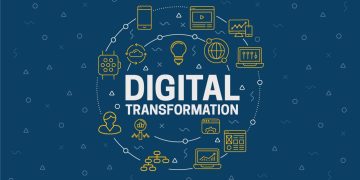
However, the twenty-first century has introduced profound transformations in how research is conducted. The rise of digital technology, artificial intelligence, cloud computing, advanced simulation systems, automation, and global communication networks has reshaped nearly every stage of the research process.
Researchers now have access to enormous volumes of data generated through digital platforms, sensors, satellites, genomic sequencing, and online interactions. Machine learning algorithms can identify patterns hidden within complex datasets. Remote collaboration allows global research teams to work together in real time. Computational models simulate systems ranging from molecular biology to climate dynamics.
These technological advances are changing not only the tools researchers use but also the philosophy of research itself. Traditional distinctions between qualitative and quantitative analysis are becoming increasingly fluid. Interdisciplinary approaches are expanding rapidly. Open science initiatives are redefining how knowledge is shared.
At the same time, modern research faces major challenges. Information overload, reproducibility problems, ethical concerns, algorithmic bias, misinformation, and political polarization complicate the scientific landscape. Researchers must balance innovation with integrity, transparency, and public trust.
The future of research methodology will depend on humanity’s ability to combine technological capability with rigorous ethical standards and critical thinking.
This article explores how research methodologies are evolving in the digital era, the technologies transforming academic discovery, the rise of interdisciplinary and computational research models, and the opportunities and risks shaping the future of knowledge creation.
The Historical Development of Research Methodology
Research methodology has evolved over thousands of years.
Ancient philosophers relied heavily on observation and logical reasoning. Greek thinkers such as Aristotle attempted to classify knowledge systematically. Early medical practitioners documented symptoms and treatments through empirical observation.
The Scientific Revolution fundamentally transformed methodology.
Thinkers such as Francis Bacon emphasized experimentation and evidence-based inquiry. René Descartes promoted systematic doubt and analytical reasoning. Isaac Newton demonstrated how mathematical laws could explain physical phenomena.
Modern scientific methodology gradually developed around several key principles:
- Observation
- Hypothesis formation
- Experimentation
- Data collection
- Statistical analysis
- Replication
- Peer review
During the nineteenth and twentieth centuries, research became increasingly specialized.
Universities and laboratories developed formal disciplinary structures. Quantitative analysis expanded through advances in mathematics and statistics.
Social sciences adopted methodologies inspired partly by natural sciences, while qualitative approaches emerged to explore human behavior, culture, and subjective experience.
By the late twentieth century, computers began transforming data analysis and information management.
The digital revolution accelerated methodological change dramatically.
Today, researchers operate in environments shaped by:
- Artificial intelligence
- Big data analytics
- Automation
- Cloud computing
- Computational modeling
- Global connectivity
- Open-access information systems
Research methodology is now deeply connected to technological infrastructure.
Quantitative Research in the Digital Age
Quantitative research focuses on numerical analysis, measurement, statistical testing, and objective evaluation.
Digital technologies have expanded quantitative methodologies significantly.
Big Data Analytics
Traditional quantitative studies often relied on relatively small samples.
Modern researchers can analyze datasets containing millions or even billions of records.
Examples include:
- Social media behavior
- Financial transactions
- Genomic information
- Satellite imagery
- Consumer activity
- Climate measurements
Big data analytics enables more comprehensive modeling and predictive analysis.
Advanced Statistical Modeling
Powerful computational systems allow researchers to use sophisticated statistical techniques.
Methods such as:
- Regression analysis
- Bayesian modeling
- Network analysis
- Time-series forecasting
- Multivariate statistics
can process complex relationships within large datasets.
Real-Time Data Collection
Digital sensors and connected devices continuously generate data.
Researchers can monitor:
- Environmental conditions
- Human behavior
- Physiological responses
- Transportation patterns
- Economic activity
in real time.
This improves accuracy and responsiveness.
Computational Simulation
Researchers increasingly use computational simulations to model systems difficult to study directly.
Examples include:
- Climate systems
- Economic markets
- Epidemic spread
- Urban infrastructure
- Molecular interactions
Simulation-based methodology expands experimental possibilities.
Qualitative Research and Digital Transformation
Qualitative research focuses on understanding meaning, experience, interpretation, and human behavior.
Technology is also reshaping qualitative methodologies.
Digital Ethnography
Researchers increasingly study online communities and digital cultures.
Social media platforms, gaming environments, and virtual spaces provide rich sources of behavioral data.
Digital ethnography examines how people communicate, form identities, and build communities online.
AI-Assisted Text Analysis
Machine learning tools can analyze large collections of interviews, documents, articles, and social media posts.
Natural language processing identifies themes, emotional patterns, and discourse structures.
Researchers can process textual data at scales previously impossible.
Remote Interviews and Virtual Fieldwork
Video conferencing platforms allow researchers to conduct interviews and focus groups remotely.
This expands access to geographically dispersed populations.
Virtual methodologies became especially important during global pandemics.
Ethical Challenges in Digital Qualitative Research
Digital environments create new ethical concerns.
Researchers must consider:
- Online privacy
- Informed consent
- Data ownership
- Platform surveillance
- Identity protection
Ethical frameworks continue evolving alongside technological change.
Mixed Methods Research and Methodological Integration
Modern research increasingly combines quantitative and qualitative approaches.
Mixed methods research integrates numerical analysis with contextual understanding.
Why Mixed Methods Matter
Complex social and scientific problems rarely fit neatly into single methodological categories.
For example:
- Healthcare research may combine statistical outcomes with patient interviews.
- Climate studies may integrate environmental modeling with community observations.
- Educational research may analyze performance metrics alongside classroom experiences.
Mixed methodologies provide more comprehensive understanding.
Technology and Methodological Flexibility
Digital tools facilitate integration between research approaches.
Researchers can combine:
- Survey platforms
- Statistical software
- Video analysis tools
- AI-assisted coding systems
- Visualization software
within unified workflows.
Challenges of Mixed Methods Research
Combining methodologies requires careful design.
Researchers must address:
- Data integration
- Interpretation consistency
- Resource demands
- Interdisciplinary communication
Nevertheless, mixed methods approaches are becoming increasingly influential.
Artificial Intelligence and Automated Research Systems
Artificial intelligence is transforming research methodology fundamentally.
Machine Learning and Pattern Recognition
AI systems analyze complex datasets rapidly.
Machine learning models can identify relationships that human researchers may overlook.
Applications include:
- Medical diagnostics
- Behavioral prediction
- Financial forecasting
- Language analysis
- Environmental monitoring
Automated Literature Reviews
Academic publishing generates enormous volumes of research.
AI-assisted systems help researchers:
- Search literature
- Summarize findings
- Identify trends
- Detect citation patterns
Automation improves efficiency in knowledge management.
AI-Generated Hypotheses
Some advanced systems can generate potential hypotheses based on existing data patterns.
This may accelerate scientific discovery.
However, human interpretation remains essential.
Ethical Concerns and AI Bias
AI systems may reflect biases present in training datasets.
Researchers must evaluate algorithmic fairness carefully.
Transparency and accountability are critical for responsible AI-assisted research.
Open Science and Research Transparency
Traditional academic publishing systems have faced criticism for limited accessibility and lack of transparency.
Open science movements aim to improve collaboration and reproducibility.
Open Access Publishing
Open-access journals make research freely available.
This improves:
- Educational access
- Global collaboration
- Public engagement
- Knowledge dissemination
Open Data Sharing
Researchers increasingly share datasets publicly.
Open data improves:
- Verification
- Replication
- Secondary analysis
- Transparency
Preprints and Rapid Communication
Digital platforms allow researchers to share findings before formal peer review.
This accelerates scientific communication.
However, rapid dissemination also increases risks of misinformation and unverified claims.
Reproducibility and Replication
Some scientific fields face reproducibility challenges.
Open methodologies and transparent data practices help improve reliability.
Cloud Computing and Global Research Infrastructure
Cloud computing has revolutionized research infrastructure.
Researchers can now access powerful computational resources remotely.
Distributed Research Collaboration
Cloud-based platforms enable teams across continents to work together.
Researchers share:
- Data
- Simulations
- Code
- Experimental results
- Visualizations
in real time.
High-Performance Computing
Complex research often requires substantial computational power.
Cloud systems support:
- Genomic analysis
- Climate simulations
- AI training
- Engineering design
- Particle physics calculations
Democratization of Research Tools
Cloud platforms reduce barriers to advanced computing.
Smaller institutions and researchers in developing regions gain greater access to powerful analytical tools.

Interdisciplinary Research Methodologies
Modern challenges increasingly require interdisciplinary approaches.
Systems Thinking
Systems thinking examines relationships between interconnected variables.
Researchers analyze:
- Ecological systems
- Healthcare networks
- Economic structures
- Urban environments
- Social systems
rather than isolated components.
Convergence Research
Convergence research integrates expertise across disciplines.
Examples include:
- Bioinformatics
- Neuroeconomics
- Computational sociology
- Environmental engineering
- Digital humanities
Methodological Adaptation
Interdisciplinary research requires methodological flexibility.
Researchers must communicate across different academic traditions and standards.
Digital Tools and Research Innovation
Modern researchers rely heavily on digital technologies.
Data Visualization
Visualization tools help researchers interpret complex information.
Interactive charts, maps, and simulations improve understanding and communication.
Geographic Information Systems
GIS technologies support spatial research.
Applications include:
- Urban planning
- Environmental analysis
- Epidemiology
- Transportation studies
- Archaeology
Virtual and Augmented Reality
VR and AR technologies create immersive research environments.
Researchers use them for:
- Medical training
- Architecture
- psychology experiments
- engineering simulations
- educational research
Blockchain and Research Verification
Some researchers explore blockchain systems for securing scientific records and improving transparency.
Ethical Methodologies and Responsible Research
Research methodology is not only technical; it is also ethical.
Human Subject Protection
Studies involving people require informed consent and privacy protection.
Institutional review systems help ensure ethical standards.
Data Ethics
Researchers increasingly work with large-scale personal data.
Responsible methodology requires:
- Privacy safeguards
- Secure storage
- Ethical analysis
- Transparency
Bias and Inclusion
Research methodologies may unintentionally exclude certain populations.
Inclusive research design improves fairness and validity.
Misinformation and Public Trust
The digital era has accelerated information spread.
Researchers must communicate findings responsibly to maintain public trust.
Citizen Science and Public Participation
Technology allows broader public involvement in research.
Crowdsourced Research Projects
Citizen science projects involve volunteers collecting or analyzing data.
Examples include:
- Wildlife tracking
- Astronomy observations
- Air quality monitoring
- Linguistic studies
Educational Benefits
Public participation improves scientific literacy.
People become more engaged with scientific thinking and evidence-based reasoning.
Challenges of Citizen Science
Researchers must ensure:
- Data quality
- Training standards
- Ethical oversight
- Verification procedures
Nevertheless, citizen science expands research capacity significantly.
Research Methodology in Healthcare and Medicine
Healthcare research methodologies are evolving rapidly.
Precision Medicine Research
Researchers analyze genetic, environmental, and behavioral factors simultaneously.
Personalized healthcare requires highly integrated methodologies.
Digital Clinical Trials
Remote monitoring technologies allow decentralized clinical trials.
Patients participate from home using wearable devices and digital platforms.
Real-World Evidence Research
Healthcare systems increasingly analyze real-world patient data rather than relying solely on controlled laboratory environments.
This improves understanding of long-term treatment outcomes.
Education and Future Research Skills
The next generation of researchers will require broader skill sets.
Digital Literacy
Future scholars must understand:
- Data analysis
- Coding
- AI systems
- Statistical software
- Digital ethics
Critical Thinking and Interpretation
Despite technological advances, critical thinking remains essential.
Researchers must interpret results carefully and avoid overreliance on automation.
Communication Skills
Scientific communication is increasingly important.
Researchers must explain complex findings clearly to policymakers, businesses, and the public.
Lifelong Learning
Rapid technological change requires continuous adaptation.
Research training will increasingly emphasize flexibility and interdisciplinary learning.
The Future of Research Methodology
Research methodology will likely continue evolving dramatically.
Autonomous Research Systems
AI-driven systems may eventually conduct experiments, analyze results, and optimize research designs independently.
Human researchers may focus more on conceptual strategy and ethical oversight.
Digital Twins and Simulation Science
Digital twins allow researchers to model complex systems virtually.
Applications include:
- Human biology
- Smart cities
- Environmental systems
- Industrial processes
Quantum Computing and Advanced Analytics
Quantum computing could revolutionize data analysis and simulation capabilities.
This may transform fields such as chemistry, cryptography, climate science, and materials engineering.
Global Knowledge Networks
Research may become increasingly decentralized and collaborative.
Cloud platforms, AI translation systems, and open-access databases will connect researchers globally.
Conclusion: Redefining Knowledge Creation in the Digital Era
Research methodology is undergoing one of the most significant transformations in academic history.
Digital technologies, artificial intelligence, automation, cloud computing, and global communication systems are reshaping how knowledge is created, analyzed, and shared.
Modern researchers operate in environments defined by unprecedented access to information and computational power.
At the same time, technological advancement introduces new responsibilities.
Ethics, transparency, inclusion, reproducibility, and public trust remain essential foundations of credible research.
Technology can accelerate discovery, but it cannot replace human judgment, creativity, and critical reasoning.
The future of research methodology will depend on balancing innovation with responsibility.
As humanity confronts complex global challenges, effective research systems will become increasingly important for shaping sustainable, equitable, and evidence-based futures.
The digital era offers extraordinary opportunities to expand scientific understanding.
The challenge now is ensuring that the methods used to create knowledge remain rigorous, ethical, inclusive, and deeply connected to the broader needs of society.
Research is ultimately more than a technical process.
It is humanity’s ongoing effort to understand reality, solve problems, and imagine better futures through disciplined inquiry and collaborative discovery.













Discussion about this post