






























Introduction: Research in the Age of Information Explosion
Scientific research has always been one of humanity’s most powerful tools for understanding the universe and improving civilization. From ancient astronomy and philosophical inquiry to modern particle physics and genomic science, research has expanded the boundaries of knowledge while driving technological and social transformation.
In the twenty-first century, scientific research is undergoing a profound revolution. Digital technologies, artificial intelligence, global communication networks, cloud computing, advanced sensors, and massive datasets are transforming how discoveries are made. Researchers can now analyze information at scales unimaginable only decades ago. International teams collaborate in real time across continents. AI systems generate hypotheses, process experimental results, and accelerate scientific exploration.
The rise of big data has fundamentally changed the nature of research itself. Scientists are no longer limited primarily by access to information; instead, they are challenged by how to organize, interpret, and extract meaningful insights from overwhelming volumes of data. In fields ranging from medicine and climate science to astrophysics and social behavior, modern research increasingly depends on computational analysis and interdisciplinary collaboration.
At the same time, scientific institutions face growing pressure to address urgent global challenges. Climate change, pandemics, energy transitions, food security, biodiversity loss, cybersecurity threats, and demographic shifts require faster and more coordinated scientific responses.
Research is therefore becoming more global, data-driven, collaborative, and technologically integrated.
However, this transformation also introduces significant concerns regarding ethics, misinformation, research integrity, funding inequality, publication systems, data privacy, and the growing influence of political and corporate interests on scientific priorities.
The future of scientific research will depend not only on technological advancement but also on humanity’s ability to create open, ethical, inclusive, and resilient knowledge systems.
This article explores how modern research is evolving through artificial intelligence, big data, interdisciplinary collaboration, digital infrastructure, open science, and intelligent discovery systems while examining the opportunities and challenges shaping the future of global scientific innovation.
The Historical Evolution of Scientific Research
Scientific inquiry has evolved dramatically throughout human history.
Ancient civilizations relied heavily on observation and philosophical reasoning. Greek scholars explored mathematics, astronomy, and natural philosophy while Chinese, Indian, and Islamic scholars advanced medicine, engineering, and scientific methodology.
The Scientific Revolution of the sixteenth and seventeenth centuries transformed research through systematic experimentation and empirical evidence. Thinkers such as Galileo, Newton, and Bacon emphasized observation, measurement, and reproducibility.
The Industrial Revolution further accelerated scientific progress by connecting research directly to technological innovation.
During the twentieth century, governments invested heavily in scientific infrastructure. Universities, national laboratories, and corporate research centers became major drivers of discovery.
Large-scale projects such as:
- Space exploration
- Nuclear research
- Genomics
- Telecommunications
- Computing
- Medical science
transformed modern civilization.
The rise of the internet and digital technologies fundamentally changed how researchers communicate and access information.
Today, science operates within a globally connected ecosystem where knowledge can spread instantly.
The future of research increasingly depends on:
- Computational power
- Data analysis
- International collaboration
- Automation
- AI-assisted discovery
- Open-access information systems
Scientific research is becoming more interconnected than ever before.
Big Data and the Transformation of Scientific Discovery
One of the defining features of modern research is the explosion of data.
Every scientific field now generates enormous quantities of information.
Examples include:
- Genomic sequencing
- Satellite imaging
- Climate monitoring
- Social media analysis
- Particle physics experiments
- Healthcare records
- Astronomical observations
- Environmental sensors
Traditional research methods cannot efficiently process such massive datasets.
This has led to the rise of data-driven science.
What Is Big Data?
Big data refers to datasets so large and complex that conventional analytical tools become insufficient.
Big data research often involves:
- High-volume information
- Rapid data generation
- Multiple data formats
- Real-time analysis
- Predictive modeling
Advanced computational infrastructure is essential for extracting useful insights.
Data-Intensive Scientific Research
Modern researchers increasingly rely on computational simulations and statistical analysis.
For example:
- Climate scientists simulate global atmospheric systems.
- Genetic researchers analyze millions of DNA sequences.
- Astronomers process data from powerful telescopes.
- Epidemiologists track disease patterns across populations.
Scientific discovery is becoming increasingly dependent on algorithms and machine learning.
Challenges of Big Data Research
Although big data offers tremendous opportunities, it also creates difficulties.
Researchers must address:
- Data quality issues
- Storage limitations
- Privacy concerns
- Computational costs
- Interpretation complexity
- Algorithmic bias
Managing scientific data responsibly has become a central challenge of modern research.
Artificial Intelligence and Intelligent Discovery
Artificial intelligence is reshaping how scientific research is conducted.
AI systems can identify patterns, generate predictions, and process information at extraordinary speed.
Machine Learning in Research
Machine learning algorithms are used across disciplines.
Examples include:
- Drug discovery
- Materials science
- Protein folding analysis
- Climate forecasting
- Language translation
- Behavioral prediction
AI can detect correlations that human researchers may overlook.
AI-Assisted Hypothesis Generation
Traditionally, scientists developed hypotheses through observation and theoretical reasoning.
Today, AI systems increasingly assist by analyzing large datasets and identifying potential research directions.
In some cases, algorithms generate entirely new experimental possibilities.
Automation of Scientific Workflows
Laboratories are becoming more automated.
Robotic systems can:
- Conduct experiments
- Handle samples
- Analyze results
- Repeat procedures with high precision
Automation improves efficiency while reducing human error.
The Human Role in AI-Driven Research
Despite rapid technological progress, human researchers remain essential.
Scientific understanding requires:
- Critical thinking
- Ethical judgment
- Creativity
- Interpretation
- Theoretical reasoning
AI functions most effectively as a collaborative research tool rather than a complete replacement for scientists.
Interdisciplinary Research and Convergence Science
Modern scientific challenges are increasingly complex.
Problems such as climate change, pandemics, renewable energy transitions, and cybersecurity cannot be solved within isolated disciplines.
This has led to the rise of interdisciplinary research.
Convergence Science
Convergence science integrates multiple fields to solve complex problems.
For example:
- Biotechnology combines biology and engineering.
- Computational neuroscience merges psychology, computer science, and medicine.
- Climate science integrates physics, chemistry, environmental science, and economics.
Interdisciplinary collaboration accelerates innovation by combining diverse perspectives.
The Role of Universities and Research Centers
Research institutions increasingly encourage cross-disciplinary cooperation.
Innovation hubs often bring together:
- Engineers
- Medical researchers
- Data scientists
- Social scientists
- Designers
- Environmental experts
The boundaries between disciplines are becoming more flexible.
Challenges of Interdisciplinary Collaboration
Interdisciplinary research also creates communication challenges.
Different fields use distinct methodologies, terminology, and evaluation standards.
Successful collaboration requires:
- Shared goals
- Open communication
- Institutional support
- Flexible funding structures
Global Collaboration and International Research Networks
Scientific research is becoming increasingly global.
Digital communication platforms enable collaboration between researchers worldwide.
International Research Partnerships
Large scientific projects often involve multinational cooperation.
Examples include:
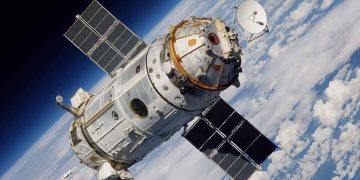
- The International Space Station
- CERN particle physics research
- Global climate monitoring networks
- Pandemic research collaborations
- International genomic databases
Shared expertise accelerates discovery.
Open Communication and Real-Time Collaboration
Researchers can now exchange data, publish findings, and collaborate instantly.
Video conferencing, cloud computing, and collaborative software have transformed scientific communication.
Scientific Diplomacy
Research collaboration can strengthen international relationships.
Scientific diplomacy promotes cooperation even between politically divided nations.
Shared global challenges encourage collaborative problem-solving.
Inequality in Global Research Systems
Despite increased connectivity, disparities remain.
Wealthy countries often dominate:
- Research funding
- Infrastructure access
- Scientific publishing
- Technological resources
Expanding research opportunities in developing regions is essential for creating more equitable scientific systems.
Open Science and Knowledge Accessibility
The traditional scientific publishing system has faced growing criticism.
Many academic journals require expensive subscriptions, limiting access to knowledge.
Open science seeks to make research more transparent and accessible.
Open Access Publishing
Open-access journals allow research findings to be freely available.
This improves:
- Public access to science
- International collaboration
- Educational opportunities
- Research transparency
Open Data Initiatives
Researchers increasingly share datasets publicly.
Open data enables independent verification and secondary analysis.
Transparency improves scientific reliability.
Citizen Science
Technology also enables public participation in research.
Citizen science projects involve volunteers collecting or analyzing data.
Examples include:
- Wildlife monitoring
- Astronomy observations
- Environmental tracking
- Health studies
Public participation strengthens scientific literacy and engagement.
Research Ethics in the Digital Era
Technological advancement introduces complex ethical challenges.
Data Privacy and Surveillance
Research involving personal information must protect privacy.
Healthcare, behavioral, and biometric research often involve highly sensitive data.
Researchers must balance scientific value with ethical responsibility.
AI Bias and Algorithmic Fairness
Machine learning systems may reproduce societal biases if trained on flawed datasets.
Biased research outcomes can reinforce inequality.
Ethical AI development requires transparency and accountability.
Research Integrity and Reproducibility
Scientific credibility depends on reproducibility.
However, some studies cannot be replicated successfully.
Pressure to publish quickly may contribute to weak research practices.
Improving transparency and peer review standards is increasingly important.
Genetic and Biological Ethics
Advances in gene editing and biotechnology raise major ethical questions.
Researchers must consider:
- Human enhancement
- Genetic privacy
- Biological risks
- Consent
- Equity
Ethical governance is essential for responsible innovation.
Quantum Computing and the Next Research Revolution
Quantum computing may transform scientific research dramatically.
Unlike classical computers, quantum systems process information using quantum states.
This could enable breakthroughs in:
- Molecular simulation
- Cryptography
- Optimization problems
- Materials science
- Climate modeling
Accelerating Complex Calculations
Some scientific problems require enormous computational resources.
Quantum computing may solve calculations currently impossible for conventional systems.
Pharmaceutical and Materials Research
Quantum simulation could accelerate:
- Drug development
- Battery technology
- Chemical engineering
- Superconductivity research
Challenges of Quantum Research
Quantum systems remain technically difficult to develop.
Researchers face challenges including:
- Error correction
- Stability
- Hardware scalability
- Energy requirements
Nevertheless, quantum science represents one of the most promising frontiers of future research.
Climate Science and Environmental Research
Climate change has become one of the most urgent scientific priorities.
Environmental research increasingly relies on:
- Satellite monitoring
- Ocean sensors
- AI climate models
- Atmospheric simulations
- Biodiversity databases
Predictive Climate Modeling
Advanced computing allows scientists to model long-term climate patterns.
These models inform policymaking and disaster preparedness.
Biodiversity and Ecosystem Research
Researchers monitor species populations and ecosystem changes using AI-assisted analysis.
Environmental science increasingly combines biology, data analytics, and remote sensing technologies.
Sustainability Research
Scientific innovation supports renewable energy, sustainable agriculture, carbon capture, and green infrastructure.
Environmental research plays a critical role in shaping humanity’s future.
Space Research and Cosmic Exploration
Space science represents another rapidly evolving research frontier.
Modern telescopes, satellites, and exploration missions generate unprecedented data.
Astronomy and Astrophysics
Researchers study:
- Black holes
- Exoplanets
- Dark matter
- Cosmic radiation
- Galaxy formation
AI systems help analyze enormous astronomical datasets.
Mars Exploration and Planetary Science
Robotic missions and future human exploration programs aim to expand knowledge of planetary environments.
Space research contributes to technological innovation and international cooperation.
Commercial Space Research
Private companies increasingly participate in space science.
Commercial investment accelerates launch technologies, satellite systems, and orbital infrastructure.
The relationship between public science and private industry is evolving rapidly.
Funding, Politics, and the Economics of Research
Scientific research depends heavily on financial support.
Government Research Funding
Governments remain major supporters of basic science.
Public investment often funds:
- Universities
- National laboratories
- Space agencies
- Health research
- Energy innovation
Corporate Research and Commercialization
Private companies invest heavily in applied research.
Technology firms, pharmaceutical companies, and industrial laboratories drive innovation.
Commercialization can accelerate practical applications.
However, corporate influence may also shape research priorities.
Competition for Scientific Talent
Countries increasingly compete for researchers, engineers, and innovation leadership.
Education systems and immigration policies influence scientific competitiveness.
Education and the Future Research Workforce
Future researchers will require interdisciplinary skills.
Scientific education increasingly emphasizes:
- Data analysis
- Computational thinking
- AI literacy
- Collaboration
- Communication skills
- Ethical reasoning
Digital Learning and Research Training
Online platforms expand access to scientific education.
Students can collaborate globally and access advanced research tools remotely.
Diversity in Science
Inclusive research environments improve creativity and innovation.
Expanding opportunities for underrepresented groups strengthens scientific systems.
The Future of Scientific Discovery
The future of research may involve unprecedented collaboration between humans and intelligent systems.
Autonomous Research Laboratories
AI-driven laboratories may eventually design and conduct experiments independently.
Researchers could focus more on conceptual interpretation and strategic direction.
Digital Twins and Simulation Science
Scientists increasingly use digital twins to model complex systems such as:
- Human organs
- Cities
- Climate systems
- Industrial infrastructure
Simulation-based research accelerates experimentation.
The Democratization of Research
Affordable technologies may expand scientific participation globally.
Cloud computing, open-access platforms, and AI tools reduce barriers to research.
Knowledge creation may become more decentralized.
Conclusion: Building the Future of Knowledge
Scientific research is entering one of the most transformative periods in human history.
Big data, artificial intelligence, global collaboration, advanced computing, and interdisciplinary innovation are reshaping how discoveries are made.
Research is becoming faster, more connected, and increasingly intelligent.
At the same time, humanity faces enormous challenges that require responsible scientific leadership.
Climate change, pandemics, energy transitions, inequality, and technological disruption demand cooperative research systems guided by ethics and public trust.
The future of science will depend not only on technological capability but also on humanity’s commitment to openness, integrity, inclusion, and collaboration.
Knowledge has always been one of civilization’s greatest resources.
In the digital era, the ability to generate, share, and apply knowledge responsibly may determine the future direction of human progress itself.
The next generation of scientific discovery will not belong solely to isolated laboratories or elite institutions.
It will emerge from interconnected global networks where humans and intelligent systems work together to explore the unknown and solve the defining problems of the twenty-first century.













Discussion about this post