
































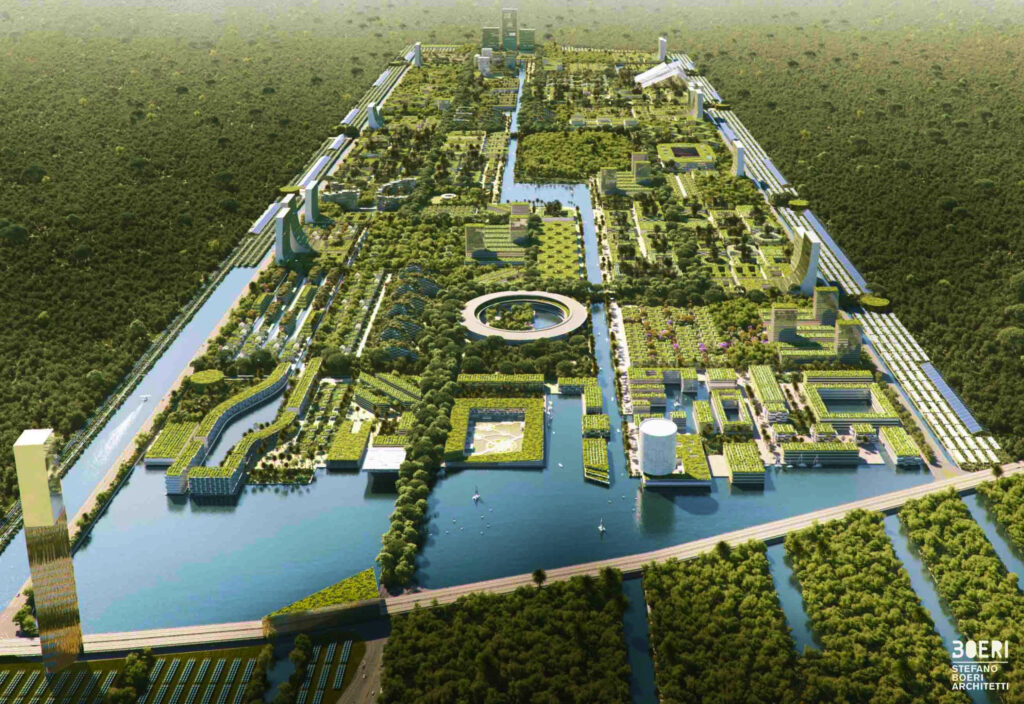
Introduction: Technology at a Turning Point
Human civilization has entered one of the most critical periods in modern history. Climate change, environmental degradation, pollution, resource depletion, biodiversity loss, and rising energy demands are reshaping political systems, economic priorities, and everyday lifestyles across the globe. Industrial progress has dramatically improved living standards over the past two centuries, but it has also created environmental consequences that can no longer be ignored.
Cities continue expanding, populations continue growing, and global consumption continues accelerating. Fossil fuels still dominate many economies, while oceans fill with plastic waste, forests disappear, and atmospheric carbon levels rise. The challenge facing humanity is no longer simply how to advance technologically, but how to advance sustainably.
This global challenge has fueled the rise of green technology — a broad category of innovations designed to reduce environmental harm, improve resource efficiency, and support long-term ecological balance. Green technology, often called “clean technology” or “sustainable technology,” includes renewable energy systems, electric transportation, smart agriculture, energy-efficient architecture, recycling technologies, water purification systems, carbon reduction strategies, and environmentally responsible manufacturing methods.
Unlike older industrial models focused primarily on economic growth, green technology attempts to align innovation with environmental responsibility. Its goal is not to stop modernization, but to redesign modernization itself.
The significance of green technology extends beyond environmental protection. It is transforming industries, creating new economic opportunities, influencing geopolitics, changing consumer behavior, and reshaping how people imagine the future. Renewable energy markets are growing rapidly. Electric vehicles are redefining transportation. Smart cities are integrating sustainability into urban planning. Artificial intelligence is optimizing energy systems. Businesses increasingly market sustainability as both an ethical responsibility and a competitive advantage.
However, the transition toward greener societies is complex. Green technologies require massive infrastructure investments, political cooperation, scientific research, and global coordination. There are also difficult questions involving economic inequality, energy access, mining practices, electronic waste, and whether technology alone can solve environmental crises created by consumption-driven systems.
The future of green technology is therefore not only about engineering solutions. It is about redefining humanity’s relationship with nature, resources, industry, and progress itself.
This article explores the rise of green technology, the innovations shaping sustainable civilization, the economic and social implications involved, and the future of environmental technology in a rapidly changing world.
The Origins of the Green Technology Movement
From Industrial Growth to Environmental Awareness
For much of modern history, industrial progress prioritized expansion, productivity, and economic output with relatively little concern for long-term environmental consequences.
The Industrial Revolution transformed societies through coal-powered factories, mechanized production, mass transportation, and large-scale urbanization. While these developments dramatically increased wealth and technological capability, they also accelerated pollution, deforestation, and fossil fuel dependence.
By the mid-20th century, environmental damage became increasingly visible:
- Air pollution in major cities
- Contaminated rivers and oceans
- Deforestation
- Wildlife decline
- Oil spills
- Rising greenhouse gas emissions
Scientific research began linking industrial activity to climate change and ecological instability.
Environmental movements emerged globally, encouraging governments and industries to reconsider unsustainable development models.
This growing awareness laid the foundation for green technology innovation.
Instead of viewing environmental protection as separate from economic progress, green technology proposed that sustainability itself could drive future growth.
Renewable Energy Revolution
Moving Beyond Fossil Fuels
One of the most important areas of green technology is renewable energy.
Traditional energy systems depend heavily on fossil fuels such as coal, oil, and natural gas. While these fuels powered industrial development for generations, they also produce large amounts of carbon emissions contributing to climate change.
Renewable energy technologies aim to replace fossil fuel dependence with cleaner energy sources.
Major renewable technologies include:
- Solar power
- Wind energy
- Hydroelectric systems
- Geothermal energy
- Tidal power
- Biomass energy
Among these, solar and wind power have experienced especially rapid growth due to falling production costs and improved efficiency.
Solar panels convert sunlight into electricity without producing direct emissions. Wind turbines generate power through moving air currents. Both technologies reduce carbon footprints significantly compared to traditional energy systems.
Advances in battery storage technology are also critical because renewable energy production can fluctuate depending on weather conditions.
The renewable energy transition represents more than environmental policy — it is reshaping global economics and geopolitics.
Countries investing heavily in renewable infrastructure may become future energy leaders.
The Rise of Electric Transportation
Reinventing Mobility
Transportation is one of the largest sources of greenhouse gas emissions worldwide.
Green technology is transforming transportation systems through electric mobility innovations.
Electric vehicles (EVs) are becoming increasingly mainstream as battery technology improves and charging infrastructure expands.
Unlike traditional gasoline-powered vehicles, EVs produce no direct tailpipe emissions.
Major advantages of electric transportation include:
- Reduced air pollution
- Lower carbon emissions
- Improved energy efficiency
- Reduced dependence on fossil fuels
- Lower long-term operating costs
Governments in many countries now encourage EV adoption through subsidies, tax incentives, and infrastructure investment.
Public transportation systems are also becoming greener through electric buses, high-speed rail systems, and sustainable urban mobility planning.
Future transportation may include:
- Autonomous electric vehicles
- Hydrogen-powered systems
- Smart traffic optimization
- Shared mobility networks
- Solar-powered transportation infrastructure
However, electric transportation also raises environmental concerns regarding lithium mining, battery disposal, and energy sourcing.
Green technology solutions must therefore consider full lifecycle sustainability rather than emissions alone.
Smart Cities and Sustainable Urban Design
Building Cities for the Future
Urban populations continue growing rapidly. Modern cities consume enormous amounts of energy while generating significant waste and pollution.
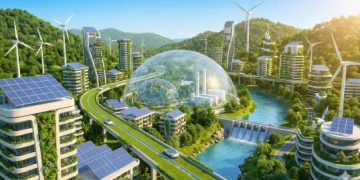
Green technology is increasingly integrated into urban planning through the concept of smart cities.
Smart cities use digital systems, renewable energy, data analysis, and sustainable infrastructure to improve efficiency and environmental performance.
Key smart city technologies include:
- Smart energy grids
- Intelligent traffic management
- Energy-efficient buildings
- Public transportation optimization
- Waste reduction systems
- Water conservation technologies
- Urban green spaces
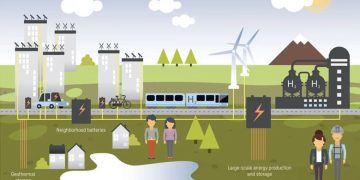
Smart grids allow cities to monitor and optimize electricity usage dynamically. Sensors collect real-time data to improve resource management and reduce waste.
Green architecture also plays a major role in sustainable urban development. Modern eco-friendly buildings emphasize:
- Natural lighting
- Energy efficiency
- Sustainable materials
- Water recycling systems
- Rooftop gardens
- Passive cooling systems
Future cities may increasingly prioritize walkability, renewable energy integration, and low-carbon infrastructure.
Urban sustainability will likely become one of the defining challenges of the 21st century.
Green Technology in Agriculture
Feeding the World Sustainably
Agriculture faces enormous pressure from population growth, climate change, soil degradation, and water scarcity.
Traditional industrial farming methods often depend heavily on pesticides, fertilizers, and resource-intensive systems.
Green agricultural technologies aim to improve food production while reducing environmental impact.
Innovations include:
- Precision agriculture
- Vertical farming
- Hydroponic systems
- AI-driven crop monitoring
- Sustainable irrigation systems
- Lab-grown foods
- Regenerative farming techniques
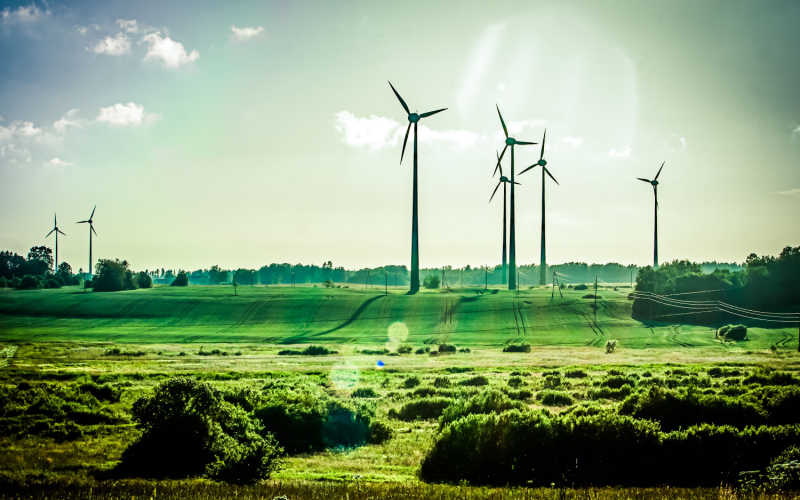
Precision agriculture uses sensors, drones, and data analysis to optimize water usage, fertilizer application, and crop management.
Vertical farming allows crops to grow indoors in controlled environments using less land and water than traditional agriculture.
Alternative protein technologies, including plant-based and lab-grown meat, aim to reduce the environmental impact of livestock production.
Sustainable agriculture will become increasingly important as climate instability affects global food systems.
The Circular Economy
Designing Waste Out of the System
Traditional industrial systems often follow a linear model:
- Extract resources
- Manufacture products
- Consume products
- Discard waste
This model creates enormous environmental strain.
Green technology increasingly supports the concept of a circular economy, where materials are reused, recycled, repaired, and repurposed continuously.
Circular economy strategies include:
- Product recycling
- Sustainable packaging
- Modular product design
- Electronic waste recovery
- Resource-sharing systems
- Repair-focused manufacturing
The goal is reducing waste while extending product lifecycles.
Technology companies are beginning to face pressure to design longer-lasting devices and improve recyclability.
The circular economy represents a major shift from disposable consumer culture toward sustainability-centered production systems.
Artificial Intelligence and Environmental Optimization
Smart Systems for a Greener Planet
Artificial intelligence is becoming increasingly important in green technology development.
AI systems can analyze large datasets and optimize complex environmental systems more efficiently than traditional methods.
Applications include:
- Energy optimization
- Climate modeling
- Smart grid management
- Traffic flow reduction
- Agricultural efficiency
- Water management
- Pollution monitoring
AI can help reduce waste by predicting energy demand and improving resource distribution.
Smart systems may eventually coordinate entire urban infrastructures to maximize sustainability automatically.
However, AI itself requires substantial computational power and energy consumption, especially large-scale machine learning systems.
The environmental impact of digital infrastructure is becoming an important consideration within green technology discussions.
Green Consumer Culture
Sustainability as a Lifestyle
Environmental awareness increasingly influences consumer behavior.
Many consumers now consider sustainability when purchasing:
- Clothing
- Electronics
- Food
- Transportation
- Home products
- Travel services
Businesses increasingly market environmentally responsible products and practices.
Green consumer trends include:
- Reusable products
- Ethical sourcing
- Minimalist lifestyles
- Sustainable fashion
- Eco-friendly packaging
- Local production systems
Younger generations especially tend to value environmental responsibility more strongly than previous generations.
Social media also plays a major role in spreading sustainability awareness and environmental activism.
However, critics warn against “greenwashing,” where companies exaggerate environmental claims primarily for marketing purposes.
True sustainability requires systemic change rather than superficial branding.
The Economic Transformation of Green Industries
Sustainability as Economic Opportunity
Green technology is not only an environmental movement — it is also becoming one of the largest economic transformations of the modern era.
Renewable energy, electric vehicles, battery production, sustainable infrastructure, and environmental engineering industries are growing rapidly.
This creates:
- New jobs
- Investment opportunities
- Technological competition
- Industrial innovation
- International market shifts
Countries leading green technology development may gain major economic advantages in future global markets.
At the same time, industries dependent on fossil fuels face disruption and transition challenges.
The green economy may redefine global power structures similarly to how oil reshaped geopolitics during the 20th century.
Challenges and Criticisms of Green Technology
Can Technology Alone Solve Environmental Crisis?
While green technology offers enormous promise, it is not without limitations and criticism.
Several major challenges remain:
Resource Extraction
Many green technologies depend on rare minerals and metals such as lithium, cobalt, and nickel.
Mining these materials can create environmental and ethical concerns.
Infrastructure Costs
Large-scale renewable transitions require enormous investment in infrastructure, energy grids, and manufacturing systems.
Energy Storage Limitations
Renewable energy systems still face challenges involving energy storage and reliability.
Consumption Culture
Some critics argue that environmental problems stem not only from energy sources but also from excessive consumption and growth-driven economic systems.
Technology alone may not solve sustainability problems if consumer behavior remains unsustainable.
Global Inequality
Wealthier nations often adopt green technologies more easily than developing countries with limited resources.
Ensuring equitable access to sustainable innovation remains a major challenge.
Climate Change and Global Responsibility
The Race Against Time
Green technology development is deeply connected to climate change mitigation efforts.
Scientists warn that reducing greenhouse gas emissions rapidly is essential to avoid severe environmental consequences.
Green technologies play a central role in:
- Carbon reduction
- Renewable transition
- Sustainable adaptation
- Climate resilience
International cooperation will likely determine the effectiveness of global sustainability efforts.
Climate change is not only an environmental issue but also a political, economic, and humanitarian challenge.
The Future of Green Technology
Toward a Sustainable Civilization
The future of green technology may involve increasingly integrated systems combining:
- Renewable energy
- AI optimization
- Smart infrastructure
- Sustainable agriculture
- Circular manufacturing
- Carbon capture technologies
- Green transportation
Future innovations could include:
- Advanced fusion energy
- Carbon-neutral cities
- Self-sustaining buildings
- Fully recyclable electronics
- Climate-adaptive infrastructure
The next phase of technological progress may be defined not by how much humanity can produce, but by how intelligently and sustainably it can operate.
Conclusion: Redefining Progress
Green technology represents one of humanity’s most important attempts to reconcile technological advancement with environmental responsibility.
The industrial systems that created modern prosperity also contributed to ecological instability. The challenge now is creating a future where innovation supports both human development and planetary sustainability.
Renewable energy, smart infrastructure, sustainable agriculture, AI optimization, and circular economies all represent steps toward this goal.
Yet green technology alone cannot solve environmental crisis without broader cultural, political, and economic change. Sustainability requires not only smarter machines, but also smarter values.
The future of civilization may depend on humanity’s ability to redefine progress itself — not as endless consumption, but as long-term balance between technological advancement, ecological responsibility, and human well-being.













Discussion about this post