






















Introduction
Technology is often associated with dramatic inventions and futuristic imagery. People imagine humanoid robots walking through cities, self-driving vehicles replacing traditional transportation, or artificial intelligence controlling vast digital systems. However, the most important technological revolutions are not always the loudest or most visible. In many cases, the technologies that transform civilization most deeply are the ones that gradually integrate into daily life until they become nearly invisible.
Modern society is now surrounded by technologies that operate quietly in the background. Cloud computing powers global communication networks. Artificial intelligence recommends entertainment, manages logistics, filters spam, and supports healthcare systems. Sensors embedded in infrastructure monitor traffic, electricity usage, and environmental conditions. Smartphones function as portable command centers for work, finance, navigation, education, and social interaction.
Most people rarely stop to think about how dramatically human life has changed in only two decades.
A person waking up in 2005 experienced the world very differently from someone waking up today. Ordering food required phone calls. Maps were often printed on paper. Watching movies depended heavily on television schedules or physical media. Long-distance communication was slower and less immediate. Remote work was uncommon. Digital payments were limited. Artificial intelligence was mostly experimental.
Today, many of those systems have been replaced or transformed by interconnected digital ecosystems operating continuously through invisible technological infrastructure.
The modern technology revolution is unique because it is not centered around a single machine or invention. Instead, it involves the integration of multiple technologies into every aspect of life. Artificial intelligence, cloud computing, mobile networks, automation, big data, wearable devices, and smart systems now function together as part of a highly connected global environment.
This transformation has improved convenience, efficiency, communication, and productivity on an unprecedented scale. Yet it has also introduced serious concerns involving privacy, mental health, surveillance, automation, social inequality, and dependence on digital systems.
Technology today is no longer simply a tool humans use occasionally. It has become an environment humans live inside.
Understanding how this invisible revolution developed — and where it may lead in the future — is essential for understanding the direction of modern civilization itself.
The Shift From Mechanical Technology to Digital Ecosystems
Earlier technological revolutions were often mechanical and physical. The Industrial Revolution introduced factories, steam engines, railroads, and mass manufacturing. These inventions changed transportation, production, and economic systems in visible ways.
The digital revolution operates differently.
Modern technologies are increasingly based on information rather than machinery alone. Data has become one of the most valuable resources in the global economy. Information moves instantly across continents through networks that most users never physically see.
The internet became the foundation for this transformation.
Initially, the internet functioned primarily as a communication tool connecting universities, governments, and research institutions. Over time, it evolved into the infrastructure supporting commerce, entertainment, finance, education, and social interaction.
The arrival of smartphones accelerated this transformation dramatically.
Instead of accessing technology only through desktop computers, people began carrying internet-connected devices everywhere. Smartphones combined communication, photography, navigation, entertainment, banking, and information access into a single object small enough to fit inside a pocket.
This changed human behavior permanently.
People no longer needed to plan routes carefully before traveling because GPS systems provided real-time navigation. Social interactions became continuous through messaging platforms and social media. Shopping shifted toward digital marketplaces. Photography became constant rather than occasional.
Technology stopped being a destination people visited occasionally and became a continuous companion.
At the same time, cloud computing enabled digital services to operate globally at enormous scale. Companies no longer needed to store data only on local devices. Information became accessible across multiple devices and locations instantly.
Streaming services replaced physical media. Remote collaboration became possible across continents. Businesses adopted digital workflows capable of operating twenty-four hours a day.
The invisible technological infrastructure supporting modern life grew larger and more complex each year.
Artificial Intelligence in Daily Life
Artificial intelligence is often portrayed as futuristic superintelligence, but most AI already exists quietly inside ordinary routines.
Recommendation systems powered by machine learning influence what people watch, read, purchase, and listen to online. Search engines predict user intent. Voice assistants respond to spoken commands. Translation systems convert languages in real time.
Many individuals interact with AI dozens or even hundreds of times each day without consciously noticing it.
In transportation, AI helps optimize traffic flow and ride-sharing services. In banking, algorithms monitor transactions for fraud detection. In healthcare, machine learning systems assist with medical imaging analysis and diagnostics.
Retail companies use predictive analytics to forecast consumer behavior and manage inventory. Social media platforms use AI to personalize feeds and advertising.
Artificial intelligence has become deeply integrated into digital infrastructure because it excels at analyzing enormous amounts of data quickly.
The growth of generative AI represents another major shift.
Systems capable of generating text, images, music, code, and video are transforming creative industries and professional workflows. Writers use AI for brainstorming and editing. Designers generate concept art rapidly. Software developers automate portions of coding.
This raises difficult questions regarding creativity, employment, and originality.
Will AI replace human workers in certain industries?
Possibly.
But history suggests technology often transforms work more than it eliminates work entirely.
The printing press changed writing. Photography changed painting. Digital editing changed filmmaking. The internet changed journalism.
Similarly, AI may ultimately reshape human creativity rather than destroy it.
The larger issue may involve adaptation speed.
Societies often struggle when technological change occurs faster than educational systems, labor markets, and political institutions can respond.
The Psychological Impact of Constant Connectivity
One of the least discussed aspects of modern technology involves its psychological effects.
Humans evolved in environments vastly different from the digitally saturated world of today. Continuous notifications, social media feeds, algorithmic recommendations, and instant communication systems compete constantly for human attention.
The attention economy has become one of the defining features of modern technology companies.
Platforms are designed to maximize engagement because user attention generates advertising revenue and data collection opportunities.
As a result, many digital systems intentionally encourage habitual usage patterns.
Infinite scrolling, autoplay video, push notifications, and personalized content recommendations create environments optimized to keep users engaged for extended periods.
This has produced both benefits and problems.
Digital communication allows families and friends to remain connected across large distances. Online communities provide support, education, and collaboration opportunities. Information access has become democratized on an unprecedented scale.
However, excessive digital consumption has also been linked to anxiety, reduced attention spans, sleep disruption, and social comparison pressures.
Young generations are growing up inside digital ecosystems that shape identity formation, relationships, and communication styles.
The psychological relationship between humans and technology may become one of the most important social questions of the twenty-first century.
Future technological development may increasingly focus not only on efficiency but also on digital well-being.
Automation and the Changing Nature of Work
Technology is transforming employment across nearly every major industry.
Automation began with manufacturing but is now expanding into logistics, transportation, administration, finance, retail, and even creative professions.
Robotics systems manage warehouse operations. AI algorithms analyze financial data. Automated customer service systems handle routine interactions.
Remote work technologies accelerated dramatically during the global pandemic era, permanently changing workplace culture.
Many organizations discovered that large portions of their workforce could operate effectively outside traditional office environments.
Cloud computing, video conferencing platforms, collaborative software, and digital project management systems made remote work possible at global scale.
This transformation produced major social consequences.
Some workers gained greater flexibility and improved work-life balance. Others experienced isolation, burnout, and blurred boundaries between personal and professional life.
Technology also intensified globalization.
A company in one country can now hire digital workers from another continent relatively easily. This creates economic opportunity but also increases global labor competition.
The future workforce may depend heavily on adaptability.
Routine tasks are increasingly vulnerable to automation, while skills involving creativity, emotional intelligence, leadership, and interdisciplinary thinking may become more valuable.
Education systems worldwide face pressure to evolve accordingly.
Traditional models focused heavily on memorization may become less relevant in economies where information is instantly accessible through digital tools.
Learning how to think may become more important than learning how to recall information.

Smart Cities and Urban Technology
Cities are becoming increasingly intelligent through technological integration.
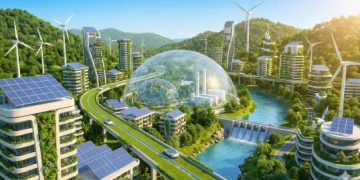
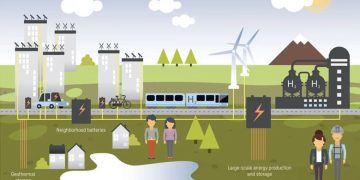
Traffic systems now analyze vehicle movement in real time. Sensors monitor air quality and energy consumption. Smart grids optimize electricity distribution. Public transportation systems use predictive analytics to improve efficiency.
Urban infrastructure is gradually transforming into interconnected digital ecosystems.
Smart city technology offers major potential benefits.
Traffic congestion may decrease through AI-powered transportation management. Energy systems may become more efficient and sustainable. Emergency services may respond faster using predictive analytics and real-time geographic data.
Environmental monitoring systems can identify pollution patterns and support climate adaptation strategies.
However, smart cities also introduce major ethical concerns.
Highly connected urban environments generate enormous quantities of data regarding citizen movement, behavior, and communication.
Who controls this data?
How is it protected?
Can surveillance systems threaten civil liberties?
Balancing efficiency with privacy will become increasingly important as urban technology expands.
The cities of the future may become among the most technologically advanced environments humans have ever created.
Whether they become empowering or oppressive may depend largely on governance and regulation.
Technology and Human Identity
Technology increasingly influences not only how humans live but also how humans define themselves.
Social media platforms shape public identity and self-presentation. Digital communication influences language and relationships. Online environments create new forms of community and culture.
Virtual reality and augmented reality technologies may eventually blur distinctions between physical and digital experience even further.
Wearable devices monitor biological activity continuously. Brain-computer interface research explores direct connections between human nervous systems and machines.
These developments raise philosophical questions humanity has never fully confronted before.
What happens when technology becomes deeply integrated into human cognition and perception?
What does privacy mean in environments where biometric information is constantly collected?
Can human individuality remain stable in algorithmically personalized digital environments?
Technology is no longer merely external infrastructure.
It increasingly shapes consciousness, memory, attention, communication, and identity itself.
Environmental Consequences of Technology
Modern technology creates both environmental solutions and environmental challenges.
Digital systems improve energy management, scientific modeling, and renewable energy research. Smart agriculture systems reduce waste and improve efficiency.
However, technological infrastructure also consumes enormous amounts of electricity and raw materials.
Data centers supporting cloud computing require massive cooling systems and continuous energy supply. Cryptocurrency mining operations consume extraordinary computational power. Electronic waste continues growing globally as devices become obsolete more rapidly.
Sustainable technology development may become one of the defining priorities of future innovation.
Technology companies increasingly invest in renewable energy, efficient chip design, recyclable materials, and carbon reduction strategies.
The future relationship between technology and environmental sustainability will likely influence global climate outcomes significantly.
The Future of the Invisible Revolution
The next phase of technological evolution may become even more immersive and interconnected.
Artificial intelligence may become more deeply integrated into daily decision-making. Autonomous systems may transform transportation and logistics. Augmented reality could redefine digital interaction. Quantum computing may eventually solve problems beyond the capability of classical computers.
Technology may continue moving away from visible standalone devices toward ambient computing environments operating quietly in the background.
Homes, workplaces, vehicles, and cities may increasingly respond intelligently to human behavior automatically.
This could create extraordinary convenience and efficiency.
It could also create unprecedented dependence on digital infrastructure.
The challenge for humanity will not simply involve building more advanced technology.
The larger challenge will involve deciding how technology should shape society, ethics, labor, privacy, relationships, and human experience itself.
Conclusion
The modern technology revolution is unlike any transformation in human history because it operates continuously, globally, and often invisibly.
Technology is no longer confined to laboratories, factories, or office buildings. It surrounds modern life completely, influencing communication, healthcare, transportation, work, entertainment, education, and identity.
Many of the most important systems shaping civilization today are digital infrastructures most people rarely notice directly.
Artificial intelligence, cloud computing, automation, smart systems, and global connectivity have fundamentally reshaped human behavior within only a few decades.
The benefits are extraordinary.
Communication has become instantaneous. Information access has expanded dramatically. Scientific progress continues accelerating. Healthcare, logistics, and productivity have improved through intelligent systems.
Yet technological progress also introduces difficult questions regarding privacy, mental health, inequality, surveillance, employment, and environmental sustainability.
The future of technology will not depend solely on engineers or corporations.
It will depend on how societies choose to integrate innovation into human life responsibly.
Technology itself is neither entirely positive nor entirely dangerous.
Its impact depends on the values guiding its development and use.
Humanity now stands inside an invisible technological revolution still unfolding in real time.
The decisions made during the coming decades may shape not only the future of machines — but the future of civilization itself.









Discussion about this post