

































Introduction: The End of the Gasoline Era?
For more than a century, gasoline-powered vehicles defined modern civilization. Cars transformed cities, economies, lifestyles, tourism, trade, and even cultural identity. Roads expanded across nations, suburbs grew around automobile ownership, and oil became one of the most powerful economic and political forces in the world. The internal combustion engine was not just a technological invention — it became the foundation of industrial modernity itself.
Today, however, transportation is entering a period of historic transformation.
Electric vehicles (EVs) are rapidly emerging as one of the most important green technologies of the 21st century. Once considered slow, impractical, and expensive alternatives to gasoline cars, EVs are now becoming mainstream products adopted by governments, businesses, and consumers around the world. Major automotive companies are investing billions into electric mobility, cities are building charging infrastructure, and many countries are preparing to phase out gasoline vehicle sales entirely within the coming decades.
The rise of electric vehicles is driven by several global pressures at once. Climate change has intensified demands for lower carbon emissions. Urban air pollution threatens public health in many cities. Fossil fuel dependence creates geopolitical and economic instability. Meanwhile, advances in battery technology, software systems, and renewable energy have made electric mobility increasingly practical and affordable.
Electric vehicles represent more than a transportation upgrade. They are part of a larger shift toward sustainable technology systems designed to reduce environmental harm while improving efficiency and energy independence. EVs connect directly to renewable energy, smart cities, autonomous driving systems, and the broader transformation of digital lifestyles.
At the same time, the electric vehicle revolution raises major challenges and controversies. Battery production depends on mining rare materials such as lithium and cobalt. Charging infrastructure remains uneven globally. Electrical grids require modernization. Questions also remain regarding affordability, recycling, and whether replacing billions of gasoline cars with electric ones alone can truly solve transportation-related environmental problems.
The transition toward electric transportation therefore represents not only a technological evolution but also a cultural and economic redefinition of mobility itself.
This article explores the history of electric vehicles, the technologies driving the EV revolution, the environmental and economic implications involved, the transformation of urban transportation systems, and the future of sustainable mobility in a rapidly changing world.
The Early History of Electric Vehicles
A Technology Older Than Many Realize
Many people assume electric vehicles are a recent invention, but electric transportation actually predates modern gasoline cars.
In the late 19th century, electric cars were already competing with steam-powered and gasoline-powered vehicles. Early EVs were quiet, relatively simple to operate, and popular in some urban environments.
However, several factors caused gasoline vehicles to dominate the 20th century:
- Cheap oil availability
- Longer driving range
- Faster refueling
- Mass production systems
- Expanding highway infrastructure
The invention of efficient gasoline engines and large-scale manufacturing methods made internal combustion vehicles economically dominant for decades.
Electric vehicles remained limited to niche markets and experimental projects throughout most of the 20th century.
The modern EV revival began only when environmental concerns, battery innovation, and digital technologies converged during the early 21st century.
Climate Change and the Push for Clean Transportation
Why Transportation Became a Global Environmental Issue
Transportation is one of the largest contributors to greenhouse gas emissions worldwide.
Gasoline and diesel vehicles release carbon dioxide, nitrogen oxides, and particulate pollution into the atmosphere. These emissions contribute to:
- Climate change
- Urban air pollution
- Respiratory illnesses
- Environmental degradation
As climate science became increasingly urgent, governments and industries began searching for cleaner transportation alternatives.
Electric vehicles produce no direct tailpipe emissions during operation. When powered by renewable energy, they can significantly reduce transportation-related carbon footprints.
This environmental advantage became a major driver of EV development.
Cities struggling with severe air pollution especially began promoting electric buses, taxis, and public transportation systems.
The transportation sector became central to global sustainability strategies.
How Electric Vehicles Work
The Basics of Electric Mobility
Unlike traditional vehicles powered by internal combustion engines, electric vehicles use electric motors powered by rechargeable battery systems.
A typical EV includes:
- Battery pack
- Electric motor
- Power electronics
- Charging system
- Regenerative braking technology
Electric motors convert electrical energy into mechanical movement with far fewer moving parts than gasoline engines.
This provides several advantages:
- Higher energy efficiency
- Reduced maintenance needs
- Quieter operation
- Faster torque delivery
- Lower operating costs
Regenerative braking systems recover energy during braking and feed it back into the battery, improving efficiency further.
Most modern EVs use lithium-ion batteries because they offer high energy density and relatively long lifespans.
Battery technology is one of the most important factors shaping the future of electric transportation.
Battery Innovation and the EV Boom
The Heart of the Electric Revolution
Battery development is central to the success of electric vehicles.
Earlier EVs faced major limitations involving:
- Short driving range
- Slow charging
- High battery costs
- Limited durability
Advances in lithium-ion battery technology transformed the industry dramatically.
Modern batteries offer:
- Longer ranges
- Faster charging
- Improved safety
- Greater energy storage
- Lower production costs
Battery prices have declined significantly over the past decade, making EVs increasingly affordable.
Researchers are also developing next-generation battery technologies including:
- Solid-state batteries
- Sodium-ion batteries
- Graphene-based systems
- Ultra-fast charging technologies
Future breakthroughs may dramatically improve EV performance and accessibility.
Battery innovation also influences renewable energy storage, making electric transportation deeply connected to broader green energy systems.
Charging Infrastructure and the Energy Transition
Building the Electric Ecosystem
One of the biggest challenges facing EV adoption is charging infrastructure.
Gasoline systems benefit from more than a century of infrastructure development. Electric transportation requires an entirely new network of charging stations, grid systems, and energy coordination.
Charging systems vary widely, including:
- Home charging stations
- Public charging networks
- Fast-charging stations
- Wireless charging concepts
Fast charging technology continues improving, reducing charging times significantly.
Many governments and private companies are investing heavily in charging infrastructure to support mass EV adoption.
Future smart charging systems may coordinate charging schedules dynamically to reduce grid pressure and maximize renewable energy use.
The success of electric transportation depends not only on vehicles themselves but also on the supporting energy ecosystem.
Electric Vehicles and Renewable Energy
Connecting Mobility to Sustainability
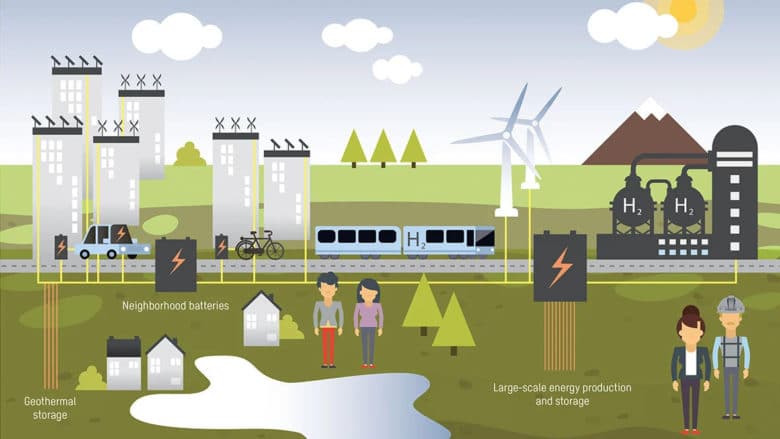
Electric vehicles become most environmentally effective when powered by renewable energy sources such as solar, wind, or hydroelectric systems.
If EVs rely heavily on fossil fuel-powered electrical grids, their environmental advantages decrease.
The long-term vision involves integrating EVs into broader renewable energy systems.
For example:
- Solar-powered charging stations
- Home solar + EV charging systems
- Smart grid coordination
- Vehicle-to-grid energy sharing
Some future EVs may even function as mobile energy storage units capable of supplying electricity back to homes or electrical grids during emergencies.
Electric mobility and renewable energy are increasingly interconnected parts of the green technology transition.
The Transformation of the Automotive Industry
Reinventing Manufacturing and Competition
The rise of EVs is transforming the global automotive industry.
Traditional automakers built expertise around internal combustion engines for decades. Electric vehicles require different engineering priorities involving:
- Software systems
- Battery management
- Electronics integration
- Digital interfaces
This shift has opened opportunities for new companies while forcing established manufacturers to adapt rapidly.
The automotive industry is increasingly becoming part of the technology sector rather than purely mechanical manufacturing.
Modern EVs often include advanced digital features such as:
- Autonomous driving assistance
- AI-powered systems
- Over-the-air software updates
- Smart connectivity
- Integrated navigation optimization
Cars are evolving into intelligent digital platforms as much as transportation machines.
Autonomous Driving and Smart Mobility
The Future Beyond Human Drivers
Electric vehicles are closely linked to autonomous driving technologies.
Self-driving systems use AI, sensors, cameras, radar, and machine learning to navigate roads with minimal human input.
Many experts believe autonomous EVs could eventually transform transportation systems entirely.
Potential benefits include:
- Reduced traffic accidents
- Improved traffic efficiency
- Lower transportation costs
- Increased accessibility
- Reduced parking needs
Future mobility systems may rely more heavily on shared autonomous electric fleets rather than individually owned vehicles.
However, autonomous systems still face major technical, ethical, and regulatory challenges.
Questions involving safety, liability, cybersecurity, and employment disruption remain unresolved.

Urban Design and the Electric City
Rethinking Transportation Infrastructure
Electric transportation is influencing urban planning and city development.
Traditional cities were heavily shaped by gasoline vehicle systems involving highways, gas stations, parking lots, and traffic-heavy infrastructure.
Electric mobility encourages different urban priorities such as:
- Cleaner public transportation
- Low-emission zones
- Bike-friendly infrastructure
- Smart traffic systems
- Shared mobility services
Electric buses and trains are becoming increasingly important in sustainable city planning.
Some urban planners envision future cities with reduced private car ownership and more integrated multimodal transportation systems.
The rise of EVs may therefore reshape not only transportation technology but also the structure of cities themselves.
Environmental Challenges of Electric Vehicles
Are EVs Truly Green?
Although EVs reduce tailpipe emissions, they are not entirely free from environmental concerns.
Battery production requires mining materials such as:
- Lithium
- Cobalt
- Nickel
- Rare earth metals
Mining operations may create ecological damage, water usage problems, and labor concerns.
Battery manufacturing also requires substantial energy.
Additionally, battery disposal and recycling systems remain developing industries.
Critics argue that simply replacing gasoline cars with electric ones may not fully solve transportation sustainability issues if societies continue prioritizing car-dependent infrastructure and high consumption levels.
True sustainability may require broader shifts toward:
- Public transportation
- Walkable cities
- Reduced consumption
- Shared mobility systems
Electric vehicles are an important solution, but not necessarily a complete one.
Economic Impact of the EV Revolution
Jobs, Markets, and Industrial Competition
The EV transition is creating major economic changes globally.
New industries are emerging around:
- Battery manufacturing
- Charging infrastructure
- Renewable energy integration
- Software systems
- Recycling technologies
Countries investing heavily in EV industries may gain strategic economic advantages.
At the same time, fossil fuel industries and traditional automotive supply chains face disruption.
Workers in gasoline engine manufacturing sectors may require retraining for new technological environments.
The electric vehicle revolution therefore involves both opportunity and economic transition challenges.
Consumer Culture and Electric Identity
Sustainability as Lifestyle
Electric vehicles increasingly represent more than transportation choices — they symbolize cultural values and lifestyle identity.
Many consumers associate EV ownership with:
- Environmental awareness
- Technological progress
- Innovation
- Modernity
- Future-oriented thinking
EV design often emphasizes minimalist digital aesthetics and software integration rather than traditional automotive engineering culture.
Social media and technology culture have helped position electric mobility as part of broader sustainable lifestyle movements.
The car itself is evolving from a mechanical product into a connected digital ecosystem.
Developing Nations and Transportation Equity
Will the EV Future Be Global?
One major question surrounding electric transportation is whether the transition will occur equitably worldwide.
Wealthier countries often adopt EV technologies more rapidly because of stronger infrastructure and higher consumer purchasing power.
Developing regions may face challenges involving:
- High vehicle costs
- Limited charging infrastructure
- Weak electrical grids
- Energy access limitations
Ensuring fair global access to sustainable transportation will likely become an important international issue.
Without equitable planning, green technology transitions could widen existing economic inequalities.
The Future of Electric Mobility
Beyond the Traditional Car
The future of electric transportation may extend far beyond passenger cars.
Emerging technologies include:
- Electric aircraft
- Electric shipping systems
- Autonomous delivery robots
- High-speed electric rail
- Urban air mobility systems
- Hydrogen-electric hybrids
Transportation systems may become increasingly interconnected through AI coordination, smart infrastructure, and renewable energy integration.
Mobility itself may shift from ownership-based models toward service-based ecosystems where transportation is accessed on demand.
Conclusion: Reinventing Human Movement
The rise of electric vehicles represents one of the most important technological transformations of the modern era.
For more than a century, gasoline-powered transportation shaped economies, cities, geopolitics, and lifestyles. Today, electric mobility offers an alternative path focused on sustainability, efficiency, and cleaner energy systems.
Electric vehicles reduce emissions, improve energy efficiency, and connect directly to renewable energy futures. Advances in battery technology, software integration, and charging infrastructure continue accelerating adoption worldwide.
Yet the EV revolution also raises complex questions involving mining, infrastructure, inequality, consumption culture, and long-term sustainability.
Ultimately, the significance of electric vehicles extends beyond transportation itself. They symbolize humanity’s broader attempt to redesign industrial civilization for an era increasingly defined by environmental responsibility and technological transformation.
The future of mobility may not simply involve replacing gasoline with electricity, but reimagining how human societies move, connect, and live sustainably in the decades ahead.













Discussion about this post