























Introduction: Living Beyond Earth
For thousands of years, humans evolved under the conditions of Earth. Gravity shaped the human body, atmosphere protected life from radiation, and natural ecosystems provided stable environments for survival. Every aspect of human biology and psychology developed within the boundaries of Earth’s environment.
Space stations fundamentally challenge those conditions.
Living aboard a space station means existing in an artificial environment surrounded by vacuum, radiation, extreme temperatures, and isolation. Unlike short space missions, long-duration orbital habitation forces humans to adapt physically, mentally, and socially to a completely unfamiliar world.
Modern space stations are not simply machines orbiting Earth. They are fully functioning ecosystems designed to support human life in one of the harshest environments imaginable.
Astronauts living aboard space stations must manage:
- Physical health
- Psychological stress
- Scientific work
- Technical maintenance
- International cooperation
- Daily survival routines
Every action — sleeping, eating, exercising, working, and communicating — becomes different in microgravity.
At the same time, life aboard a space station offers extraordinary perspectives on humanity, Earth, and the future of civilization. Astronauts often describe orbital life as transformative, changing their understanding of national borders, environmental fragility, and human interconnectedness.
As humanity prepares for long-duration missions to the Moon and Mars, understanding life aboard space stations becomes increasingly important. Orbital habitats serve as testing grounds for future space colonization and provide critical insights into human adaptation beyond Earth.
This article explores the realities of living aboard space stations, including daily routines, psychological challenges, health effects, technological systems, social dynamics, and the future of long-term human habitation in space.
Entering Orbit
The Transition From Earth to Space
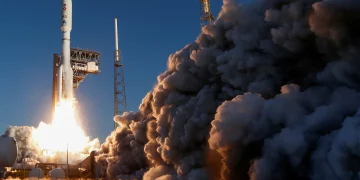
Life aboard a space station begins with launch — one of the most physically intense experiences humans can endure.
Astronauts experience:
- Extreme acceleration
- Vibrations
- Noise
- Rapid environmental change
Within minutes after launch, gravity disappears and astronauts enter microgravity.
The human body immediately begins adjusting to weightlessness.
Many astronauts initially experience:
- Space motion sickness
- Disorientation
- Nausea
- Balance disturbances
The brain struggles to adapt because inner-ear balance systems evolved for gravity-based environments.
This adaptation period can last several days.
Entering orbit is not only a physical transition but also a psychological one. Astronauts leave behind Earth’s natural environment entirely and begin life inside an enclosed artificial habitat.
The Structure of a Space Station
A Self-Contained Artificial World
Modern space stations are highly complex systems composed of interconnected modules.
These modules serve different purposes:
- Living quarters
- Laboratories
- Exercise areas
- Storage systems
- Control centers
- Airlocks
Everything inside the station is carefully designed for microgravity conditions.
Objects cannot simply be placed on surfaces because nothing stays in place naturally.
Tools, laptops, food containers, and personal items are attached using:
- Velcro
- Magnets
- Straps
- Clips
Space stations function as closed environmental systems where every resource must be managed carefully.
Unlike Earth, there is no external atmosphere, water supply, or natural waste system available.
Sleeping in Space
Rest Without Gravity
Sleeping aboard a space station differs significantly from sleeping on Earth.
Without gravity, astronauts do not lie on beds. Instead, they sleep in sleeping bags attached to walls or ceilings.
In microgravity:
- There is no “up” or “down”
- The body floats continuously
- Pressure points disappear
Some astronauts describe sleep in space as comfortable because there is no weight pressing on the body.
However, sleep quality can be affected by:
- Constant equipment noise
- Stress
- Disrupted circadian rhythms
- Rapid orbital sunrises and sunsets
The International Space Station experiences approximately 16 sunrises and sunsets every 24 hours due to its orbital speed.
Artificial lighting systems help regulate sleep cycles and maintain astronaut health.
Eating and Nutrition in Orbit
Food in Microgravity
Eating in space requires specialized systems and careful planning.
In microgravity:
- Liquids float
- Crumbs can become hazardous
- Food handling becomes complicated
Space food is specially prepared to reduce contamination risks and improve storage efficiency.
Meals often include:
- Freeze-dried foods
- Vacuum-sealed packages
- Rehydratable meals
- Thermostabilized foods
Nutrition is extremely important because astronauts experience muscle and bone loss in microgravity.
Dietary plans are carefully monitored to maintain:
- Bone health
- Muscle mass
- Immune function
- Cardiovascular stability
Food also plays a major psychological role in maintaining morale during long missions.
Hygiene and Personal Care
Staying Clean Without Running Water
Hygiene systems aboard space stations are very different from those on Earth.
Because water floats in microgravity, normal showers are impossible.
Astronauts use:
- Rinseless soaps
- Wet towels
- Water dispensers
- Specialized hygiene kits
Toothbrushing also requires modified techniques.
Waste management systems are highly engineered because improper waste control could threaten station safety.
Even simple activities such as washing hair become technically complex in orbit.
Maintaining hygiene is essential not only for health but also for psychological comfort during long missions.
Exercise and Physical Survival
Fighting the Effects of Microgravity
One of the biggest challenges of long-term space habitation is physical deterioration.
Without gravity:
- Muscles weaken
- Bones lose density
- Cardiovascular systems change
To counter these effects, astronauts exercise approximately two hours per day using specialized equipment.
Exercise systems include:
- Resistance machines
- Treadmills with harnesses
- Stationary bicycles
Exercise is not optional in space — it is a survival requirement.
Maintaining physical health is essential for both mission success and post-mission recovery on Earth.
Psychological Challenges of Isolation
The Mental Reality of Space Living
Long-duration space missions create significant psychological challenges.
Astronauts experience:
- Isolation
- Confinement
- Stress
- Separation from family
- Lack of privacy
The station environment is small, repetitive, and highly controlled.
Psychological pressures increase over time, especially during extended missions.
Astronauts must develop strong emotional resilience and teamwork skills.
Psychologists study space crews carefully because understanding mental adaptation is essential for future Mars missions.
Long-duration interplanetary travel may involve years of isolation from Earth.
Communication With Earth
Staying Connected Across Space
Communication is critical for astronaut well-being and mission operations.
Astronauts communicate with Earth through:
- Video calls
- Email systems
- Audio communication channels
- Mission control networks
Contact with family helps reduce psychological stress.
However, communication delays become more significant for future deep-space missions.
For Mars missions, delays may reach up to 20 minutes each way, making real-time communication impossible.
This will fundamentally change how astronauts experience isolation and autonomy.
Scientific Work in Orbit
A Laboratory Above Earth
Astronauts spend much of their time conducting scientific experiments.
Research aboard space stations includes:
- Biology
- Physics
- Medicine
- Material science
- Earth observation
Microgravity allows scientists to study phenomena impossible to observe under Earth gravity conditions.
Experiments contribute to both space exploration and Earth-based scientific advancement.
Astronauts effectively function as scientists, engineers, mechanics, and researchers simultaneously.
Maintenance and Technical Operations
Constant Engineering Responsibility
Space stations require continuous maintenance.
Astronauts regularly inspect and repair systems such as:
- Air filters
- Water recycling units
- Electrical systems
- Communication hardware
- Scientific instruments
Small technical problems can quickly become dangerous in space.
Crew members are trained extensively to handle emergencies and equipment failures.
Orbital habitats demand constant technical awareness and problem-solving.
Spacewalks
Working Outside the Station
Spacewalks are among the most dangerous activities astronauts perform.
During a spacewalk, astronauts leave the station wearing protective suits that function as miniature spacecraft.
Spacewalks are used for:
- Repairs
- Equipment installation
- Scientific tasks
- External inspections
The environment outside the station includes:
- Vacuum exposure
- Radiation
- Extreme temperature fluctuations
Even minor suit failures can become fatal.
Spacewalks require extensive preparation and precision.
The Overview Effect
Seeing Earth From Space
Many astronauts experience a profound psychological shift known as the “Overview Effect.”
From orbit, Earth appears:
- Fragile
- Borderless
- Isolated in darkness
Astronauts often describe increased awareness of:
- Environmental vulnerability
- Human interconnectedness
- Global unity
The experience changes how many astronauts think about politics, conflict, and humanity’s future.
Space stations therefore influence not only science but also human perspective itself.
International Cooperation in Orbit
Living Together Beyond National Borders
Space stations often host international crews from different countries and cultures.
Living and working together in confined environments requires:
- Communication skills
- Mutual respect
- Cultural understanding
- Team coordination
The International Space Station represents one of humanity’s most successful international cooperative projects.
Orbital cooperation demonstrates that shared goals can transcend geopolitical differences.
Emergency Situations in Space
Survival Under Extreme Risk
Space stations must prepare for emergencies such as:
- Fire
- Depressurization
- Toxic leaks
- Equipment failure
- Medical crises
Emergency procedures are carefully rehearsed.
Because evacuation options are limited, astronauts must solve problems rapidly and independently.
Space remains an inherently dangerous environment.
Preparing for Deep-Space Missions
Space Stations as Mars Mission Laboratories
Space stations are critical for preparing future deep-space exploration.
They allow scientists to study:
- Long-term human adaptation
- Psychological endurance
- Closed-loop life support systems
- Autonomous operations
These lessons are essential for future lunar and Martian habitats.
Orbital stations are effectively training grounds for interplanetary civilization.
The Future of Human Habitation in Space
Beyond Temporary Missions
Future space habitats may become much larger and more advanced.
Potential developments include:
- Artificial gravity systems
- Civilian orbital habitats
- Space hotels
- Rotating space colonies
- Deep-space stations
Human life in space may eventually evolve from temporary missions into permanent habitation.
This would fundamentally change the trajectory of civilization.
Conclusion: Learning to Live Beyond Earth
Life aboard a space station represents one of the greatest experiments in human history.
Astronauts living in orbit are not only conducting scientific research — they are testing humanity’s ability to survive beyond Earth itself.
Every aspect of orbital life, from sleeping and eating to psychological adaptation and technical maintenance, teaches humanity how to exist in environments never intended for human biology.
Space stations are therefore more than engineering structures. They are prototypes for humanity’s future beyond Earth.
As technology advances and long-duration missions become more common, the lessons learned aboard space stations may eventually help humans establish permanent settlements across the solar system.
In this sense, every astronaut living in orbit today is participating in the earliest chapter of humanity’s expansion into the universe.










Discussion about this post