

























Introduction: Humanity’s First Permanent Presence Beyond Earth
For most of human history, space existed only as a distant mystery. Ancient civilizations observed the stars with fascination, mythology, and philosophical curiosity, but the idea of humans living beyond Earth seemed impossible. The 20th century changed everything. Rockets, satellites, lunar missions, and advanced aerospace engineering transformed space from imagination into reality.
Among the most important achievements of this transformation is the development of space stations — permanent or semi-permanent structures designed for human habitation and scientific activity in orbit.
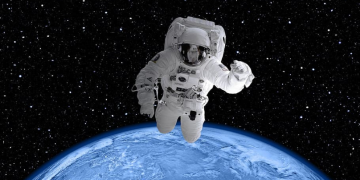
Space stations represent far more than technological achievements. They are humanity’s first attempt to create sustainable environments beyond Earth. Unlike short-duration missions, space stations allow humans to live, work, conduct research, and adapt biologically to life in space over extended periods of time.
From early Soviet space stations to the International Space Station (ISS), orbital habitats have become laboratories, engineering testbeds, diplomatic platforms, and symbols of global cooperation. They allow scientists to study microgravity, human physiology, advanced materials, Earth systems, and technologies necessary for future deep-space exploration.
At the same time, space stations are increasingly connected to commercial space industries, private aerospace companies, tourism development, and long-term plans for lunar and Martian colonization. The future of orbital habitats may include rotating artificial-gravity stations, commercial research platforms, space manufacturing centers, and even permanent civilian communities in orbit.
However, the expansion of human activity into space also raises difficult questions involving cost, environmental impact, geopolitical competition, militarization, and whether humanity should prioritize Earth’s problems before expanding into space.
Space stations therefore exist at the intersection of science, technology, politics, economics, and philosophy.
This article explores the history of space stations, the technologies that make orbital living possible, the scientific importance of long-duration space habitation, the future of commercial and deep-space stations, and the role orbital habitats may play in the future of human civilization.
The Origins of Space Stations
From Science Fiction to Reality
The concept of space stations existed long before the technology required to build them.
Science fiction writers and futurists imagined orbital habitats as early as the 19th and early 20th centuries. Visionaries such as Konstantin Tsiolkovsky proposed rotating stations that could create artificial gravity through centrifugal force.
These early ideas inspired generations of engineers and scientists.
The space race between the Soviet Union and the United States accelerated practical development.
The Soviet Union launched the world’s first space station, Salyut 1, in 1971.
This marked the beginning of humanity’s permanent orbital presence.
Subsequent stations such as:
- Skylab
- Mir
- Tiangong
- International Space Station (ISS)
expanded human understanding of long-duration space habitation.
Each generation of space stations introduced new engineering capabilities and scientific opportunities.
The International Space Station
Humanity’s Largest Orbital Laboratory
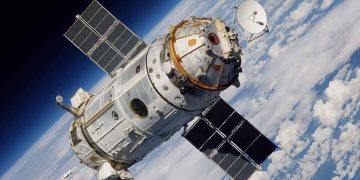
The International Space Station is the most advanced and significant space station ever constructed.
The ISS is a collaborative project involving multiple countries and space agencies, including:
- NASA
- Roscosmos
- ESA
- JAXA
- CSA
Orbiting Earth at approximately 400 kilometers above the surface, the ISS serves as:
- A scientific laboratory
- A technology testing platform
- A diplomatic cooperation project
- A long-duration habitation experiment
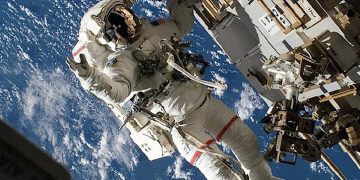
Astronauts aboard the ISS conduct research in areas such as:
- Biology
- Physics
- Medicine
- Material science
- Environmental monitoring
The station demonstrates that humans can live continuously in space for extended periods.
The ISS also represents one of the most successful examples of international scientific cooperation in modern history.
Engineering Challenges of Space Stations
Building Habitats in the Vacuum of Space
Constructing and maintaining a space station is one of the most difficult engineering challenges humanity has ever undertaken.
Space stations must operate in an environment characterized by:
- Vacuum conditions
- Extreme temperatures
- Radiation exposure
- Microgravity
- High-speed orbital motion
Key systems required for survival include:
- Oxygen generation
- Water recycling
- Temperature control
- Waste management
- Radiation shielding
- Power generation
Solar panels provide most electrical power for modern stations.
Life support systems recycle water and maintain breathable atmospheres.
Even small engineering failures can become life-threatening in orbit.
As a result, space station design prioritizes redundancy, safety, and reliability.
Life in Microgravity
How Space Changes the Human Body
One of the primary purposes of space stations is studying how humans adapt to microgravity environments.
Extended exposure to microgravity affects the body in many ways:
- Muscle loss
- Bone density reduction
- Fluid redistribution
- Cardiovascular changes
- Immune system effects
- Vision problems
Astronauts aboard space stations must exercise regularly to reduce physical deterioration.
Understanding these biological effects is essential for future missions to the Moon, Mars, and beyond.
Space stations function as laboratories for human adaptation beyond Earth.
Scientific Research in Orbit
Why Space Laboratories Matter
Microgravity environments allow scientists to perform experiments impossible on Earth.
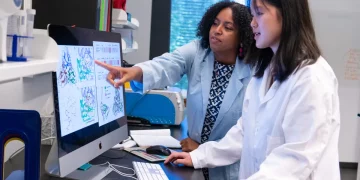
Research aboard space stations contributes to fields such as:
- Protein crystallization
- Fluid dynamics
- Combustion science
- Material development
- Human medicine
Some biological and chemical processes behave differently in microgravity.
Studying these processes may lead to medical advances and new technologies.
Space-based research also improves understanding of Earth systems including:
- Climate change
- Atmospheric behavior
- Ocean patterns
- Environmental monitoring
The scientific value of orbital laboratories extends far beyond space exploration itself.
Space Stations and International Cooperation
Diplomacy Beyond Earth
Space stations have also become important political and diplomatic symbols.
The International Space Station brought together countries with complex geopolitical relationships.
Scientific cooperation in orbit demonstrates how shared goals can transcend national competition.
Space collaboration has historically helped maintain communication and partnership even during periods of political tension on Earth.
However, space is also becoming increasingly competitive again as nations seek strategic and technological influence.
Future space station development may involve both cooperation and rivalry simultaneously.
Commercial Space Stations
The Rise of Private Orbital Industry
For most of history, space stations were government-led projects.
Today, private aerospace companies are entering the field.
Commercial space stations may support:
- Scientific research
- Space tourism
- Manufacturing
- Entertainment
- Media production
- Private astronaut missions
Companies are developing modular orbital habitats intended to replace or supplement government stations.
This shift reflects the broader commercialization of space.
Private investment may accelerate innovation while reducing dependence on national budgets.
However, commercialization also raises questions regarding regulation, accessibility, and economic inequality in space.
Space Tourism and Civilian Orbital Life
Opening Orbit to Non-Astronauts
Space stations may eventually become destinations for civilian travelers.
Space tourism is already emerging through suborbital and orbital commercial missions.
Future orbital hotels and habitats could allow civilians to experience life in space.
Potential activities may include:
- Scientific tourism
- Recreational observation
- Luxury experiences
- Educational programs
However, space tourism currently remains extremely expensive and technologically limited.
The long-term challenge is making orbital access safer and more affordable.
Space Manufacturing in Orbit
Factories Beyond Earth
Microgravity environments may support manufacturing processes impossible on Earth.
Potential orbital manufacturing applications include:
- Advanced fiber optics
- Pharmaceutical development
- Semiconductor production
- High-purity materials
- Biological tissue engineering
Microgravity eliminates certain physical constraints caused by gravity-driven processes.
Future space stations may therefore function as industrial production platforms rather than only research laboratories.
This could create entirely new economic sectors.

Artificial Gravity and Future Habitats
Solving the Long-Term Human Problem
One major limitation of current space stations is microgravity itself.
Long-term human health may require artificial gravity systems.
Future stations could use rotational designs to simulate gravity through centrifugal force.
Artificial gravity may:
- Reduce muscle loss
- Preserve bone density
- Improve cardiovascular stability
- Support long-term habitation
Rotating habitats have appeared in scientific concepts for decades but remain technologically challenging.
They may become essential for deep-space colonization efforts.
Lunar and Martian Gateway Stations
Beyond Earth Orbit
Future space stations may orbit not only Earth but also the Moon and Mars.
Projects such as lunar gateway stations aim to support:
- Lunar exploration
- Deep-space missions
- Resource extraction
- Scientific operations
These stations would function as transportation hubs and research platforms for interplanetary exploration.
Orbital infrastructure may eventually form a transportation network connecting multiple celestial destinations.
Space Debris and Orbital Sustainability
The Growing Danger Around Earth
As human activity in orbit increases, space debris becomes a major concern.
Old satellites, rocket fragments, and abandoned equipment travel at extremely high speeds.
Even small debris can damage spacecraft seriously.
Orbital congestion threatens the long-term sustainability of space operations.
Future space station development requires better debris management systems and responsible orbital policies.
Protecting orbital environments may become increasingly important as space activity expands.
The Militarization of Space
Peaceful Exploration or Strategic Competition?
Space stations exist within broader geopolitical realities.
As space becomes economically and strategically important, nations increasingly view orbital infrastructure as a matter of national security.
Concerns include:
- Satellite warfare
- Space surveillance
- Military technologies
- Territorial influence
Maintaining peaceful international cooperation in space may become more difficult in the future.
The governance of orbital infrastructure will likely shape future geopolitical relationships.
Philosophical Meaning of Space Stations
Humanity Becomes a Spacefaring Species
Space stations are not only engineering achievements — they are philosophical milestones.
For the first time in history, humans maintain continuous presence beyond Earth.
This changes how humanity understands itself.
Space stations symbolize:
- Exploration
- Adaptation
- Cooperation
- Curiosity
- Survival beyond Earth
They represent the first step toward becoming a multi-planetary civilization.
The psychological significance of living permanently in space may be as important as the scientific and technological achievements themselves.
The Future of Orbital Civilization
Cities Above Earth?
Future orbital habitats may evolve far beyond current stations.
Possible developments include:
- Large rotating habitats
- Orbital research cities
- Space-based universities
- Industrial manufacturing hubs
- Permanent civilian settlements
Advances in robotics, AI, energy systems, and materials science may eventually make large-scale orbital civilization possible.
The boundary between Earth civilization and space civilization may gradually disappear.
Conclusion: Humanity’s First Homes Beyond Earth
Space stations represent one of humanity’s greatest technological and scientific achievements.
They are laboratories, engineering systems, diplomatic projects, and symbols of human ambition. They allow humanity to study life beyond Earth while preparing for future exploration of the Moon, Mars, and deeper space.
At the same time, space stations force humanity to confront important questions about sustainability, cooperation, economics, and the future direction of civilization itself.
As orbital technology advances, space stations may evolve from isolated research platforms into permanent centers of human activity beyond Earth.
The future of humanity may ultimately depend not only on how we live on Earth, but on whether we can successfully build sustainable civilizations beyond it.












Discussion about this post