



























Prologue: The Mirror That Thinks
For centuries, humans have defined themselves by their uniqueness—our ability to think, to create, to feel, and to imagine. Intelligence was not merely a function; it was identity. To be human was to possess something fundamentally irreplaceable.
Artificial intelligence disrupts this assumption.
Unlike previous technologies that extended physical capability, AI extends cognitive capacity. It does not just help us do more—it challenges what it means to be more. When a machine can write poetry, compose music, diagnose illness, or generate ideas, the boundary between human and tool begins to blur.
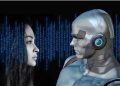
AI is no longer just a mirror reflecting human intelligence. It is a mirror that thinks back.
1. The Displacement of Cognitive Uniqueness
Human identity has long been anchored in intellectual superiority. The ability to reason, create, and innovate distinguished humans from all other forms of life.
AI challenges this foundation.
When algorithms can outperform humans in tasks such as pattern recognition, strategic games, and even creative writing, the sense of cognitive uniqueness begins to erode. This is not merely a technological shift—it is a psychological one.
People begin to question:
- If a machine can do what I do, what makes me valuable?
- If intelligence is replicable, what defines individuality?
This is the beginning of what can be called cognitive displacement—the gradual realization that intelligence is no longer exclusively human.
2. The Redefinition of Creativity
Creativity has traditionally been seen as the last refuge of human uniqueness. Logic could be mechanized, but imagination was sacred.
AI has entered this space.
Generative models can now produce art, music, literature, and design at astonishing speed and scale. While debates continue about whether AI is truly “creative,” the psychological impact is already evident.
For creators, the presence of AI introduces a new tension:
- Is creativity about originality, or output?
- Does intention matter more than result?
- If an audience cannot distinguish between human and AI work, does authorship still matter?
This shifts creativity from a process of expression to a question of definition.
3. Identity in the Age of Augmentation
AI does not only replace; it augments.
Writers use AI to brainstorm ideas. Designers use it to generate concepts. Programmers use it to write code. In many cases, the final output is a hybrid of human direction and machine execution.
This creates a layered identity:
- Where does the human end and the machine begin?
- Who is the true author of an AI-assisted creation?
The concept of augmented identity emerges. Individuals are no longer defined solely by their internal capabilities, but by how effectively they collaborate with intelligent systems.
In this sense, identity becomes relational rather than intrinsic.
4. The Anxiety of Irrelevance
One of the most significant psychological effects of AI is the fear of becoming irrelevant.
This anxiety is not limited to specific professions. It permeates multiple layers of society—from artists and writers to analysts and engineers.
The fear operates on two levels:
- Functional irrelevance: “My job can be done by AI.”
- Existential irrelevance: “My abilities are no longer special.”
The second is more profound.
Work has long been a source of identity and self-worth. When the value of work is questioned, identity itself becomes unstable.
This leads to a paradox: the more capable AI becomes, the more humans must redefine their sense of worth beyond capability.
5. The Illusion of Control
AI systems are designed to assist, but they also guide.
Recommendations, predictions, and automated decisions shape user behavior. While individuals feel in control, their options are often pre-filtered.
This creates an illusion:
- We believe we are choosing freely.
- In reality, we are choosing from curated possibilities.
Psychologically, this shifts the perception of agency. Control becomes less about making decisions and more about selecting from suggestions.
Over time, this can reduce confidence in independent judgment, reinforcing reliance on AI systems.
6. Emotional Attachment to Artificial Entities
As AI becomes more conversational and responsive, humans begin to form emotional connections with it.
This is not entirely new—people have long anthropomorphized objects and systems. However, AI amplifies this tendency through interaction.
AI companions, chatbots, and virtual assistants simulate empathy, understanding, and responsiveness. For some users, these interactions fulfill emotional needs.
This raises complex questions:
- Can emotional connection exist without consciousness?
- Does authenticity matter if the experience feels real?
From a psychological perspective, the brain responds to perceived interaction, not objective reality. If an AI behaves as if it understands, users may respond as if they are understood.
7. The Fragmentation of Self
In the digital age, identity was already becoming fragmented across platforms. AI accelerates this fragmentation.
Different systems interact with different versions of the user:
- Professional profiles
- Social media personas
- Behavioral data patterns
AI models construct representations of individuals based on data, not self-perception. These representations influence what users see, experience, and even believe.
As a result, individuals exist simultaneously as:
- A self they perceive
- A self others perceive
- A self algorithms construct
This creates a multi-layered identity that is increasingly difficult to reconcile.
8. The Shift from Effort to Outcome
Traditionally, effort has been closely tied to value. Hard work signified merit.
AI disrupts this relationship.
When high-quality results can be generated with minimal effort, the connection between effort and outcome weakens. This has psychological implications:
- Achievement feels less personal
- Success feels less earned
- Motivation becomes harder to sustain
If results are easily attainable, the meaning of accomplishment changes.
This forces a reevaluation: should value be measured by effort, originality, or impact?
9. The Emergence of Meta-Skills
As AI takes over execution, human value shifts toward higher-level capabilities.
These include:
- Critical thinking
- Judgment
- Taste and curation
- Ethical reasoning
These meta-skills are less about producing and more about deciding.
Psychologically, this represents a shift from “doing” to “directing.” However, not everyone is prepared for this transition. Many systems—educational, professional, cultural—are still structured around execution-based skills.
The gap between required skills and developed skills creates tension and uncertainty.
10. Reconstructing Meaning in an AI World
At its core, the psychological impact of AI is a crisis of meaning.
If machines can perform tasks once considered uniquely human, then meaning must be found elsewhere.
Possible directions include:
- Relationships rather than productivity
- Experience rather than output
- Purpose rather than efficiency
This does not diminish the role of AI, but it reframes the role of humans.
Instead of competing with machines, humans may need to focus on dimensions that machines cannot fully replicate—subjective experience, moral judgment, and existential purpose.
Epilogue: Becoming Human Again
Artificial intelligence does not simply change what we do. It changes how we see ourselves.
The challenge is not to preserve an outdated definition of humanity, but to evolve it.
Perhaps being human was never about intelligence alone. Perhaps it is about something deeper:
- The ability to find meaning
- The capacity for empathy
- The awareness of existence itself
AI may surpass us in calculation, speed, and even creativity. But it also forces us to confront a more fundamental question:
What does it mean to be human when intelligence is no longer enough?
The answer is not yet clear. But the search for it may define the next chapter of human identity.










Discussion about this post