



































Innovation has always been a driving force behind human progress. From the Industrial Revolution to the digital era, new ideas have transformed how we live, work, and interact. But today, innovation is not just about one field of expertise. Increasingly, it’s being shaped by interdisciplinary research—where different areas of knowledge come together to solve complex problems and create groundbreaking ideas. But what exactly is the true value of interdisciplinary research? How does it push the boundaries of technology, science, and society?
1. What Is Interdisciplinary Research?
Interdisciplinary research happens when experts from different fields collaborate to tackle problems that cannot be solved by any one discipline alone. Instead of working in isolated “silos,” researchers from diverse backgrounds—such as biology, technology, engineering, and even art—bring their unique perspectives to the table.
Think about the development of brain-machine interfaces. This technology relies on input from neuroscientists (who study the brain), engineers (who design the devices), and computer scientists (who write the algorithms). When these fields collaborate, they create a solution that wouldn’t be possible if they worked alone.
2. Solving Big Problems Together
Many of the world’s biggest challenges—climate change, global health issues, and space exploration—are complicated and multi-faceted. Addressing them requires diverse knowledge. Interdisciplinary research allows scientists, engineers, social scientists, and even ethicists to come together and find solutions from multiple angles.
Take climate change. Tackling it isn’t just about improving solar panels or wind turbines (though that’s part of it). It also involves understanding economic systems, societal behaviors, and even political will. Experts from economics, policy, and environmental science must all work together to create sustainable and effective solutions.
The same is true for space exploration. Whether it’s NASA’s Mars missions or the emerging field of space tourism, innovations are not just driven by engineers and astronauts. Collaborations between physicists, computer scientists, artists (to design user-friendly interfaces), and even psychologists (to ensure astronaut well-being) are crucial.
3. Advancing Technology Through Collaboration
When fields combine, they often create technologies that push the envelope. One prominent example is autonomous vehicles. These self-driving cars are made possible by the convergence of multiple disciplines: artificial intelligence (AI) for decision-making, robotics for navigation, and data science for analyzing sensor data. By bringing together these different perspectives, the innovation has become a reality.
Another exciting area is personalized medicine. Through interdisciplinary collaboration, AI and biotechnology are merging to create treatments tailored to individual patients. This includes using genetic data to understand how patients will respond to different treatments—an innovation that could make healthcare more precise and effective.
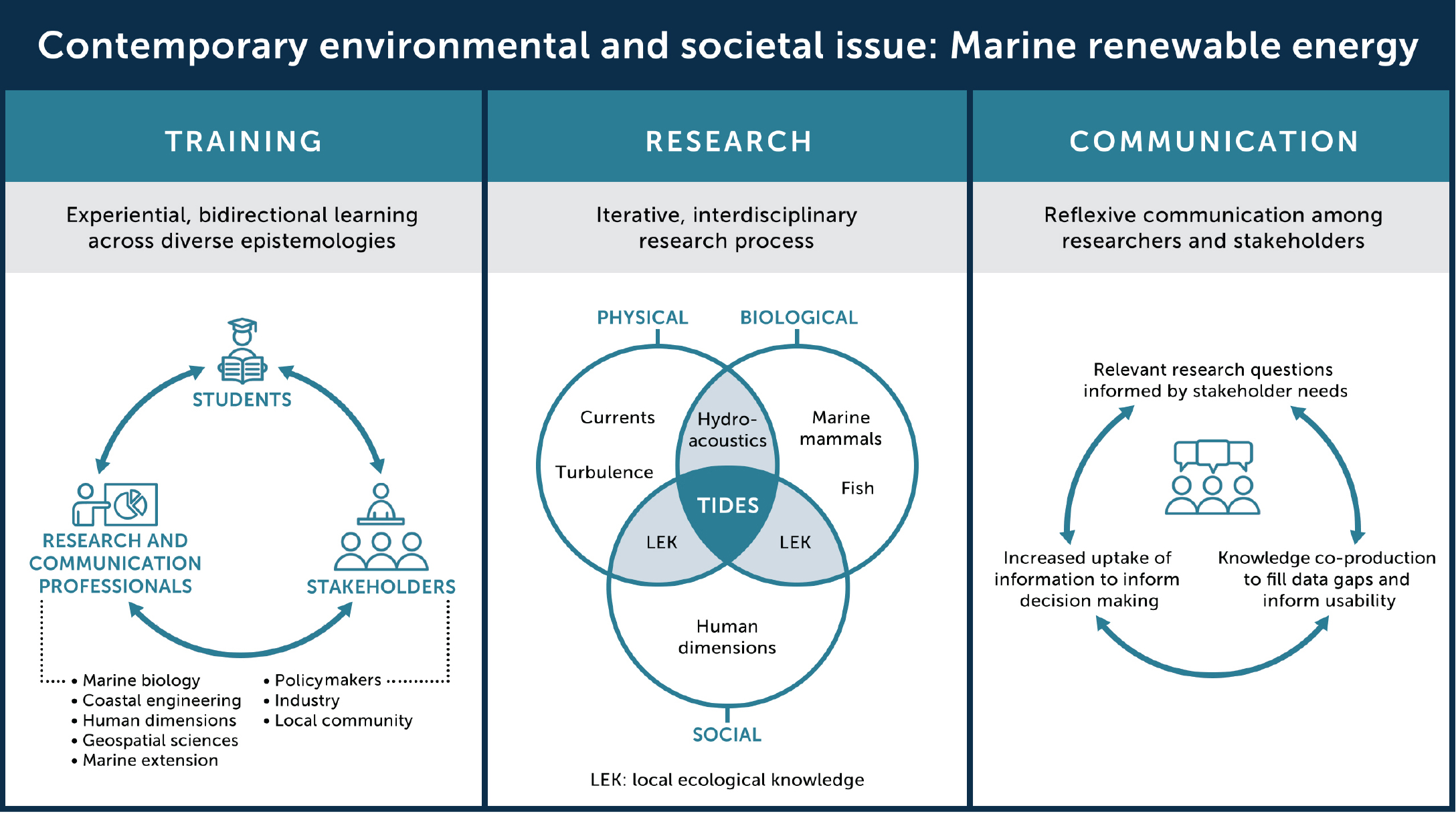
Even in industries like renewable energy, innovation is powered by interdisciplinary work. The development of more efficient solar cells or wind turbines often requires knowledge of materials science, engineering, and environmental science working hand-in-hand to create new solutions.
4. Breaking Down Silos to Spark Creativity
One of the greatest advantages of interdisciplinary research is that it challenges the way we think. When experts from different fields come together, they often see problems in new ways. This helps break traditional thinking patterns and sparks creativity.
A good example is augmented reality (AR), which blends computer science, design, psychology, and optics. Designers work with engineers to ensure the technology is usable, while psychologists study human behavior to improve the interaction between users and AR environments. By combining all these elements, AR can transform industries ranging from gaming to healthcare to education.

This cross-pollination of ideas allows for solutions that wouldn’t be possible if experts stayed in their own lanes. It’s a perfect example of how interdisciplinary work makes innovation more dynamic and impactful.
5. Encouraging a Culture of Innovation
Interdisciplinary research doesn’t just lead to new products or technologies—it fosters a culture of creativity. When researchers from diverse backgrounds work together, they push each other’s boundaries. This helps create an environment where new ideas can flourish.
Universities and research institutions that encourage collaboration across disciplines tend to be at the forefront of major innovations. For example, when experts in biotechnology, environmental science, and AI combine forces, they might come up with a solution to both global food security and environmental protection—a problem that is too large for any one field to tackle on its own.
In the business world, companies that embrace interdisciplinary teams are often the most innovative. They are able to adapt quickly and stay ahead of trends by tapping into a broad pool of knowledge. This is especially critical in fast-evolving industries like technology, where staying competitive requires constant innovation.
6. Interdisciplinary Research and Education
For interdisciplinary research to thrive, education must support it. Traditional education systems often focus on deep specialization in one subject area. But to solve today’s complex problems, we need to think across disciplines.
More and more universities are offering interdisciplinary programs that allow students to combine fields like computer science and psychology, or biology and environmental science. These programs teach students how to think broadly and collaborate across disciplines, preparing them for the interconnected world of modern research and innovation.
Industry partnerships with academic institutions are also playing a role in fostering interdisciplinary work. When companies in sectors like tech or healthcare collaborate with universities, they create real-world applications for the research happening in classrooms. This leads to the development of new products and technologies that can make a tangible impact.
7. The Future of Interdisciplinary Research in Innovation
As technology continues to evolve at an ever-increasing pace, interdisciplinary research will be more important than ever. Whether it’s AI, space exploration, healthcare, or environmental sustainability, innovation in the future will require input from multiple disciplines.
For example, combining fields like quantum computing, machine learning, and neuroscience could lead to entirely new breakthroughs in AI and computing. These interdisciplinary collaborations have the potential to revolutionize how we understand and interact with technology.
At the same time, challenges still remain. Interdisciplinary research often requires overcoming differences in terminology, research methods, and ways of thinking. But when done right, the rewards far outweigh the difficulties. By breaking down these barriers, interdisciplinary research will continue to be a key driver of innovation, helping to solve the world’s most pressing problems.












Discussion about this post