






























Humor is a quintessential part of human culture. It’s an art, a form of communication, and a universal language that connects people across cultures, backgrounds, and even barriers of time. But what happens when you introduce artificial intelligence (AI) to the equation? Can machines truly understand the subtleties of human humor? Can they generate jokes, puns, or funny scenarios that resonate with humans? This question sits at the intersection of artificial intelligence, cognitive science, and creativity.
In this article, we’ll explore how AI interacts with humor, the underlying processes that make humor so complex, and whether AI can ever match or surpass human humor. By examining the role of AI in comedy and its potential to understand and create humor, we will uncover both the possibilities and the limitations that exist in this fascinating realm.
The Anatomy of Humor
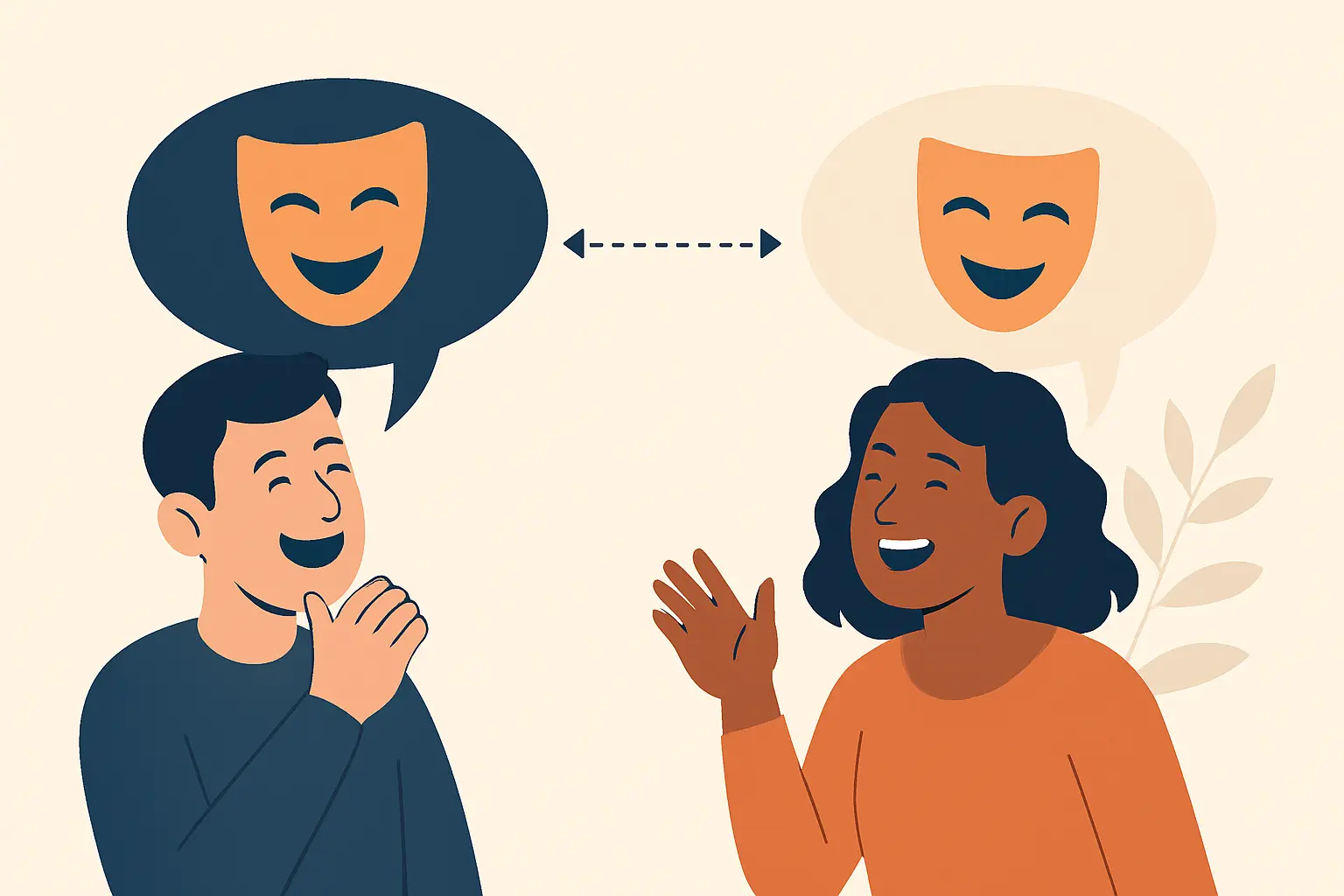
Before diving into AI’s relationship with humor, it’s essential to understand what makes something funny. Humor is a multi-layered phenomenon. It involves a combination of timing, context, wordplay, surprise, and social understanding. Many jokes are built on a shared knowledge of language, culture, and emotions. To make someone laugh, a joke often relies on the element of surprise — an unexpected twist that defies our logical expectations.
Some of the most common types of humor include:
- Wordplay: Puns and double entendres that exploit the multiple meanings of words.
- Incongruity: Presenting something absurd or illogical, creating a surprise element.
- Exaggeration: Taking something normal and amplifying it to an absurd degree.
- Self-deprecation: Making oneself the subject of the joke, often in a way that is endearing or relatable.
- Dark humor: Using taboo or morbid subjects for comedic effect, often with irony or sarcasm.
This complexity is one of the biggest challenges for AI. While AI has made great strides in understanding language, the subtleties of humor — with its reliance on context, timing, and shared human experience — remain a significant hurdle.
How AI Processes Humor
AI, particularly through techniques like Natural Language Processing (NLP), has made remarkable advances in understanding and generating human language. But NLP alone isn’t enough to understand humor. Humor relies on more than just syntax; it needs an understanding of intent, social cues, and the emotional tone of a conversation.

Humor and Context
One of the key challenges AI faces when creating humor is the need for context. A joke often relies on an intricate balance between what is said and how it fits into the current situation or conversation. For example, humor in a social context requires a grasp of cultural norms, social hierarchies, and shared knowledge between the speaker and the audience.
AI tools like OpenAI’s GPT-3 and GPT-4, which can generate text based on input prompts, can sometimes produce amusing results, but they often miss the mark. Their understanding of humor is purely algorithmic and doesn’t have the depth of emotional or contextual awareness that a human comedian would rely on.
For instance, GPT-3 might generate a joke like: “Why did the chicken join a band? Because it had drumsticks!” While this is technically a joke, it relies on a simple, surface-level play on words. It doesn’t take into account the setting in which the joke might land or the emotional tone required to deliver it effectively.
Humor and Timing
Timing is another crucial element of humor. A joke’s punchline is often about delivering it at the right moment, a skill honed through experience and intuition. While some AI systems can generate punchlines, the timing often falls flat, making the humor feel mechanical or forced.
Consider the difference between reading a joke in a text message versus hearing it told live, with all the nuances of voice tone, facial expressions, and physical cues. Human comedians excel at adapting their timing based on the audience’s reactions, an ability that current AI systems simply do not possess.
Can AI Create Humor?
AI’s ability to generate humor has improved significantly, especially with models like GPT-4, which can produce text that mimics humor. But creating humor is not just about stringing words together. It requires intuition, emotional intelligence, and an understanding of societal values — all things that are challenging for AI to grasp fully.
AI-Generated Jokes
Take, for instance, some AI-generated jokes. They can often be funny in a robotic, dry, or absurd way:
- “Why don’t skeletons fight each other? They don’t have the guts.”
- “I told my computer I needed a break, and now it won’t stop sending me Kit-Kats.”
These jokes are simple and can make someone chuckle, but they don’t always elicit the same response as a cleverly crafted human joke. The humor is mechanical, as the jokes are based on common punchlines that AI has learned from data but lacks the deep understanding of why these particular jokes might resonate with a specific audience at a particular time.

AI has also been trained on massive datasets, including internet forums, stand-up comedy routines, and scripts. However, this data doesn’t give AI the ability to understand why a certain joke might be offensive, culturally insensitive, or inappropriate in certain settings. Humor can be a fine line between being funny and crossing a boundary — something AI is still learning to navigate.
AI and Satire
Satire, a form of humor that involves using irony, sarcasm, or ridicule to expose or criticize, is another area where AI struggles. Satirical humor often requires a deep understanding of current events, political landscapes, and societal issues. It’s about having a keen awareness of power dynamics, norms, and injustices. AI, on the other hand, lacks lived experience and thus struggles to generate satire that resonates on the same level as a seasoned human satirist.
However, there are attempts to push AI into creating satire. Models like GPT-4 can mimic the style of famous satirists by analyzing their work, but it’s still a long way from creating genuine, insightful satire. The ability to use humor to critique and bring attention to social or political issues requires an understanding of human emotions and biases — a nuance AI still hasn’t fully captured.
Humor in AI-Driven Entertainment
AI has found a place in creating humor in certain areas of entertainment, especially in interactive media. AI-powered chatbots and virtual assistants like Siri, Alexa, and Google Assistant have been programmed with various jokes, puns, and playful responses. These conversational agents use humor as a way to engage users, making the interaction feel more natural and enjoyable.
For instance, when you ask Siri, “Tell me a joke,” it might respond with something like:
- “Why don’t skeletons ever fight each other? They don’t have the guts.”
- “I’m reading a book on anti-gravity. It’s impossible to put down.”
These interactions are typically light-hearted, but they’re far from being truly “funny” in the way that humans appreciate humor. The humor here is largely pre-programmed, not created or adapted on the fly based on the user’s emotions or context.
AI in Comedy Writing
One of the most promising areas of AI-generated humor is in comedy writing. Several AI tools are being used to generate comedic scripts, jokes, and even short stories. AI can be an asset in brainstorming sessions, providing new ideas, punchlines, or humorous twists that human writers can build upon. However, AI’s contribution tends to be more about augmenting human creativity rather than creating humor independently.
For example, AI could suggest a wacky scenario or a humorous punchline based on keywords or themes provided by human writers. It can help writers overcome creative blocks, suggesting new ways to develop a comedic storyline. But the artistry and wit that come from human insight — that deep understanding of human emotion, culture, and context — cannot be replicated by AI in its current form.
The Future of AI and Humor
So, can AI ever truly understand and create humor like a human? The short answer is: not yet. While AI can produce jokes and recognize patterns that make things funny, it doesn’t fully grasp the subtleties that make humor such a unique and deeply human experience.
As AI continues to evolve, however, we might see improvements in its ability to engage with humor. Advances in machine learning, deep learning, and emotional AI could bring us closer to machines that not only understand the structure of humor but also its emotional nuances. Perhaps in the future, AI will be able to create humor that resonates more deeply with human audiences, adapting its jokes to different contexts, cultures, and individual preferences.
For now, AI remains a useful tool for generating humor, but the role of the human touch — intuition, empathy, and cultural awareness — remains irreplaceable.













Discussion about this post