




























Introduction
Artificial intelligence has moved far beyond the boundaries of science fiction. What was once imagined as a distant technological dream is now deeply integrated into daily life, influencing industries, governments, education systems, healthcare institutions, and even personal relationships. AI-powered systems recommend the movies people watch, optimize traffic routes, assist doctors in diagnosing diseases, generate digital artwork, automate business operations, and help researchers discover new scientific possibilities. The rapid evolution of artificial intelligence represents one of the most significant technological transformations in modern history.
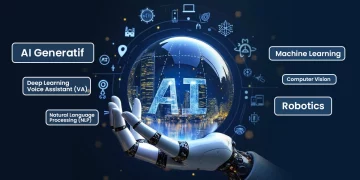
The rise of AI is not simply another phase of digital development. It is a structural shift that is redefining how societies operate and how economies grow. From machine learning and natural language processing to robotics and generative AI, intelligent systems are increasingly capable of performing tasks once thought to require uniquely human abilities. These systems can analyze vast amounts of data, identify patterns, learn from experience, and make predictions with astonishing speed and accuracy.
At the same time, the rapid growth of AI has sparked major debates about ethics, employment, privacy, creativity, and the future of humanity itself. While some experts see AI as a tool capable of solving global problems, others warn about potential risks related to misinformation, inequality, and excessive automation.
This article explores the evolution of artificial intelligence, its influence across major industries, the challenges associated with its expansion, and the possibilities that may define the next chapter of human civilization.
The Evolution of Artificial Intelligence
The origins of artificial intelligence can be traced back to the mid-twentieth century when mathematicians and computer scientists began exploring the possibility of machines capable of simulating human reasoning. Early pioneers such as Alan Turing introduced foundational concepts that would later shape the field of AI. Turing’s famous question — “Can machines think?” — inspired decades of research into machine intelligence.
During the 1950s and 1960s, researchers created simple rule-based systems capable of solving mathematical problems and playing games like chess. However, limited computing power prevented major breakthroughs. Progress remained slow for several decades, leading to periods commonly referred to as “AI winters,” during which investment and public interest declined.
The situation changed dramatically in the twenty-first century due to three key factors: increased computational power, massive amounts of digital data, and advances in machine learning algorithms. Neural networks, inspired by the structure of the human brain, became far more effective when combined with modern processors and large datasets.
Deep learning transformed AI from a theoretical concept into a practical tool. Systems became capable of recognizing speech, identifying images, translating languages, and generating human-like text. The emergence of generative AI accelerated this transformation even further, allowing machines to create original content such as music, videos, software code, and visual art.
Today, AI systems are no longer limited to research laboratories. They are embedded in smartphones, search engines, financial systems, manufacturing facilities, and smart homes around the world.
AI in Healthcare
One of the most promising applications of AI can be found in healthcare. Artificial intelligence is helping doctors diagnose illnesses earlier, personalize treatments, and improve patient outcomes.
Medical imaging systems powered by AI can detect signs of cancer, heart disease, and neurological disorders with remarkable accuracy. By analyzing thousands of medical scans, AI systems learn to recognize patterns that may be difficult for human specialists to identify quickly.
AI is also transforming pharmaceutical research. Developing new medications traditionally requires years of experimentation and billions of dollars in investment. Machine learning systems can analyze chemical structures and predict which compounds may be effective against certain diseases, dramatically accelerating the drug discovery process.
In hospitals, AI-driven automation improves operational efficiency by managing patient records, scheduling appointments, and optimizing resource allocation. Virtual assistants and medical chatbots help patients access healthcare information more conveniently.
Wearable devices equipped with AI algorithms monitor heart rates, sleep patterns, and physical activity in real time. These technologies support preventive healthcare by identifying potential health issues before they become severe.
Despite these advances, healthcare AI also raises ethical concerns regarding patient privacy, data security, and algorithmic bias. Ensuring that AI systems are transparent and fair remains a major challenge.
AI and the Future of Work
The impact of artificial intelligence on employment is one of the most debated topics in modern society. AI-driven automation is capable of performing repetitive tasks more efficiently than humans in many industries.
Manufacturing facilities increasingly rely on intelligent robots for assembly, packaging, and quality control. Customer service departments use AI chatbots to answer routine inquiries. Financial institutions employ algorithms to detect fraud and analyze market trends.
While automation may eliminate certain jobs, it also creates new opportunities. Emerging industries related to AI development, cybersecurity, robotics engineering, and data science are generating demand for highly skilled professionals.
The future workforce will likely require adaptability and continuous learning. Skills such as creativity, emotional intelligence, critical thinking, and interdisciplinary collaboration may become more valuable as machines handle routine analytical tasks.
Governments and educational institutions face growing pressure to redesign training systems and prepare workers for an AI-driven economy. Lifelong education may become essential for career stability.
Ethical Challenges and Risks
The rapid expansion of AI introduces significant ethical questions. One major concern involves algorithmic bias. AI systems learn from data generated by humans, and biased data can produce unfair outcomes.
Facial recognition technologies, for example, have faced criticism for inaccurate identification rates among certain demographic groups. Hiring algorithms may unintentionally discriminate against candidates based on historical patterns.
Privacy is another major issue. AI systems collect and analyze enormous quantities of personal information. Without proper regulation, this data could be misused by corporations or governments.
The rise of deepfake technology has also increased concerns about misinformation. AI-generated videos and audio recordings can imitate real individuals convincingly, potentially spreading false narratives and undermining public trust.
Autonomous weapons represent another controversial area. Military organizations worldwide are researching AI-powered defense systems capable of operating with minimal human involvement. Critics warn that such technologies could increase the risk of uncontrolled conflict.
To address these challenges, many experts advocate for global AI governance frameworks emphasizing transparency, accountability, fairness, and human oversight.
AI and Creativity
Artificial intelligence is increasingly entering creative fields traditionally associated with human imagination. AI-generated art, music, literature, and film production have become major topics of discussion.
Generative AI models can produce realistic paintings, compose orchestral music, and write essays within seconds. Some artists see these technologies as collaborative tools capable of expanding creative possibilities.
Others worry that AI-generated content could undermine human originality and reduce opportunities for professional creators. Questions surrounding copyright ownership and intellectual property remain unresolved.
However, history suggests that technological innovation often reshapes creative industries rather than eliminating them entirely. Photography did not destroy painting, and digital editing did not eliminate filmmaking. Instead, new technologies expanded artistic expression.
AI may ultimately become another creative instrument — one that enhances productivity while encouraging new forms of storytelling and artistic experimentation.
The Global AI Race
Artificial intelligence has become a major geopolitical priority. Countries around the world are investing heavily in AI research to strengthen economic competitiveness and national security.
The United States remains a leader in AI innovation due to its powerful technology companies, research universities, and venture capital ecosystem. China has also emerged as a dominant force, investing billions into AI infrastructure and smart city development.
European nations focus strongly on ethical regulation and responsible AI governance. Meanwhile, developing countries seek ways to integrate AI into agriculture, healthcare, and education.
The global AI race may shape the balance of economic and political power throughout the twenty-first century. Nations capable of leading AI innovation could gain enormous strategic advantages.
Conclusion
Artificial intelligence is transforming the modern world at extraordinary speed. Its influence extends across healthcare, business, transportation, education, entertainment, and scientific research. AI offers powerful tools capable of improving productivity, solving complex problems, and enhancing human capabilities.
However, the future of AI depends on how societies choose to manage its development. Ethical regulation, education reform, data protection, and international cooperation will play critical roles in ensuring that AI benefits humanity rather than creating instability.
The rise of artificial intelligence is not merely a technological revolution. It is a defining moment in human history — one that may reshape civilization for generations to come.









Discussion about this post