













Introduction
The emergence of generative artificial intelligence represents one of the most disruptive moments in the history of creativity. For centuries, artistic expression was considered uniquely human. Painters translated emotion into color, musicians transformed experience into sound, and writers crafted stories from imagination. Today, machines can generate images, compose songs, write essays, and produce cinematic visuals within seconds.
Generative AI systems are redefining the boundaries between technology and creativity. These systems are capable of analyzing enormous datasets, learning artistic patterns, and generating entirely new content based on prompts provided by users.
The creative revolution powered by AI has sparked excitement, curiosity, and controversy across industries. Supporters view generative AI as a powerful tool that democratizes creativity and enhances productivity. Critics argue that AI-generated content threatens artistic authenticity and may disrupt creative professions.
This article explores how generative AI works, its impact on creative industries, ethical debates surrounding AI-generated content, and the future relationship between human creativity and machine intelligence.
Understanding Generative AI
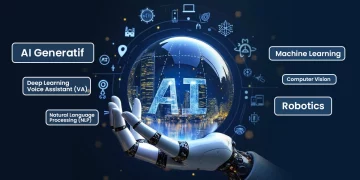
Generative AI refers to artificial intelligence systems designed to create original content rather than simply analyze existing information. These systems rely heavily on deep learning and neural networks trained on massive datasets.
Large language models generate text by predicting the most likely sequence of words based on training data. Image generation systems analyze visual patterns and produce artwork that resembles photographs, paintings, or illustrations.
The development of transformer architectures dramatically improved the quality of AI-generated content. Modern AI systems can generate highly coherent essays, realistic voices, and sophisticated visual compositions.
Unlike traditional software, generative AI systems are adaptive and flexible. Users can interact with them conversationally, providing instructions that influence the generated output.
AI in Writing and Journalism
Generative AI is rapidly transforming the writing industry. Businesses use AI tools to draft marketing copy, summarize reports, generate product descriptions, and automate customer communication.
News organizations experiment with AI-assisted journalism for financial reporting, sports updates, and data-heavy news coverage. AI systems can process information quickly and generate readable summaries in seconds.
Writers also use AI as a brainstorming partner. AI tools help generate ideas, organize outlines, and overcome creative blocks.
However, concerns regarding misinformation and plagiarism remain serious. AI-generated text can sometimes produce inaccurate information presented confidently. Distinguishing authentic journalism from automated content may become increasingly difficult.
AI in Visual Arts
The visual art world has experienced a dramatic transformation due to AI image generation. Artists can create detailed digital paintings, futuristic landscapes, and photorealistic illustrations using text prompts.
AI tools allow individuals without traditional artistic training to produce impressive visuals. This accessibility has expanded participation in digital creativity.
Professional designers increasingly integrate AI into workflows for concept development, advertising, architecture, and entertainment.
At the same time, debates over copyright and training data continue. Many artists argue that AI systems trained on existing artwork may replicate styles without permission.
Music, Film, and Entertainment
AI-generated music composition is becoming more sophisticated each year. Algorithms can produce melodies, harmonies, and instrumental arrangements across multiple genres.
Film production companies use AI for script analysis, editing support, visual effects generation, and audience prediction.
Virtual influencers and AI-generated characters are also gaining popularity across social media and entertainment platforms.
The entertainment industry may increasingly blend human and machine creativity, creating hybrid production models.
Ethical Questions
The rise of generative AI raises difficult ethical questions regarding originality, ownership, and authenticity.
Who owns AI-generated art? The programmer, the user, or the AI company? Legal systems worldwide are struggling to define intellectual property rules for machine-generated content.
Another concern involves misinformation. AI systems can generate fake images, audio recordings, and videos capable of deceiving audiences.
Educational institutions also face challenges as students use AI tools for essays and assignments.
Responsible AI development requires transparency, regulation, and digital literacy.
The Future of Human Creativity
Despite fears surrounding automation, human creativity is unlikely to disappear. Instead, creative work may evolve.
AI excels at pattern recognition and rapid generation, but humans provide emotional depth, cultural understanding, ethical judgment, and lived experience.
Future creative industries may focus more heavily on collaboration between humans and intelligent systems.
Rather than replacing artists, generative AI may expand artistic possibilities and create entirely new forms of expression.








Discussion about this post