




























Introduction
Education has always reflected the technological progress of civilization. From handwritten manuscripts and printing presses to computers and online learning platforms, each innovation has changed how knowledge is shared and understood. Today, artificial intelligence is becoming the next major force transforming global education systems.
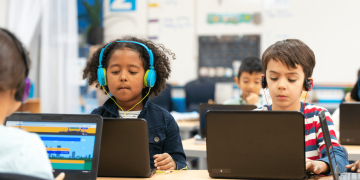
AI is no longer limited to research laboratories or advanced technology companies. Intelligent systems are entering classrooms, universities, digital learning platforms, and professional training programs around the world. Students now interact with AI-powered tutoring systems, adaptive learning software, automated assessment tools, and virtual assistants capable of answering questions instantly.
The integration of AI into education represents far more than simple automation. It signals a shift toward highly personalized learning environments where educational experiences can adapt to individual needs, abilities, interests, and learning speeds.
Traditional education systems often struggle to support every student equally. Large classrooms, standardized testing, limited teacher resources, and unequal access to quality instruction create major barriers. Artificial intelligence offers new possibilities for addressing these challenges.
However, the expansion of AI in education also introduces important ethical and social concerns. Questions surrounding data privacy, unequal access to technology, algorithmic bias, and the changing role of teachers continue to generate debate among educators and policymakers.
This article explores how artificial intelligence is reshaping education, the opportunities created by intelligent learning systems, the challenges educational institutions face, and the future of learning in an AI-driven society.
The Evolution of Educational Technology
Technology has influenced education for centuries. The invention of the printing press dramatically expanded access to books and literacy. Radio and television introduced distance learning opportunities. Computers transformed classrooms during the late twentieth century, while the internet enabled global access to information.
The rise of online education platforms during the early twenty-first century accelerated digital learning even further. Students gained access to online lectures, interactive exercises, and educational videos from virtually anywhere.
Artificial intelligence represents the next stage of this evolution because it enables systems not only to deliver information but also to analyze student behavior, predict learning needs, and personalize educational experiences.
Unlike traditional software, AI systems learn from user interactions. These technologies can identify patterns in student performance, adjust lesson difficulty, recommend learning materials, and provide targeted support.
As computing power and machine learning algorithms improve, educational AI systems are becoming increasingly sophisticated.
Personalized Learning and Adaptive Education
One of the greatest strengths of AI in education is personalization.
Traditional classrooms often rely on standardized teaching methods designed for large groups of students. However, students learn at different speeds and possess different strengths, weaknesses, and interests.
Some students may quickly understand mathematical concepts but struggle with language learning. Others may require additional practice before mastering certain subjects.
AI-powered adaptive learning systems analyze student performance in real time and modify educational content accordingly.
If a student struggles with algebra, the system can provide simpler exercises, additional explanations, and targeted practice sessions. If another student demonstrates advanced understanding, the platform may introduce more challenging material.
This individualized approach increases engagement and improves learning efficiency.
Students no longer need to progress at the exact same pace as their classmates. Instead, learning pathways become flexible and personalized.
Adaptive learning platforms also help educators identify struggling students earlier. Teachers can monitor performance data and intervene before academic difficulties become severe.
AI-Powered Tutoring Systems
Intelligent tutoring systems are becoming increasingly common in modern education.
These AI-driven platforms function as virtual tutors capable of interacting with students individually.
Unlike static educational software, intelligent tutors respond dynamically to questions and provide step-by-step guidance.
Students can ask questions repeatedly without fear of embarrassment or judgment. This creates a more comfortable environment for learning difficult subjects.
AI tutors are particularly valuable for remote learning and self-paced education.
Language learning applications use speech recognition and natural language processing to evaluate pronunciation and conversational ability.
Mathematics tutoring systems analyze student mistakes and provide explanations tailored to specific misunderstandings.
Some AI tutors simulate human conversation, making digital learning feel more interactive and engaging.
In regions with limited access to qualified teachers, intelligent tutoring systems may significantly expand educational opportunities.
The Changing Role of Teachers
Many people worry that artificial intelligence could eventually replace teachers. However, most experts believe AI will function primarily as a supportive tool rather than a replacement for human educators.
Teaching involves far more than delivering information.
Teachers provide emotional support, mentorship, social guidance, and motivation. They help students develop confidence, communication skills, creativity, and ethical understanding.
Artificial intelligence cannot fully replicate human empathy or interpersonal relationships.
Instead, AI may reduce administrative burdens and allow teachers to focus more heavily on student interaction.
Educators spend large amounts of time grading assignments, organizing materials, preparing lesson plans, and managing classroom logistics.
AI automation can streamline these tasks.
Automated grading systems evaluate multiple-choice exams and even certain forms of written work.
AI scheduling systems improve classroom organization and administrative efficiency.
By reducing repetitive tasks, AI may allow teachers to dedicate more energy to mentorship, discussion, and personalized instruction.
AI and Accessibility in Education
Artificial intelligence has the potential to improve educational accessibility for students with disabilities.
Speech-to-text systems assist students with hearing impairments.
Text-to-speech technology supports visually impaired learners.
AI translation tools help students access educational materials across multiple languages.
Students with learning differences such as dyslexia or attention disorders may benefit from personalized learning systems that adapt content presentation styles.
Virtual reality and AI-powered simulations also create immersive educational experiences for students unable to participate in traditional classroom environments.
These technologies may help make education more inclusive and equitable.
Data and Learning Analytics
Modern educational AI systems collect enormous amounts of data.
Learning analytics platforms monitor attendance, assignment completion, quiz results, interaction patterns, and engagement levels.
This information helps educators understand how students learn and identify areas requiring improvement.
Predictive analytics systems may even forecast which students are at risk of dropping out or falling behind academically.
Early intervention programs supported by AI can improve student retention and academic success.
However, extensive data collection also raises concerns regarding privacy and surveillance.
Educational institutions must ensure that student information is protected and used responsibly.
Challenges and Ethical Concerns
Despite its advantages, AI in education presents significant challenges.
One major concern involves unequal access to technology.
Students in wealthy schools often benefit from advanced digital infrastructure, high-speed internet, and modern devices.
Meanwhile, disadvantaged communities may lack access to reliable technology.
If not managed carefully, AI could deepen existing educational inequalities.
Algorithmic bias represents another issue.
AI systems trained on biased datasets may unfairly evaluate certain groups of students.
Transparency and fairness must remain central priorities during AI development.
There are also concerns regarding overdependence on technology.
Excessive reliance on AI tools may reduce critical thinking, independent problem-solving, and human interaction.
Educational systems must balance technological efficiency with meaningful human learning experiences.
AI in Higher Education and Research
Universities increasingly use AI for academic research, admissions analysis, and administrative management.
Research institutions employ machine learning algorithms to analyze scientific data, identify patterns, and accelerate discoveries.
AI systems assist researchers in medicine, physics, engineering, climate science, and social sciences.
Higher education institutions also use AI chatbots to support student services such as enrollment guidance, campus navigation, and academic advising.
Online universities powered by AI may continue expanding access to global education.
The Future of Learning
The future classroom may look dramatically different from traditional educational environments.
Students could participate in immersive virtual reality simulations guided by AI tutors.
Real-time language translation may enable international collaboration between students worldwide.
Personalized curricula may adapt continuously based on career goals, interests, and learning performance.
Lifelong learning will likely become increasingly important in rapidly changing economies shaped by automation.
Workers may regularly use AI-driven educational platforms to update skills throughout their careers.
Education may evolve from a limited phase of life into a continuous process supported by intelligent technologies.
Conclusion
Artificial intelligence is transforming education by making learning more personalized, accessible, and adaptive.
AI-powered tutoring systems, learning analytics, automation tools, and accessibility technologies are reshaping how students learn and how teachers teach.
At the same time, educational institutions must address concerns regarding privacy, inequality, ethical AI design, and excessive technological dependence.
The future of education will likely involve collaboration between human educators and intelligent systems.
Rather than replacing teachers, AI has the potential to enhance human learning by creating more flexible, inclusive, and engaging educational experiences.
As societies continue adapting to technological change, education itself may become one of the most important areas where artificial intelligence shapes the future of humanity.










Discussion about this post