


















Introduction
For most of human history, tools were extensions of physical strength. Early humans created stone weapons to hunt animals, wooden structures to build shelter, and agricultural tools to cultivate land. The Industrial Revolution later introduced machines capable of replacing physical labor on massive scales. Factories, engines, and mechanical systems transformed economies and urban civilization.
Today, humanity is entering another technological era — one fundamentally different from previous revolutions.
Modern technology is no longer focused only on increasing physical power. Increasingly, technology is designed to replicate, assist, or even surpass aspects of human intelligence itself.
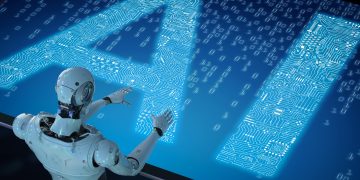
Artificial intelligence systems now recognize speech, analyze images, generate written language, compose music, predict consumer behavior, and assist scientific research. Autonomous vehicles navigate roads using sensors and machine learning. Smart systems manage energy grids, financial markets, logistics operations, and healthcare networks.
Machines are gradually becoming capable of interpreting the world rather than merely operating within it.
This shift may become one of the most important turning points in human civilization.
The future of technology will likely be defined not simply by faster computers or smaller devices, but by the growing ability of machines to understand context, learn from experience, interact naturally with humans, and make increasingly complex decisions.
At the same time, this transformation raises profound questions.
What happens when machines become capable of performing intellectual tasks once considered uniquely human?
How will societies adapt to automation, intelligent systems, and algorithmic decision-making?
Can humanity maintain control over technologies becoming increasingly autonomous and powerful?
The future of human technology may ultimately become a story not only about machines — but about redefining what it means to be human in a world shaped by intelligent systems.
The Evolution From Calculation to Understanding
Traditional computers were designed primarily for calculation.
Early computing systems processed mathematical operations at speeds impossible for humans. They followed explicit instructions and operated according to rigid programming rules.
These systems were powerful but limited.
A traditional computer could calculate equations rapidly but could not understand language, identify emotions, or interpret visual scenes naturally.
The rise of machine learning changed this dramatically.
Instead of programming computers step-by-step for every situation, researchers began developing systems capable of learning patterns from data.
This was a revolutionary idea.
Rather than telling machines exactly how to recognize a cat in a photograph, developers trained neural networks using enormous image datasets. Over time, the system learned to identify patterns associated with cats independently.
This learning-based approach transformed artificial intelligence.
Machines became capable of performing tasks previously considered difficult or impossible for software systems.
Speech recognition improved rapidly. Translation systems became more accurate. Recommendation algorithms learned consumer preferences. AI systems defeated world champions in chess and complex strategy games.
Modern AI systems increasingly operate less like traditional tools and more like adaptive systems capable of responding dynamically to information.
The difference between calculation and understanding may define the next stage of technological evolution.
Artificial Intelligence and the Rise of Predictive Technology
One of the defining characteristics of modern technology is prediction.
Digital systems no longer simply respond to human commands. Increasingly, they anticipate behavior before users act.
Streaming platforms recommend movies based on viewing history. Online stores predict purchasing interests. Navigation apps forecast traffic conditions. Social media algorithms determine which content users are most likely to engage with.
Predictive systems influence daily life constantly.
This capability depends heavily on data collection.
Every digital interaction generates information regarding preferences, movement patterns, communication habits, and behavioral tendencies.
Artificial intelligence analyzes this information to identify patterns humans may not notice independently.
This creates enormous commercial and technological power.
Companies capable of predicting consumer behavior can optimize advertising, improve engagement, and increase profitability.
Governments may use predictive analytics for public safety, healthcare planning, and infrastructure management.
However, predictive technology also raises ethical concerns.
If algorithms influence decisions regarding employment, education, insurance, or policing, biases within data systems may affect real human lives.
The future of predictive technology may depend heavily on transparency and ethical regulation.
Autonomous Systems and the End of Manual Operation
For centuries, most machines required direct human control.
Cars needed drivers. Factories required workers operating equipment manually. Aircraft depended entirely on human pilots.
Today, automation is gradually changing that relationship.
Autonomous systems use artificial intelligence, sensors, robotics, and real-time data processing to operate with reduced human involvement.
Self-driving vehicles represent one of the clearest examples.
Autonomous cars continuously analyze roads, traffic movement, weather conditions, pedestrian behavior, and navigation systems simultaneously. These vehicles process enormous amounts of information far faster than human drivers can react.
Supporters argue autonomous transportation could reduce accidents, improve accessibility, and transform urban infrastructure.
Critics worry about safety, legal liability, cybersecurity vulnerabilities, and employment disruption affecting drivers and transportation industries.
Autonomous technology extends far beyond transportation.
Warehouses increasingly rely on robotic systems capable of organizing inventory independently. Agricultural machines use AI-driven precision farming systems. Military organizations research autonomous drones and defense platforms.
Homes themselves are becoming partially autonomous environments.
Smart systems regulate temperature, lighting, security, and energy usage automatically based on behavioral patterns.
Future societies may interact continuously with systems operating semi-independently in the background.
This creates convenience and efficiency — but also dependence.
The more infrastructure becomes autonomous, the more vulnerable societies may become to technical failures, cyberattacks, or algorithmic errors.
The Human-Machine Relationship
One of the most important technological questions of the future involves the relationship between humans and intelligent systems.
Earlier machines functioned clearly as tools.
A hammer extended physical force. A calculator accelerated arithmetic. A car improved transportation speed.
Modern intelligent systems operate differently because they increasingly participate in decision-making processes.
AI systems recommend medical diagnoses. Algorithms influence hiring decisions. Financial software guides investments. Navigation systems shape travel routes. Social media algorithms determine information exposure.
Machines are gradually becoming cognitive partners rather than purely mechanical instruments.
This changes human behavior.
People increasingly rely on technology for memory, navigation, communication, and information retrieval. Smartphones already function as extensions of human cognition in many ways.
Future technologies may deepen this integration further.
Brain-computer interface research explores direct communication between nervous systems and digital devices. Augmented reality systems may overlay digital information continuously onto physical environments.
Human experience itself may become technologically mediated.
This raises philosophical questions humanity has never fully resolved before.
If memory becomes externalized through digital systems, how does that affect identity?
If algorithms shape perception and attention continuously, can individuals remain fully autonomous in their thinking?
Technology may increasingly influence not only what humans do — but how humans think.
Biotechnology and the Merging of Digital and Biological Systems
Technology is also beginning to intersect more deeply with biology.
Wearable devices monitor heart rate, sleep quality, stress levels, and movement patterns continuously. AI systems analyze medical data to identify disease risks earlier than traditional methods.
Biotechnology companies are exploring gene editing, synthetic biology, neural engineering, and personalized medicine.
The boundary between technological systems and biological systems may gradually weaken.
Brain-computer interfaces represent one of the most ambitious areas of research.
These systems aim to allow direct communication between neural activity and digital devices.
Potential applications include restoring movement for paralyzed individuals, improving communication for patients with neurological conditions, and eventually enhancing cognitive interaction with technology itself.
Such developments could transform healthcare dramatically.
They also raise ethical concerns.
Could technological enhancement create new forms of inequality?
Should there be limits regarding biological modification or cognitive augmentation?
The merging of digital and biological systems may become one of the defining technological debates of the future.
The Data Economy and Digital Power
Modern technology companies derive enormous influence from data.
Information regarding consumer behavior, communication patterns, search activity, purchasing decisions, and social interaction has become economically valuable on unprecedented scales.
Some experts describe data as the “new oil” of the digital economy.
Large technology corporations possess extraordinary power partly because they control vast digital ecosystems collecting and analyzing user information continuously.
This concentration of data creates competitive advantages difficult for smaller organizations to match.
The data economy influences politics, commerce, entertainment, advertising, and public discourse.
Social media platforms shape information exposure for billions of people. Recommendation algorithms influence cultural trends and consumer behavior globally.
As artificial intelligence grows more sophisticated, data becomes even more valuable because machine learning systems improve through larger datasets.
This creates difficult questions regarding ownership and privacy.
Who owns personal data?
How should digital information be regulated?
Can individuals maintain privacy within highly connected technological environments?
The future of digital power may depend heavily on how societies answer these questions.
Technology and the Transformation of Education
Technology is also redefining how humans learn.
Traditional education systems were built for industrial societies emphasizing standardized instruction and memorization.
Digital technology changes educational possibilities dramatically.
Students can now access lectures, research materials, and educational platforms globally through internet-connected systems. AI-powered tutoring systems personalize instruction according to individual learning styles and performance patterns.
Virtual reality may eventually create immersive educational simulations allowing students to explore historical environments, scientific processes, or engineering systems interactively.
The role of teachers may evolve from information delivery toward mentorship, critical thinking development, and emotional guidance.
At the same time, educational systems face pressure to prepare students for rapidly changing technological environments.
Skills involving creativity, adaptability, collaboration, and interdisciplinary problem-solving may become increasingly important.
Future workers may need continuous education throughout their careers because technological change evolves faster than traditional academic cycles.
Learning itself may become a lifelong technologically supported process rather than a limited phase of early life.
Environmental Technology and Sustainable Innovation
Technology creates environmental challenges but also environmental solutions.
Industrial development contributed heavily to climate change, pollution, and resource depletion. However, modern technology may also become essential for addressing these crises.
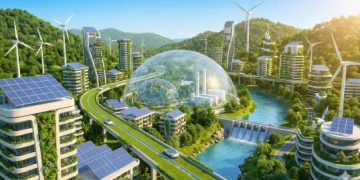
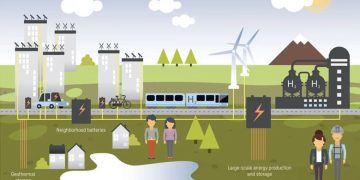
Renewable energy systems continue improving through advances in engineering and materials science. Smart grids optimize electricity distribution. AI-powered environmental monitoring systems track pollution, weather patterns, and ecosystem changes.
Precision agriculture reduces waste while improving food production efficiency. Electric transportation may reduce fossil fuel dependence.
Carbon capture technology, advanced battery systems, and sustainable manufacturing processes continue developing rapidly.
The future relationship between technology and environmental sustainability may determine long-term planetary stability.
Innovation alone cannot solve environmental problems automatically.
Political cooperation, economic restructuring, and behavioral change remain essential.
However, advanced technology will likely play a critical role in any large-scale sustainability strategy.
The Ethical Future of Intelligent Technology
As machines become more capable, ethical concerns become increasingly urgent.
Artificial intelligence systems may contain biases reflecting training data inequalities. Surveillance technologies threaten privacy. Deepfake systems complicate trust in digital media.
Automation may increase economic inequality if productivity gains remain concentrated among large corporations or wealthy nations.
Military AI systems introduce additional risks involving autonomous weapons and algorithmic warfare.
The ethical future of technology may depend not only on innovation speed but also on governance quality.
Societies must decide how much autonomy intelligent systems should possess and what limits should exist regarding surveillance, automation, and data collection.
Technology development is not purely technical.
It reflects social values, political priorities, and economic incentives.
The future of intelligent technology will therefore depend heavily on human choices.
Conclusion
Human civilization is entering a technological era fundamentally different from previous revolutions.
Machines are no longer merely mechanical tools performing physical tasks. Increasingly, they are becoming intelligent systems capable of learning, predicting, analyzing, and interacting with the world dynamically.
Artificial intelligence, autonomous systems, biotechnology, predictive algorithms, and digital infrastructure are reshaping nearly every aspect of modern life.
The future of technology may involve deeper integration between humans and machines than ever before in history.
This transformation offers extraordinary opportunities.
Healthcare may improve dramatically. Scientific discovery may accelerate. Education could become more personalized and accessible. Environmental technologies may support sustainability efforts.
Yet intelligent technology also introduces major risks involving privacy, inequality, surveillance, misinformation, and dependence on digital systems.
The future will not be shaped by technology alone.
It will be shaped by how humanity chooses to guide technological development ethically and responsibly.
The greatest challenge of the coming century may not involve building intelligent machines.
It may involve ensuring that human wisdom evolves alongside them.









Discussion about this post