
















Introduction
Human civilization has always been shaped by machines.
The wheel transformed transportation. The printing press transformed communication. Steam engines transformed manufacturing. Electricity transformed cities and industries. Computers transformed information processing.
Today, however, humanity is experiencing a technological transformation unlike any previous revolution because modern machines are no longer limited to mechanical functions alone.
Machines are becoming intelligent.
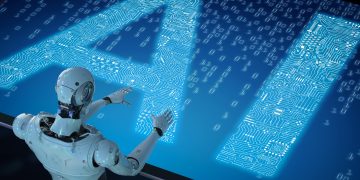
Artificial intelligence, robotics, machine learning, automation systems, and advanced software are now capable of performing tasks that once required human reasoning, creativity, perception, and decision-making.
This marks the beginning of what many experts describe as the age of smart machines.
Unlike traditional industrial machines that simply repeated physical actions, modern intelligent systems can analyze information, adapt to changing environments, learn from data, generate content, and interact with humans in increasingly natural ways.
Smart machines are entering nearly every major industry.
Factories use autonomous robots and predictive AI systems. Hospitals rely on machine learning for diagnostics and medical imaging. Financial institutions use algorithms for fraud detection and market analysis. Retail companies automate logistics and customer service. Creative industries now use generative AI to produce art, music, writing, and visual design.
The rise of smart technology is transforming not only economies but also the structure of human life itself.
People increasingly depend on digital systems for communication, navigation, entertainment, education, shopping, healthcare, and work.
At the same time, intelligent machines introduce difficult social and ethical questions.
What happens when machines outperform humans in certain intellectual tasks?
How will employment evolve in highly automated economies?
Can creativity remain uniquely human?
Will technology strengthen human potential — or create greater dependence on algorithms and automation?
The age of smart machines may ultimately become one of the most important turning points in human history.
From Mechanical Automation to Intelligent Automation
Automation itself is not new.
Factories have used machines for repetitive labor since the Industrial Revolution. Assembly lines dramatically increased production efficiency during the twentieth century. Industrial robots later transformed automotive manufacturing and large-scale production systems.
However, earlier automation was mostly mechanical and predictable.
Traditional industrial robots operated according to strict programmed instructions. They performed repetitive tasks efficiently but struggled in dynamic or unpredictable environments.
Modern smart machines are different because they incorporate artificial intelligence.
Machine learning systems allow technology to adapt based on data and experience. Instead of following only fixed instructions, intelligent systems can improve performance over time by analyzing patterns and outcomes.
For example, modern warehouse robots navigate complex environments using sensors and AI-based mapping systems. Autonomous vehicles continuously interpret road conditions and surrounding movement. AI-powered customer service systems understand natural language conversations.
The shift from rigid automation to adaptive intelligence represents a major technological leap.
Machines are gradually becoming capable of handling complexity rather than simply repeating routine actions.
Smart Technology in the Workplace
One of the largest impacts of intelligent machines involves work.
Automation is transforming employment across manufacturing, logistics, transportation, healthcare, retail, finance, media, and administrative industries.
Many repetitive tasks are increasingly handled by software systems or robotic platforms.
In warehouses, robots transport inventory continuously with minimal human supervision. AI systems optimize supply chains and forecast consumer demand. Automated checkout systems reduce reliance on cashiers. Financial algorithms process transactions and analyze risk far faster than human analysts.
The workplace itself is becoming more data-driven and technologically integrated.
At the same time, smart machines are not affecting every profession equally.
Jobs involving repetitive and predictable tasks face the highest automation risk. Occupations requiring emotional intelligence, creativity, strategic thinking, leadership, and interpersonal communication remain more difficult for machines to replicate fully.
This creates major economic transitions.
Workers increasingly need digital skills and adaptability. Lifelong learning may become essential in rapidly evolving economies shaped by technological change.
Educational systems are also under pressure to evolve.
Traditional industrial-era education models emphasized standardization and memorization. Modern economies increasingly reward creativity, collaboration, critical thinking, and technological literacy.
The future workforce may need to collaborate with intelligent systems rather than compete directly against them.

Artificial Intelligence and Creative Industries
One of the most surprising developments of recent years involves AI entering creative fields.
For decades, creativity was considered uniquely human.
Painting, music composition, storytelling, filmmaking, poetry, and design were seen as expressions of imagination and emotional experience impossible for machines to reproduce authentically.
Generative AI has challenged those assumptions.
Modern AI systems can produce highly realistic images, compose music, write articles, generate video content, and assist with graphic design.
These technologies are transforming creative industries rapidly.
Writers use AI for brainstorming and editing assistance. Designers generate concept art within seconds. Marketing companies automate advertising content creation. Film studios experiment with AI-enhanced visual effects and script analysis.
Some artists view AI as a powerful creative tool capable of expanding artistic possibilities.
Others worry that machine-generated content may reduce originality or threaten creative professions.
The debate surrounding AI creativity reflects a larger question about technology and human identity.
If machines can imitate creative expression convincingly, what remains uniquely human?
Some experts argue that creativity involves more than producing patterns or aesthetic outputs.
Human creativity emerges from lived experience, emotion, memory, cultural understanding, and consciousness itself.
AI may replicate style, but it does not experience existence.
The future of creative industries may therefore involve collaboration between human imagination and machine efficiency rather than complete replacement.
Smart Homes and Everyday Automation
Technology is also transforming domestic life.
Smart homes increasingly integrate AI-powered systems controlling lighting, temperature, security, entertainment, and appliances automatically.
Voice assistants allow users to manage digital systems conversationally. Smart refrigerators monitor food inventory. Automated vacuum robots clean living spaces independently. AI-driven energy systems optimize electricity consumption.
The goal of smart home technology is convenience and efficiency.
As sensors and interconnected devices become more advanced, homes may gradually function as intelligent environments responding continuously to occupant behavior.
Future homes may predict user preferences automatically.
Lighting systems could adjust according to mood or time of day. Kitchens may recommend meals based on dietary needs and available ingredients. AI assistants could manage schedules, shopping, communication, and entertainment seamlessly.
This increasing integration of technology into domestic environments reflects a broader societal trend:
Technology is becoming ambient rather than isolated.
Instead of interacting with standalone devices occasionally, humans increasingly live inside interconnected digital ecosystems operating continuously in the background.
Transportation and Autonomous Mobility
Transportation technology is undergoing one of the largest transformations in modern history.
Autonomous vehicles, electric transportation systems, AI-powered traffic management, and connected mobility platforms are reshaping how people and goods move through cities.
Self-driving vehicles represent a major technological ambition.
These systems rely on machine learning, sensors, cameras, mapping technologies, and real-time data processing to navigate roads autonomously.
Supporters believe autonomous transportation may reduce accidents, improve accessibility, and increase efficiency.
Human error causes most traffic accidents globally. Intelligent systems capable of reacting instantly to changing conditions could potentially improve road safety significantly.
Autonomous logistics systems may also transform global commerce.
Delivery drones, robotic warehouses, and AI-optimized shipping networks are already changing supply chain management.
At the same time, transportation automation creates major challenges.
Millions of jobs involving driving and logistics may eventually face disruption. Legal liability questions remain unresolved. Cybersecurity risks involving connected vehicles require careful management.
The future transportation ecosystem may become highly intelligent, interconnected, and increasingly automated.
Healthcare and Intelligent Medicine
Healthcare is one of the most promising areas for smart machine technology.
Artificial intelligence systems now assist doctors in analyzing medical images, predicting disease risks, and managing patient data.
Machine learning algorithms can identify patterns within enormous medical datasets more rapidly than traditional methods.
AI systems help detect cancers through imaging analysis, monitor heart conditions through wearable devices, and support personalized treatment planning.
Robotic surgery systems improve precision during complex procedures. Telemedicine platforms expand healthcare access through digital communication technologies.
Future healthcare may become increasingly preventive rather than reactive.
Wearable technology and continuous health monitoring systems may identify medical risks earlier, allowing intervention before diseases become severe.
However, healthcare AI also introduces ethical concerns.
Medical data privacy, algorithmic bias, and transparency remain major issues. Patients may hesitate to trust systems they do not fully understand.
The challenge for intelligent medicine involves combining technological capability with human-centered care and ethical responsibility.
The Psychological Effects of Smart Technology
The age of smart machines is not affecting only industries and infrastructure.
It is also influencing human psychology and behavior.
People now interact with algorithms continuously throughout daily life.
Social media platforms personalize content feeds. Recommendation systems influence entertainment choices. Digital notifications compete constantly for attention.
This creates environments optimized for engagement.
Many technology companies rely heavily on advertising-based business models, meaning user attention becomes economically valuable.
As a result, digital platforms often encourage continuous interaction through notifications, personalized recommendations, autoplay systems, and infinite scrolling interfaces.
These systems can improve convenience and entertainment access.
However, they may also contribute to anxiety, distraction, information overload, and reduced attention spans.
The relationship between humans and technology is becoming increasingly psychological rather than purely functional.
Future technological development may require greater focus on digital well-being and healthy human-machine interaction.
Ethics and the Risks of Smart Machines
The rise of intelligent technology introduces serious ethical challenges.
Artificial intelligence systems may contain biases reflecting inequalities within training data. Automated decision-making systems can influence hiring, policing, lending, and healthcare outcomes.
Surveillance technology powered by AI threatens privacy and civil liberties. Facial recognition systems allow real-time identification and tracking capabilities previously impossible at large scale.
Autonomous weapons create additional military risks.
Deepfake technologies complicate trust in digital information by generating highly realistic fake media.
The rapid pace of technological development often exceeds the speed of regulation and public understanding.
This creates uncertainty regarding accountability and oversight.
Who is responsible when autonomous systems fail?
How should governments regulate artificial intelligence?
Can societies maintain democratic values within increasingly algorithm-driven environments?
The future of smart technology may depend heavily on ethical governance and transparency.
Human Identity in the Machine Age
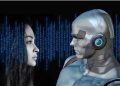
One of the deepest questions raised by intelligent machines concerns human identity itself.
Throughout history, humans often defined themselves partly through intellectual superiority over other species and tools.
As machines become capable of generating language, analyzing information, and producing creative outputs, traditional assumptions regarding intelligence may evolve.
Some fear intelligent systems could reduce human uniqueness.
Others argue technology may enhance human capability rather than diminish it.
The future may involve increasing collaboration between humans and machines.
Humans provide emotional understanding, ethics, cultural meaning, imagination, and consciousness. Machines provide computational speed, memory capacity, pattern recognition, and automation efficiency.
The relationship between human intelligence and machine intelligence may define the next era of civilization.
Conclusion
The age of smart machines represents one of the most significant technological transformations in human history.
Artificial intelligence, automation systems, robotics, and intelligent digital infrastructure are reshaping work, creativity, transportation, healthcare, communication, and domestic life.
Unlike earlier industrial technologies focused mainly on physical labor, modern smart systems increasingly influence cognitive and creative processes.
This creates extraordinary opportunities.
Healthcare may improve dramatically. Productivity could increase. Transportation systems may become safer and more efficient. Scientific research may accelerate through AI-powered analysis.
However, intelligent technology also introduces major challenges involving employment, ethics, surveillance, inequality, psychological well-being, and human identity.
The future of smart machines will not depend solely on engineering breakthroughs.
It will depend on how humanity chooses to integrate intelligence, ethics, and technology together.
The machine age is no longer approaching.
It has already begun.









Discussion about this post