

















Introduction: Innovation at an Exponential Speed
Innovation has always shaped human civilization, but what distinguishes the modern era is its speed, scale, and interconnectedness. For most of history, technological progress moved gradually—centuries passed between major breakthroughs. Today, however, innovation is no longer linear. It is exponential.
Artificial intelligence, biotechnology, quantum computing, advanced robotics, renewable energy systems, and digital networks are evolving simultaneously and reinforcing each other. This convergence is creating a new phase of human development where innovation is not just accelerating—it is compounding.
In this environment, change no longer arrives in isolated waves. Instead, multiple technological revolutions unfold at the same time, reshaping economies, societies, industries, and even human identity itself.
The future of innovation is therefore not just about new inventions. It is about how interconnected systems of intelligence, biology, energy, and computation redefine what is possible for humanity.
This article explores the concept of exponential innovation, the convergence of emerging technologies, the transformation of human capability, and the potential futures that may emerge from continuous technological acceleration.
The Concept of Exponential Innovation
Why Progress No Longer Moves in a Straight Line
Traditional innovation followed a linear pattern: gradual improvement over time. However, modern innovation behaves differently.
Exponential innovation means that progress accelerates as technology improves itself. Each breakthrough enables faster development of the next one.
This is driven by:
- Digital computation power
- Artificial intelligence learning systems
- Global knowledge sharing
- Automation of research and design
- Rapid prototyping technologies
For example, AI systems now assist in designing better AI systems, creating a feedback loop of improvement.
Similarly, advancements in computing power accelerate breakthroughs in fields like medicine, materials science, and climate modeling.
The result is a world where innovation compounds rather than simply accumulates.
The Convergence of Technologies
When Multiple Innovations Merge Into One System
One of the defining characteristics of future innovation is convergence.
Rather than developing independently, technologies increasingly interact and merge.
Key converging fields include:
- Artificial intelligence
- Biotechnology
- Nanotechnology
- Quantum computing
- Robotics
- Energy systems
This convergence creates entirely new categories of innovation that did not previously exist.
For example:
- AI + biotechnology → personalized medicine and gene editing
- AI + robotics → autonomous industrial systems
- Quantum computing + AI → ultra-powerful data analysis
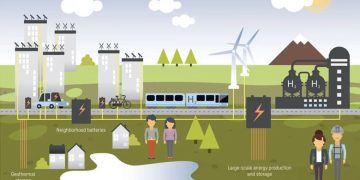
- Renewable energy + smart grids → self-optimizing energy ecosystems
When technologies converge, their combined impact becomes greater than the sum of their parts.
Artificial Intelligence as an Innovation Engine
Machines That Accelerate Discovery
Artificial intelligence is becoming one of the most important drivers of future innovation.
AI systems are now capable of:
- Generating new scientific hypotheses
- Designing complex engineering systems
- Optimizing industrial processes
- Creating digital simulations of physical environments
- Assisting in drug discovery and material science
In many industries, AI is already reducing the time required for innovation from years to months.
In the future, AI may become a general-purpose innovation engine, capable of assisting in nearly every field of human knowledge.
This raises a fundamental shift: innovation itself is becoming automated.
Biotechnology and the Redesign of Life
Innovation Beyond Machines
Biotechnology represents innovation at the biological level.
Future advancements may allow humans to:
- Modify genetic structures
- Prevent hereditary diseases
- Enhance biological resilience
- Extend lifespan significantly
- Design synthetic biological systems
Gene editing technologies such as CRISPR already allow precise modifications to DNA.
In the future, biotechnology may move from treating diseases to redesigning biological systems entirely.
This raises profound ethical and philosophical questions about the limits of human intervention in life itself.
Quantum Computing and Computational Breakthroughs
Unlocking New Dimensions of Problem Solving
Quantum computing represents a fundamental shift in how information is processed.
Unlike classical computers, quantum systems use quantum states to perform calculations at vastly higher complexity levels.
Potential applications include:
- Molecular simulation
- Advanced cryptography
- Climate modeling
- Optimization problems
- Financial system analysis
Quantum computing could solve problems that are currently impossible for traditional computers.
This may dramatically accelerate innovation in science, engineering, and economics.
However, quantum technology is still in early development stages, with significant technical challenges remaining.
Robotics and Autonomous Systems
Machines That Act in the Physical World
Robotics is transforming how humans interact with physical environments.
Future robotic systems may be capable of:
- Fully autonomous manufacturing
- Precision medical surgery
- Disaster response operations
- Agricultural automation
- Construction and infrastructure development
When combined with AI, robotics becomes a powerful system capable of independent decision-making and action.
This creates a world where physical labor is increasingly automated, reshaping labor markets and economic structures.
Energy Innovation and the Post-Fossil Fuel World
Powering the Future
Energy systems are undergoing one of the most important transformations in human history.
Future innovation in energy includes:
- Advanced solar technologies
- Wind energy optimization
- Nuclear fusion research
- Smart energy grids
- Energy storage breakthroughs
The transition away from fossil fuels is not just environmental—it is structural.
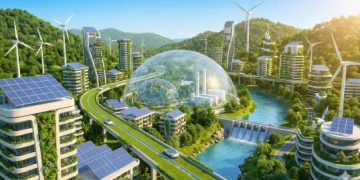
Energy systems of the future will likely be decentralized, intelligent, and renewable.
This shift will redefine global geopolitics, industrial systems, and economic power structures.
Human Enhancement Technologies
Redefining Human Capability
Future innovation may extend beyond external systems and into human biology itself.
Emerging fields include:
- Neural interface technologies
- Cognitive enhancement systems
- Brain-computer interaction
- Sensory augmentation
- Digital memory extension systems
These technologies could expand human cognitive and physical abilities beyond natural limitations.
However, they also raise complex ethical concerns regarding identity, inequality, and human definition.
The Innovation Economy of the Future
Value Creation in a Digital World
Future economies will be increasingly driven by innovation rather than traditional production.
Key characteristics include:
- AI-driven productivity
- Digital asset economies
- Platform-based ecosystems
- Knowledge-intensive industries
- Automated production systems
Value creation will depend more on ideas, data, and intelligence than physical labor or raw materials.
Innovation will become the primary economic resource.
Global Collaboration and Open Innovation
Knowledge Without Borders
Future innovation is increasingly global and collaborative.
Open-source systems, digital communication platforms, and global research networks allow ideas to circulate rapidly.
This creates:
- Faster problem-solving
- Shared technological development
- Cross-cultural collaboration
- Distributed innovation ecosystems
However, it also raises challenges related to intellectual property, competition, and geopolitical tension.
Risks of Rapid Innovation
The Dark Side of Acceleration
While exponential innovation creates opportunities, it also introduces risks:
1. Technological Unemployment
Automation may replace large segments of the workforce.
2. Ethical Uncertainty
New technologies often outpace ethical frameworks.
3. Inequality Expansion
Advanced technologies may be unevenly distributed.
4. Systemic Dependence
Society may become overly dependent on complex systems.
5. Security Risks
Highly advanced technologies may be misused or weaponized.
Managing these risks is essential for sustainable progress.
The Human Role in Future Innovation
Creativity in an Automated World
As machines become more capable, the role of humans in innovation evolves.
Humans will increasingly focus on:
- Defining goals and values
- Creative and abstract thinking
- Ethical decision-making
- Interdisciplinary synthesis
- Visionary leadership
Rather than replacing human innovation, technology will amplify it.
The most important innovations of the future may come from human-AI collaboration.
The Speed Paradox of Innovation
Faster Progress, Greater Instability
As innovation accelerates, societies face a paradox:
Faster innovation improves capabilities but increases instability.
This creates pressure on:
- Education systems
- Legal frameworks
- Economic structures
- Cultural adaptation
Societies must learn to adapt at the same speed as technological change.
The Future of Innovation Ecosystems
Toward Global Intelligence Networks
Future innovation ecosystems may operate as interconnected global intelligence systems.
These systems could integrate:
- AI research networks
- Scientific databases
- Real-time global collaboration
- Automated discovery platforms
Innovation may become a continuous, distributed process across humanity.
Conclusion: Innovation Without Limits
The future of innovation is defined by acceleration, convergence, and transformation.
Technologies are no longer evolving separately—they are merging into interconnected systems that reshape every aspect of human life.
Artificial intelligence, biotechnology, quantum computing, robotics, and energy systems together form the foundation of a new technological era.
However, this future also demands responsibility. The speed of innovation must be matched by ethical awareness, governance, and human-centered design.
Ultimately, innovation is not just about creating new technologies—it is about redefining what it means to be human in a rapidly changing world.
The future will belong not to the most advanced machines, but to the societies that can innovate wisely, responsibly, and continuously in harmony with both technology and humanity itself.










Discussion about this post