
































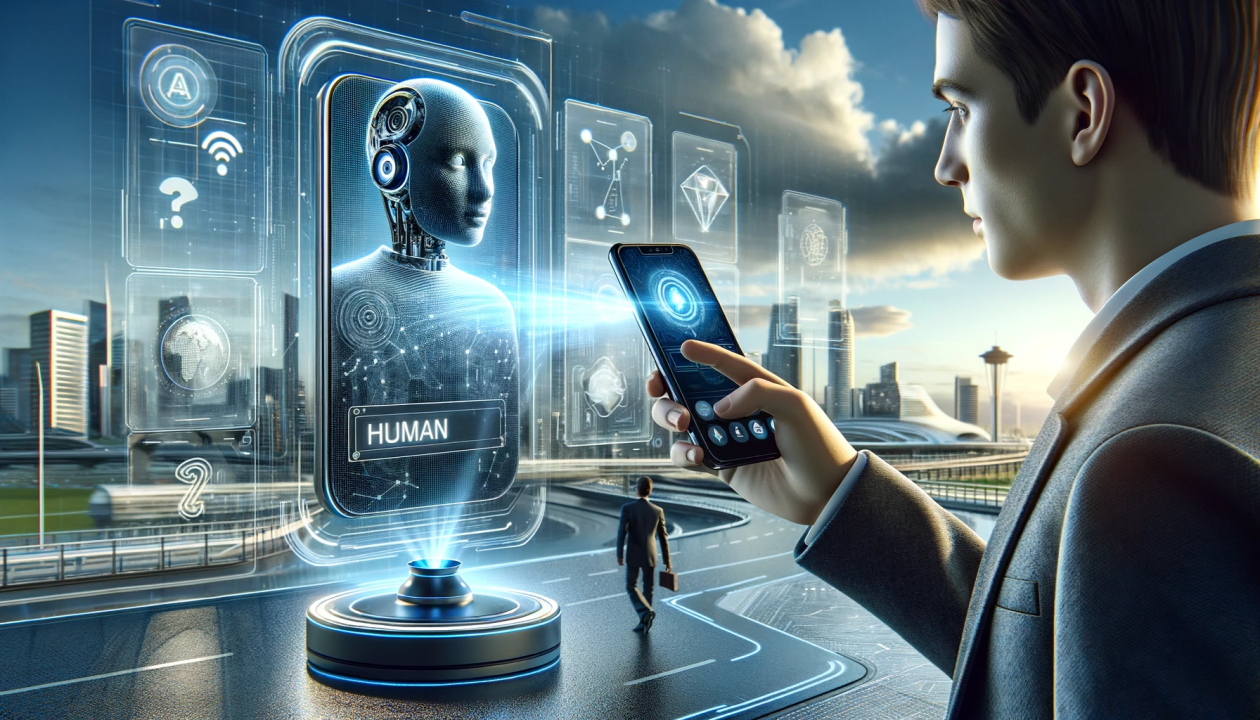
Introduction: The Rapid Evolution of Smartphones with AI
Smartphones have come a long way since their inception, evolving from simple communication devices into powerful tools that assist in almost every aspect of our daily lives. From the days of flip phones and basic touchscreens to the sleek, multifaceted devices we carry today, smartphones have become integral to modern society. The key factor behind this rapid evolution is Artificial Intelligence (AI), which has dramatically enhanced the capabilities of smartphones.
By 2025, AI has progressed to the point where it is embedded in nearly every facet of our smartphone experience. From virtual assistants that understand our needs more intuitively to cameras that take perfect photos without manual input, AI is making our smartphones smarter, faster, and more personalized. The rise of AI in smartphones is not just about adding new features, but about transforming how we interact with technology, making our devices more intuitive, efficient, and capable of anticipating our needs.
This article explores how AI is transforming smartphones by examining the most significant innovations—from AI personal assistants and camera enhancements to health and fitness integrations and smarter battery management. Additionally, we will explore the impact of AI on smartphone security features and discuss what the future holds for AI-powered devices in 2025 and beyond.
AI Personal Assistants: More Intuitive, Smarter Virtual Assistants
One of the most visible applications of AI in smartphones is in the realm of personal assistants. Virtual assistants like Siri, Google Assistant, and Alexa were among the first AI-powered features to be integrated into smartphones, and they have evolved significantly over the past few years. By 2025, personal assistants will be more intuitive, context-aware, and smarter than ever before.
In 2025, AI personal assistants will go beyond basic voice commands and will function as proactive, personalized agents that learn from user behavior. For instance, they will be able to anticipate needs, suggest actions based on prior behavior, and even act autonomously to complete tasks without requiring explicit commands. Imagine a personal assistant that suggests your calendar appointments, sets reminders for your favorite activities, and adjusts your settings based on your location or habits—all before you even ask.
One of the biggest changes in personal assistants will be their ability to handle more complex tasks. These assistants will leverage deep learning models and natural language processing (NLP) to understand nuance, context, and intent in conversations. For example, instead of just responding to a direct request like “Set a reminder for my meeting,” the assistant may proactively ask questions such as, “Would you like me to schedule a follow-up for the meeting?” or “Should I send an invitation to your colleagues?”
Additionally, virtual assistants will be able to connect and interact with other smart devices in your home or car, creating a seamless ecosystem where everything—from lights to thermostats to entertainment systems—can be controlled by voice, gesture, or even thought, thanks to more advanced brain-computer interfaces.
Camera Innovation: AI-Enhanced Photography and Video
The smartphone camera has been one of the most important features of modern devices, and with the integration of AI, photography and video capture have entered a new era. In 2025, AI-enhanced cameras will be even more powerful, enabling users to take professional-grade photos and videos with minimal effort.
One of the most exciting developments will be the AI-driven improvement of image quality. Smartphones in 2025 will have AI algorithms capable of enhancing image resolution, optimizing lighting in real time, and even adjusting the composition to create visually stunning photos. For example, AI will automatically adjust exposure, white balance, and depth of field, ensuring perfect shots regardless of lighting conditions or subject movement.
AI will also enable real-time scene recognition, where the camera automatically identifies what you’re capturing—whether it’s a landscape, portrait, food, or a moving object—and adjusts settings accordingly. For instance, if you’re taking a picture of your pet, the AI could automatically apply filters or effects to enhance the pet’s features, remove distracting backgrounds, or add motion blur to highlight action shots.
In addition, smartphones in 2025 will feature improved video stabilization powered by AI, allowing for ultra-smooth video capture even while on the move. AI-driven autofocus and tracking will ensure that subjects are always in sharp focus, and the ability to adjust the aperture and frame rate will allow for cinematic-quality videos, all in a device that fits in your pocket.
Health and Fitness Integration: AI-Powered Wellness Tracking
AI’s influence on smartphones has extended far beyond entertainment and productivity; it is now playing an essential role in health and wellness tracking. In 2025, smartphones will have a much deeper integration with AI-powered health apps, enabling users to monitor and improve their overall wellness with personalized insights and recommendations.
AI-enabled health and fitness apps will be able to analyze data from wearables, sensors, and even your smartphone’s built-in accelerometer, providing a comprehensive picture of your health. AI will track not only physical activity like walking, running, or cycling, but also monitor sleep patterns, heart rate variability, stress levels, and even emotional well-being. By 2025, health apps will be able to detect early signs of potential health issues, such as irregular heart rhythms, poor posture, or even mental health concerns like anxiety and depression, based on data patterns.
For example, your smartphone might notify you that your stress levels are elevated based on patterns of activity and provide you with guided breathing exercises or meditation recommendations. It could even suggest a workout or a quick walk based on the data it has learned about your routines and preferences. If your sleep quality is poor, the AI could adjust your phone’s settings (like screen brightness or notifications) to help improve your rest.
Moreover, the integration of AI-powered virtual health coaches will allow users to access personalized fitness routines, meal plans, and wellness tips. These virtual coaches will become even more sophisticated over time, understanding your preferences, goals, and challenges and offering suggestions in real-time, much like a personal trainer who’s always in your pocket.
Smart Battery Management: AI Optimizing Power Consumption
Battery life has always been one of the most critical aspects of a smartphone, and while hardware improvements have made significant strides, the integration of AI is providing new ways to optimize power consumption. By 2025, AI will be at the core of smart battery management, enabling smartphones to last longer and charge more efficiently.
AI will be able to learn usage patterns over time, predicting which apps or services you’ll use next and adjusting power distribution accordingly. For instance, if you frequently use social media apps in the evening, the smartphone’s AI might adjust power consumption by dimming the screen, limiting background app activity, or optimizing network usage to ensure your phone lasts through the night.
Additionally, AI will manage background tasks and processes more intelligently, shutting down unnecessary apps and functions when they’re not in use to conserve battery life. This will go hand-in-hand with the development of more energy-efficient hardware, like advanced chipsets and displays that consume less power.
Charging technologies will also be enhanced with AI. Your smartphone may learn your daily charging habits and adjust its charging speed to maximize battery health. Rather than charging your phone at full speed, it might choose to charge slower during the night and speed up only in the morning, ensuring that the battery maintains its longevity without sacrificing performance.
Security Features: AI-Driven Facial Recognition and Biometrics
Security is a major concern for smartphone users, and in 2025, AI will play an even more significant role in ensuring your device remains secure. Biometrics like facial recognition, fingerprints, and voice authentication will continue to evolve, powered by AI to increase accuracy and speed.
Facial recognition, already in use in many smartphones today, will become far more advanced in 2025. AI algorithms will enhance its accuracy, allowing the phone to recognize your face in different lighting conditions, angles, or even when you’re wearing glasses or a mask. Moreover, AI will make it more difficult for hackers to bypass facial recognition by adding multiple layers of identification, such as detecting subtle changes in your expressions or verifying your eye movements.
Fingerprint scanners will also benefit from AI-powered enhancements, reducing errors and improving recognition speed. AI will be able to learn from usage patterns and become more attuned to subtle changes in the user’s fingers over time, ensuring that security remains tight, even if the user’s finger slightly changes shape or size due to temperature or moisture.
Voice recognition will also see significant improvements, especially with AI-powered virtual assistants. By 2025, voice biometrics will likely be incorporated into smartphone security, allowing users to unlock their phones or authorize payments simply by speaking. The system will recognize your unique voiceprint, providing an additional layer of security for sensitive information.
Conclusion: The Future of Smartphones as AI-Powered Devices
The smartphone of 2025 will be a far more advanced device than anything we can imagine today. With AI at its core, smartphones will be smarter, more intuitive, and more personalized than ever before. Whether it’s through smarter virtual assistants, AI-enhanced photography, wellness tracking, or optimized battery management, the integration of AI will make smartphones even more indispensable in our daily lives.
As the line between human and machine continues to blur, smartphones will evolve from mere tools into intelligent assistants that understand our habits, predict our needs, and enhance our experiences in ways we never thought possible. By 2025, smartphones will be our companions, helping us manage our work, health, security, and personal lives in ways that feel seamless, natural, and effortless.
With AI powering everything from camera innovation to security features and battery management, the future of smartphones looks incredibly exciting. The next generation of smartphones will not only be smarter—they’ll be more attuned to us as individuals, continuously adapting to meet our unique needs in real-time.













Discussion about this post