






























techfusionnews
  • Home
  • Digital Lifestyle
    Can Cryptocurrency Replace Traditional Banking?

    Can Cryptocurrency Replace Traditional Banking?

    Is Augmented Reality Changing How We Learn?

    Is Augmented Reality Changing How We Learn?

    The Dark Side of the Smart City Revolution

    The Dark Side of the Smart City Revolution

    Can You Escape the Surveillance State with VPNs?

    Can You Escape the Surveillance State with VPNs?

    Are Digital Detoxes Just a Trend or a Necessity?

    Are Digital Detoxes Just a Trend or a Necessity?

    Is Social Media Helping or Hurting Your Mental Health?

    Is Social Media Helping or Hurting Your Mental Health?

  • Green Tech & Wellness
    Can Circular Economy Principles Revolutionize Healthcare?

    Can Circular Economy Principles Revolutionize Healthcare?

    Is AI the Secret to Personalized Eco-Wellness Solutions?

    Is AI the Secret to Personalized Eco-Wellness Solutions?

    How Do Green Building Materials Affect Your Overall Wellbeing?

    How Do Green Building Materials Affect Your Overall Wellbeing?

    Could Plant-Based Diets Be the Future of Eco-Friendly Wellness?

    Could Plant-Based Diets Be the Future of Eco-Friendly Wellness?

    How Can Smart Green Gadgets Improve Indoor Air Quality?

    How Can Smart Green Gadgets Improve Indoor Air Quality?

    Can Clean Energy Revolutionize Your Fitness Routine?

    Can Clean Energy Revolutionize Your Fitness Routine?

  • AI
    Will AI Ever Truly Understand Human Consciousness?

    Will AI Ever Truly Understand Human Consciousness?

    What Role Will AI Play in the Next Evolution of the Internet?

    What Role Will AI Play in the Next Evolution of the Internet?

    How Will AI Transform the Future of Education?

    How Will AI Transform the Future of Education?

    Can AI Understand and Create Humor?

    Can AI Understand and Create Humor?

    Is AI the Key to Unlocking Human Potential?

    Is AI the Key to Unlocking Human Potential?

    How Close Are We to AI Becoming Sentient?

    How Close Are We to AI Becoming Sentient?

  • Space Exploration
    Will We Ever Reach the Edge of the Observable Universe?

    Will We Ever Reach the Edge of the Observable Universe?

    What Are the Ethical Implications of Colonizing Other Planets?

    What Are the Ethical Implications of Colonizing Other Planets?

    What If Earth’s Magnetic Field Collapsed—Could We Survive in Space?

    What If Earth’s Magnetic Field Collapsed—Could We Survive in Space?

    Can Artificial Intelligence Assist in Discovering Exoplanets?

    Can Artificial Intelligence Assist in Discovering Exoplanets?

    Is Space Debris a Threat to Future Space Exploration?

    Is Space Debris a Threat to Future Space Exploration?

    Could We Use Wormholes to Travel Through Time and Space?

    Could We Use Wormholes to Travel Through Time and Space?

  • Innovation & Research
    Can Innovation Thrive Without Government Funding?

    Can Innovation Thrive Without Government Funding?

    Are We Ready for the Ethical Challenges of AI in Research?

    Are We Ready for the Ethical Challenges of AI in Research?

    How Can Failure Be the Most Important Lesson in Innovation?

    How Can Failure Be the Most Important Lesson in Innovation?

    Can the Digital Transformation of Research Lead to Global Scientific Unity?

    Can the Digital Transformation of Research Lead to Global Scientific Unity?

    What is the True Value of Interdisciplinary Research in Innovation?

    Why Do Some Scientific Discoveries Fail to Make an Impact?

    Why Do Some Scientific Discoveries Fail to Make an Impact?

  • All Tech
    Will AI Ever Truly Understand Human Consciousness?

    Will AI Ever Truly Understand Human Consciousness?

    Can Cryptocurrency Replace Traditional Banking?

    Can Cryptocurrency Replace Traditional Banking?

    Can Circular Economy Principles Revolutionize Healthcare?

    Can Circular Economy Principles Revolutionize Healthcare?

    Can Innovation Thrive Without Government Funding?

    Can Innovation Thrive Without Government Funding?

    Will We Ever Reach the Edge of the Observable Universe?

    Will We Ever Reach the Edge of the Observable Universe?

    What Role Will AI Play in the Next Evolution of the Internet?

    What Role Will AI Play in the Next Evolution of the Internet?

techfusionnews
  • Home
  • Digital Lifestyle
    Can Cryptocurrency Replace Traditional Banking?

    Can Cryptocurrency Replace Traditional Banking?

    Is Augmented Reality Changing How We Learn?

    Is Augmented Reality Changing How We Learn?

    The Dark Side of the Smart City Revolution

    The Dark Side of the Smart City Revolution

    Can You Escape the Surveillance State with VPNs?

    Can You Escape the Surveillance State with VPNs?

    Are Digital Detoxes Just a Trend or a Necessity?

    Are Digital Detoxes Just a Trend or a Necessity?

    Is Social Media Helping or Hurting Your Mental Health?

    Is Social Media Helping or Hurting Your Mental Health?

  • Green Tech & Wellness
    Can Circular Economy Principles Revolutionize Healthcare?

    Can Circular Economy Principles Revolutionize Healthcare?

    Is AI the Secret to Personalized Eco-Wellness Solutions?

    Is AI the Secret to Personalized Eco-Wellness Solutions?

    How Do Green Building Materials Affect Your Overall Wellbeing?

    How Do Green Building Materials Affect Your Overall Wellbeing?

    Could Plant-Based Diets Be the Future of Eco-Friendly Wellness?

    Could Plant-Based Diets Be the Future of Eco-Friendly Wellness?

    How Can Smart Green Gadgets Improve Indoor Air Quality?

    How Can Smart Green Gadgets Improve Indoor Air Quality?

    Can Clean Energy Revolutionize Your Fitness Routine?

    Can Clean Energy Revolutionize Your Fitness Routine?

  • AI
    Will AI Ever Truly Understand Human Consciousness?

    Will AI Ever Truly Understand Human Consciousness?

    What Role Will AI Play in the Next Evolution of the Internet?

    What Role Will AI Play in the Next Evolution of the Internet?

    How Will AI Transform the Future of Education?

    How Will AI Transform the Future of Education?

    Can AI Understand and Create Humor?

    Can AI Understand and Create Humor?

    Is AI the Key to Unlocking Human Potential?

    Is AI the Key to Unlocking Human Potential?

    How Close Are We to AI Becoming Sentient?

    How Close Are We to AI Becoming Sentient?

  • Space Exploration
    Will We Ever Reach the Edge of the Observable Universe?

    Will We Ever Reach the Edge of the Observable Universe?

    What Are the Ethical Implications of Colonizing Other Planets?

    What Are the Ethical Implications of Colonizing Other Planets?

    What If Earth’s Magnetic Field Collapsed—Could We Survive in Space?

    What If Earth’s Magnetic Field Collapsed—Could We Survive in Space?

    Can Artificial Intelligence Assist in Discovering Exoplanets?

    Can Artificial Intelligence Assist in Discovering Exoplanets?

    Is Space Debris a Threat to Future Space Exploration?

    Is Space Debris a Threat to Future Space Exploration?

    Could We Use Wormholes to Travel Through Time and Space?

    Could We Use Wormholes to Travel Through Time and Space?

  • Innovation & Research
    Can Innovation Thrive Without Government Funding?

    Can Innovation Thrive Without Government Funding?

    Are We Ready for the Ethical Challenges of AI in Research?

    Are We Ready for the Ethical Challenges of AI in Research?

    How Can Failure Be the Most Important Lesson in Innovation?

    How Can Failure Be the Most Important Lesson in Innovation?

    Can the Digital Transformation of Research Lead to Global Scientific Unity?

    Can the Digital Transformation of Research Lead to Global Scientific Unity?

    What is the True Value of Interdisciplinary Research in Innovation?

    Why Do Some Scientific Discoveries Fail to Make an Impact?

    Why Do Some Scientific Discoveries Fail to Make an Impact?

  • All Tech
    Will AI Ever Truly Understand Human Consciousness?

    Will AI Ever Truly Understand Human Consciousness?

    Can Cryptocurrency Replace Traditional Banking?

    Can Cryptocurrency Replace Traditional Banking?

    Can Circular Economy Principles Revolutionize Healthcare?

    Can Circular Economy Principles Revolutionize Healthcare?

    Can Innovation Thrive Without Government Funding?

    Can Innovation Thrive Without Government Funding?

    Will We Ever Reach the Edge of the Observable Universe?

    Will We Ever Reach the Edge of the Observable Universe?

    What Role Will AI Play in the Next Evolution of the Internet?

    What Role Will AI Play in the Next Evolution of the Internet?

No Result
View All Result
Plugin Install : Cart Icon need WooCommerce plugin to be installed.
techfusionnews
No Result
View All Result
Home Innovation & Research

Robotics: The Key to Overcoming Labor Shortages in Science?

December 11, 2025
in Innovation & Research
Robotics: The Key to Overcoming Labor Shortages in Science?

The fields of science and research have always relied heavily on human intellect, creativity, and labor to drive discoveries and innovations. However, as the demand for scientific advancement grows and the global workforce faces increasing challenges such as aging populations, skill gaps, and declining participation in STEM careers, one question looms larger than ever: can robotics be the solution to these labor shortages?

In this article, we explore how robotics is poised to play a pivotal role in addressing labor shortages in scientific fields and the potential it holds to revolutionize research across various disciplines. From automated laboratories to AI-powered assistants and robotic experimenters, the future of science could very well be intertwined with intelligent machines. Let’s take a deeper dive into the evolving relationship between robotics and science.

The Global Challenge of Labor Shortages in Science

Before we explore the role of robotics, it’s important to understand the scale and nature of the labor shortage that science and research are facing today.

Aging Populations and Declining Workforces

One of the most significant factors contributing to labor shortages is the aging population. As developed countries experience demographic shifts, the workforce in fields like healthcare, life sciences, and engineering is shrinking. This not only creates a shortage of skilled scientists and researchers but also places immense pressure on existing professionals to keep up with the growing demand for scientific breakthroughs.

According to reports, the shortage of scientists, engineers, and technicians is becoming more pronounced, particularly in countries like the United States, the European Union, and Japan. The number of students enrolling in STEM (Science, Technology, Engineering, and Mathematics) programs is declining, and many STEM graduates are opting for higher-paying opportunities outside of academia or research institutions. This is exacerbating the struggle to maintain a high level of scientific output, despite the increasing complexity of modern research.

The Increasing Demand for Scientific Discovery

At the same time, global scientific demand is escalating. Research in fields like biotechnology, renewable energy, climate science, and artificial intelligence is expanding rapidly, as these areas hold the key to solving some of the most pressing issues humanity faces. From curing diseases to mitigating the effects of climate change, the stakes are high. However, without a sufficient workforce to meet these demands, progress in these critical fields is at risk.

The Rise of Robotics in Scientific Research

The answer to this challenge may lie in the rapid advancements in robotics, automation, and artificial intelligence. Robotics has the potential to address labor shortages by taking over repetitive, high-volume tasks that would traditionally require human labor. But it’s not just about replacing human workers; robots offer enhanced capabilities and can operate in ways that humans cannot.

AI Legal Research Assistant: How AI is Transforming Legal Documentation |  RecordsKeeper.AI

Robotics in Laboratory Automation

One of the most promising applications of robotics in science is laboratory automation. Laboratories around the world are already using robotic systems to automate tasks such as liquid handling, sample analysis, and data collection. These robotic systems can perform high-throughput screening, run experiments, and even monitor complex processes, all with unparalleled precision and speed.

For example, in drug discovery, robots can perform thousands of chemical tests in a fraction of the time it would take a human researcher. Automated liquid handlers, like the ones used in genomics labs, can process samples with a level of consistency that significantly reduces the likelihood of human error. In some cases, these systems can even identify potential research leads by analyzing data in real-time, vastly improving the efficiency of the discovery process.

Moreover, automation allows for round-the-clock operation, which is especially crucial in time-sensitive areas like genomics and materials science. This ensures that experiments can proceed continuously, significantly shortening the time it takes to bring new discoveries to light.

Robotic Experimentation and AI-powered Research Assistants

Beyond automation, robots are also being designed to perform more complex tasks that traditionally require human intervention. The development of autonomous robotic experimenters and AI-powered research assistants is beginning to revolutionize the research process.

For instance, autonomous robots equipped with artificial intelligence can conduct experiments, analyze results, and make real-time adjustments based on feedback. This is particularly useful in fields like physics, chemistry, and biology, where experiments are often intricate and require real-time decision-making. With robotic assistants, scientists can free up their time for higher-level thinking, creative problem-solving, and strategy development, allowing them to focus on conceptual work while leaving repetitive or routine tasks to the machines.

In some experimental settings, AI can even predict outcomes based on prior data, allowing robotic systems to intelligently guide the direction of research. This is not limited to a single field—AI is already being used in disciplines ranging from material science to neuroscience, where it helps automate data collection, analysis, and model creation.

Robotics in Data Analysis and Simulation

In addition to physical tasks, robots are also playing an increasingly important role in data analysis and computational modeling. With the explosion of big data in scientific research, manual data processing is no longer feasible. Robotics, in the form of AI and machine learning algorithms, is already helping researchers sift through vast datasets and identify meaningful patterns.
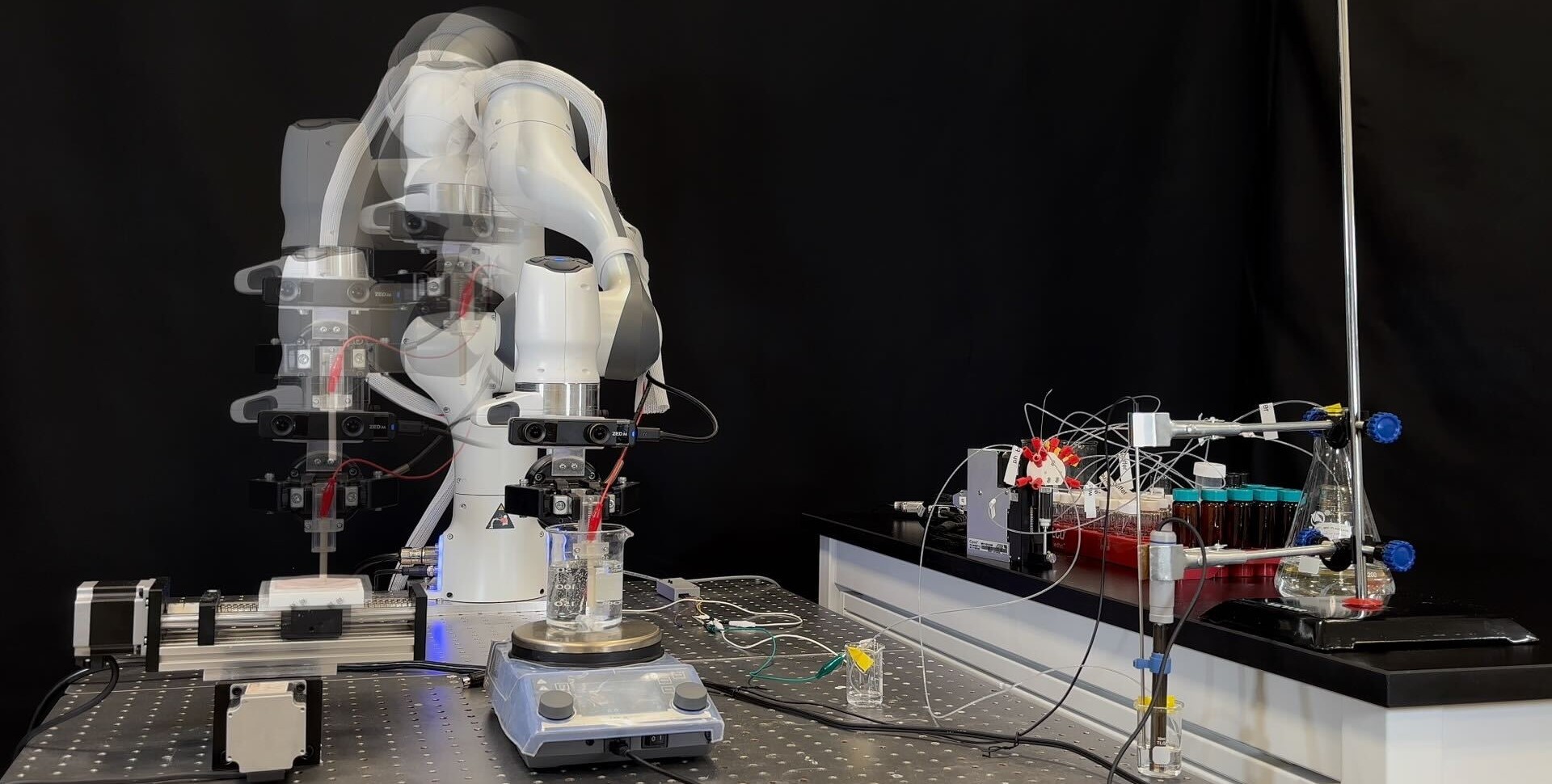
ORGANA: A Robotic Assistant for Automated Chemistry Experimentation and  Characterization

For example, in genomics, researchers can now use AI-powered tools to sequence and analyze DNA much faster than ever before. In climate science, robotic systems are helping to create more accurate models of climate behavior by processing massive amounts of data gathered from sensors around the world. These robots and algorithms not only speed up the process but also enhance the accuracy and predictive power of scientific models, leading to faster and more reliable discoveries.

The Ethical and Practical Considerations of Robotics in Science

While robotics offers tremendous promise, there are ethical and practical considerations that must be addressed.

Ethical Concerns: Job Displacement and Human Dependency

One of the primary concerns surrounding the integration of robotics in scientific research is the potential for job displacement. As robots take over more routine and manual tasks, there is a real fear that they could replace human workers entirely. However, many experts argue that robots should be seen as tools that complement human labor rather than replace it. They can take over repetitive tasks, allowing human researchers to focus on higher-level thinking and more creative aspects of their work.

There is also the question of dependency. As we rely more on automated systems, we may lose certain skills or diminish our ability to perform tasks manually. This could create a situation where human researchers become overly reliant on robotic systems, which could lead to a loss of expertise in certain areas.

Practical Considerations: Cost, Integration, and Maintenance

While robotics offers immense potential, integrating robotic systems into existing scientific infrastructures can be costly. Not all research institutions or laboratories have the funding to purchase and maintain advanced robotic equipment, which could slow down widespread adoption. Moreover, as robotic systems become more complex, ensuring that they function seamlessly with existing equipment and software can pose technical challenges.

There is also the matter of maintenance. Robotics systems, like any machinery, require upkeep, calibration, and troubleshooting. Human operators will still be necessary to ensure that these systems run smoothly, adding another layer of responsibility that must be factored into the adoption process.

The Future of Robotics in Science

Despite these challenges, the future of robotics in science looks bright. As technology continues to evolve, robots are becoming smarter, more versatile, and more accessible. The integration of robotics into scientific research has already begun, and its influence is only set to grow.

In the coming years, we can expect to see more laboratories adopting automation and AI-driven technologies to overcome labor shortages. From drug discovery to environmental research, robotics is likely to play a central role in accelerating scientific progress. Moreover, as robots become more integrated into research environments, they will not only supplement the workforce but also introduce entirely new methods and approaches to scientific inquiry.

Conclusion: A Partnership Between Humans and Robots

Robotics will not replace human researchers, but it will play an essential role in augmenting their capabilities. The labor shortages that have plagued science and research are unlikely to be solved by humans alone, but with the help of advanced robotics, we can streamline research processes, improve productivity, and create a more sustainable model for scientific discovery. The key to overcoming labor shortages in science lies not in choosing between humans and robots, but in recognizing that the future of research will be built on a partnership between human intelligence and robotic precision.

By adopting and integrating robotic technologies, the scientific community can push forward faster and more efficiently, ensuring that the next big discovery is just around the corner. Robotics is the tool that will help bridge the gap between the aspirations of science and the realities of labor shortages, allowing us to unlock new possibilities in research.


Tags: AI InnovationInnovationResearchRobotics
ShareTweetShare

Related Posts

Can Innovation Thrive Without Government Funding?
All Tech

Can Innovation Thrive Without Government Funding?

January 25, 2026
Are We Ready for the Ethical Challenges of AI in Research?
All Tech

Are We Ready for the Ethical Challenges of AI in Research?

January 24, 2026
How Can Failure Be the Most Important Lesson in Innovation?
All Tech

How Can Failure Be the Most Important Lesson in Innovation?

January 23, 2026
Can the Digital Transformation of Research Lead to Global Scientific Unity?
All Tech

Can the Digital Transformation of Research Lead to Global Scientific Unity?

January 22, 2026
All Tech

What is the True Value of Interdisciplinary Research in Innovation?

January 21, 2026
Why Do Some Scientific Discoveries Fail to Make an Impact?
All Tech

Why Do Some Scientific Discoveries Fail to Make an Impact?

January 20, 2026

Discussion about this post

  • Trending
  • Comments
  • Latest
Eternal Luminary: Humanity’s Perpetual Fascination with the Sun

Eternal Luminary: Humanity’s Perpetual Fascination with the Sun

November 5, 2024
The Race Heats Up: OpenAI Joins the AI-Powered Search Arena

The Race Heats Up: OpenAI Joins the AI-Powered Search Arena

October 16, 2024
The Canon DIGITAL IXUS Legacy: Redefining Photography with Style and Innovation

The Canon DIGITAL IXUS Legacy: Redefining Photography with Style and Innovation

November 2, 2024
A New Hope: Exploring KarXT’s Potential in Treating Alzheimer’s-Related Psychosis

A New Hope: Exploring KarXT’s Potential in Treating Alzheimer’s-Related Psychosis

December 5, 2024
The Lunar Symphony: Hal Clement’s Prophetic Fantasia

The Lunar Symphony: Hal Clement’s Prophetic Fantasia

Unlocking the Future with AI’s Latest Breakthroughs: A Journey into the Unchartered Frontier

Unlocking the Future with AI’s Latest Breakthroughs: A Journey into the Unchartered Frontier

The Transformative Power of Machine Learning: Shaping the Future of Technology and Beyond

The Transformative Power of Machine Learning: Shaping the Future of Technology and Beyond

The Emotional Intelligence of AI: Bridging the Gap Between Machines and Hearts

The Emotional Intelligence of AI: Bridging the Gap Between Machines and Hearts

Will AI Ever Truly Understand Human Consciousness?

Will AI Ever Truly Understand Human Consciousness?

January 25, 2026
Can Cryptocurrency Replace Traditional Banking?

Can Cryptocurrency Replace Traditional Banking?

January 25, 2026
Can Circular Economy Principles Revolutionize Healthcare?

Can Circular Economy Principles Revolutionize Healthcare?

January 25, 2026
Can Innovation Thrive Without Government Funding?

Can Innovation Thrive Without Government Funding?

January 25, 2026
techfusionnews

Discover the essence of innovation at "Tech Aggregator," where the latest in tech converges. From cutting-edge gadgets to cosmic ventures and green breakthroughs, our site offers a streamlined look at the future of technology. Engage with concise, impactful content designed for those eager to stay ahead in an ever-evolving digital landscape. Join us at the forefront of the tech revolution.

© 2025 techfusionnews.com. contacts:[email protected]

No Result
View All Result
  • Home
  • Digital Lifestyle
  • Green Tech & Wellness
  • AI
  • Space Exploration
  • Innovation & Research
  • All Tech

© 2025 techfusionnews.com. contacts:[email protected]

Welcome Back!

Login to your account below

Forgotten Password?

Retrieve your password

Please enter your username or email address to reset your password.

Log In