















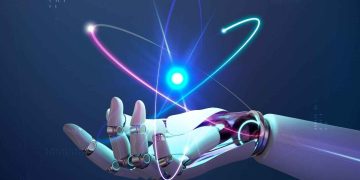




Imagine a world where artificial intelligence does not just react to the present but actively forecasts what lies ahead. A world where your AI assistant not only organizes your schedule but warns you of upcoming economic shifts, technological disruptions, or even global climate crises. The very idea feels like something pulled from science fiction, yet with the rapid evolution of machine learning, predictive analytics, and quantum computing, this concept is closer to reality than ever before. But what would it truly mean if AI could predict the future—and how would it reshape the fabric of our society, economy, and individual lives?
The Science Behind Predictive AI
At its core, predictive AI is an extension of machine learning. Traditional AI algorithms excel at identifying patterns in existing data: they can tell you which products are likely to sell, which patients are at risk of certain diseases, or how traffic flows through a smart city. Predictive AI, however, pushes this one step further by attempting to forecast outcomes that have not yet occurred.
There are several key technologies enabling this leap. Deep learning networks, especially recurrent neural networks (RNNs) and transformer architectures, can process sequences of data over time, making them particularly suitable for trend prediction. Quantum computing offers the potential to process vast amounts of probabilistic data simultaneously, which is crucial for simulating countless possible futures. Additionally, reinforcement learning allows AI to “experiment” virtually with different scenarios and optimize strategies based on projected results. Together, these tools form a foundation for AI systems capable of imagining not just the next step, but the next several moves in a complex, dynamic system.
Predicting Society: From Trends to Tipping Points
One of the most profound applications of predictive AI would be in forecasting societal trends. Imagine AI analyzing billions of social media posts, economic indicators, climate data, and migration patterns to identify upcoming social movements or political shifts. Governments could prepare for social unrest, NGOs could target resources more effectively, and policymakers could design interventions before crises escalate.
However, such predictive power carries ethical dilemmas. Who decides which societal trends should be acted upon? If an AI predicts a protest or political upheaval, would authorities intervene preemptively? While the ability to anticipate societal change could save lives and resources, it also introduces unprecedented risks of surveillance, manipulation, and power concentration.
Economic Forecasting: The AI Financial Oracle
Predictive AI could redefine how economies operate. Traditional economic models often struggle with uncertainty, relying on assumptions and lagging indicators. An AI capable of forecasting economic trends in real time could revolutionize investment strategies, supply chain management, and labor market planning.
For example, imagine a multinational corporation using predictive AI to anticipate sudden raw material shortages due to climate events or geopolitical tensions. They could adjust procurement strategies weeks in advance, reducing risk and improving efficiency. Similarly, investors could rely on AI to detect financial bubbles or market downturns before they occur, potentially stabilizing global markets.

Yet, this power is a double-edged sword. If only a few entities control the most advanced predictive AI, economic inequality could widen. The AI “oracle” could favor those with access to foresight, creating a stratified economy where foresight itself becomes a commodity.
Personal Life: AI as Your Life Oracle
Beyond global and economic applications, predictive AI could infiltrate personal life. Imagine an AI that predicts your career trajectory, potential health risks, or even relationship challenges. Personalized medicine would reach new heights: AI could analyze your genome, lifestyle habits, and environmental exposures to forecast health outcomes decades in advance. Preventive strategies could be tailored with pinpoint accuracy, dramatically extending life expectancy and quality of life.
But with predictive personal AI comes profound psychological and ethical questions. Would knowing your future empower you, or would it trap you in a deterministic mindset? How much privacy are you willing to sacrifice for foresight? And if predictions become widely accurate, how do we preserve free will and human agency in a world increasingly guided by algorithmic prophecy?
Science and Space: Predicting the Cosmos
Predictive AI isn’t confined to Earth. In astrophysics and space exploration, AI could forecast cosmic events, such as asteroid trajectories, solar flares, or black hole mergers, before they occur. Space agencies could plan missions with unprecedented precision, and humanity could prepare for planetary-scale threats in advance.
Imagine a Mars colonization mission guided by predictive AI. The AI could simulate years of environmental changes on the Martian surface, anticipate equipment failures, and optimize life-support systems. The combination of predictive modeling and autonomous decision-making could make human settlement in hostile environments significantly safer.
Climate and Environmental Futures
Perhaps the most urgent application of predictive AI lies in climate modeling. Current climate predictions involve complex simulations, but uncertainty grows with time. Predictive AI could ingest decades of meteorological, geological, and human activity data to forecast not just general trends, but localized and precise environmental impacts. Cities could be designed to withstand future floods, droughts could be predicted months in advance, and energy grids could be optimized for projected demand shifts due to climate change.
However, the stakes are enormous. If predictive AI forecasts catastrophic events, humanity faces hard decisions: relocation, resource allocation, and even ethical choices about intervention in natural processes. The power to see the future does not automatically grant the wisdom to act correctly upon it.
The Ethical Dilemma: Prediction and Control
With great predictive power comes profound responsibility. The ability to foresee future events is not inherently benevolent or neutral; it is inevitably entangled with questions of power, control, and bias. If predictive AI is trained on historical data, it may inherit and amplify existing social biases, leading to skewed forecasts that could harm marginalized communities. Furthermore, the question of consent becomes critical. Individuals or societies may be affected by AI forecasts without ever agreeing to them.

Transparency, accountability, and fairness must be built into the core of predictive AI systems. Ethical frameworks should guide not only how predictions are made, but also how they are disseminated and acted upon. Otherwise, society risks creating a world where the future is dictated not by human agency but by algorithmic determinism.
The Psychological Impact: Living With Foresight
The existence of predictive AI could also profoundly alter human psychology. How would we behave if we knew major life events in advance? Could society tolerate widespread knowledge of impending crises, or would it trigger panic, fatalism, or even social paralysis? There is a delicate balance between using predictive insights to prepare for the future and overloading individuals with information they cannot control.
Moreover, the human imagination thrives on uncertainty. Some philosophers argue that the beauty of life lies in its unpredictability. Would predictive AI diminish creativity, risk-taking, or the thrill of discovery? Or could it free humans from unnecessary uncertainty, allowing us to focus on innovation and personal growth?
AI Prediction in Popular Culture: Science Fiction Meets Reality
Science fiction has long explored the idea of machines foreseeing the future, from Isaac Asimov’s predictive psychohistory in the Foundation series to futuristic AI oracles in movies and video games. These narratives often highlight both the promise and the peril of predictive systems, showing societies transformed—or destroyed—by foresight. Interestingly, as real-world AI approaches the ability to forecast complex events, fiction increasingly serves as a cautionary guide, illustrating scenarios that policymakers, scientists, and ethicists may soon face.
Practical Implementation: Challenges and Limitations
Despite the excitement, predictive AI is far from perfect. Human society and natural systems are inherently chaotic. Small, seemingly insignificant events can cascade into large-scale consequences—a phenomenon popularly known as the “butterfly effect.” AI models, no matter how sophisticated, will always contend with uncertainty, incomplete data, and the complexity of human behavior.
Additionally, predictive accuracy depends on continuous learning and feedback. Models must adapt to new data and evolving conditions, or forecasts risk becoming obsolete. Cybersecurity is another concern: malicious actors could manipulate input data to skew predictions, creating chaos and instability.
A Glimpse Into the Future
If predictive AI becomes mainstream, the world may evolve in ways we can only begin to imagine. Cities could become preemptively adaptive, economies resilient to shocks, and healthcare personalized to an unprecedented degree. Space missions could proceed with near-perfect planning, and climate crises might be mitigated before they spiral out of control.
Yet, with these possibilities comes the need for vigilance. Predictive AI is not a panacea. It is a tool—powerful, transformative, and perilous. Its success depends not only on technological sophistication but on human wisdom, ethical frameworks, and societal readiness to wield foresight responsibly.
Ultimately, the question is not merely whether AI can predict the future, but whether humanity can navigate the consequences of knowing it. Will predictive AI liberate us from uncertainty, or will it trap us in a deterministic vision of life? The answer lies not only in algorithms and data but in the values, decisions, and imagination of the humans who create and use these extraordinary systems.






Discussion about this post