





















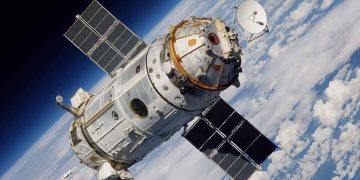















The discovery of exoplanets—planets outside our solar system—has been one of the most exciting frontiers in modern astronomy. In recent years, Artificial Intelligence (AI) has played a pivotal role in this field, speeding up the search for new worlds and providing scientists with powerful tools to analyze vast amounts of data. With advancements in machine learning and deep learning, AI is helping us uncover planets in distant solar systems, and it promises to revolutionize the way we study space.
In this article, we’ll explore how AI is reshaping the search for exoplanets, its current applications, and how it could influence future space exploration.
The Challenge of Finding Exoplanets
Finding exoplanets is no easy task. The distances between stars are immense, and the planets themselves are incredibly small and faint. Traditional methods of discovery, like the transit method and radial velocity method, have been successful but are limited in what they can achieve.
- The Transit Method: This method detects exoplanets by observing the slight dimming of a star’s light when a planet passes in front of it. While effective, this technique requires analyzing large amounts of data.
- The Radial Velocity Method: This approach looks for the subtle wobble in a star’s movement caused by the gravitational pull of an orbiting planet. Like the transit method, it also involves complex data analysis.
The volume of data generated by these methods is massive, making it challenging for astronomers to analyze it manually. Here’s where AI steps in.
AI’s Role in Detecting Exoplanets
AI, particularly machine learning (ML), excels at processing large datasets and identifying patterns. When it comes to exoplanet detection, AI helps sift through the enormous amounts of data gathered by telescopes like Kepler and TESS, making it possible to spot planets that might otherwise go unnoticed.
Machine Learning: The Power of Pattern Recognition
The key to AI’s success in exoplanet discovery is its ability to recognize patterns. The signals that indicate an exoplanet, such as the dimming of a star’s light, can be subtle and hard to distinguish from background noise. Machine learning algorithms are trained to recognize these patterns by analyzing vast amounts of data. Once trained, the algorithms can quickly identify potential exoplanet candidates.
For example, AI can analyze light curves—graphs that show how a star’s brightness changes over time—helping scientists spot the periodic dimming caused by a planet transiting its star. The AI system can then flag this as a potential exoplanet, which human astronomers can investigate further.
The Role of Deep Learning
Deep learning, a type of machine learning, is particularly effective in exoplanet discovery. This technique uses neural networks with multiple layers to analyze data in a way that mimics the human brain. Deep learning can recognize even the faintest signals of an exoplanet, filtering out noise and focusing on the most likely candidates.
This method is especially useful when analyzing data from large-scale missions like Kepler, which has found thousands of exoplanets. Deep learning algorithms can sift through light curves to identify not only potential exoplanets but also rule out false positives—signals that might initially look like an exoplanet but are caused by other factors, like stellar flares.
Automating the Discovery Process
Traditionally, astronomers would manually analyze data from telescopes, but this process is slow and limited. AI has dramatically sped up the discovery process by automating the detection of exoplanets. With machine learning, AI can scan massive datasets and flag potential exoplanets for further study. This makes it possible to find exoplanets more quickly and efficiently than ever before.
For example, AI was used to analyze data from the Kepler Space Telescope, helping researchers identify thousands of new exoplanets. The process, which would have taken human astronomers years to complete, was done in just a fraction of the time thanks to AI.
AI’s Potential for Future Space Exploration
As we look to the future, AI will continue to play an even more significant role in space exploration. Space agencies like NASA and private companies like SpaceX are working on ambitious missions to explore other planets and moons in our solar system and beyond. AI will be essential in these efforts, helping analyze the data from telescopes, spacecraft, and even autonomous rovers.
Autonomous Exploration

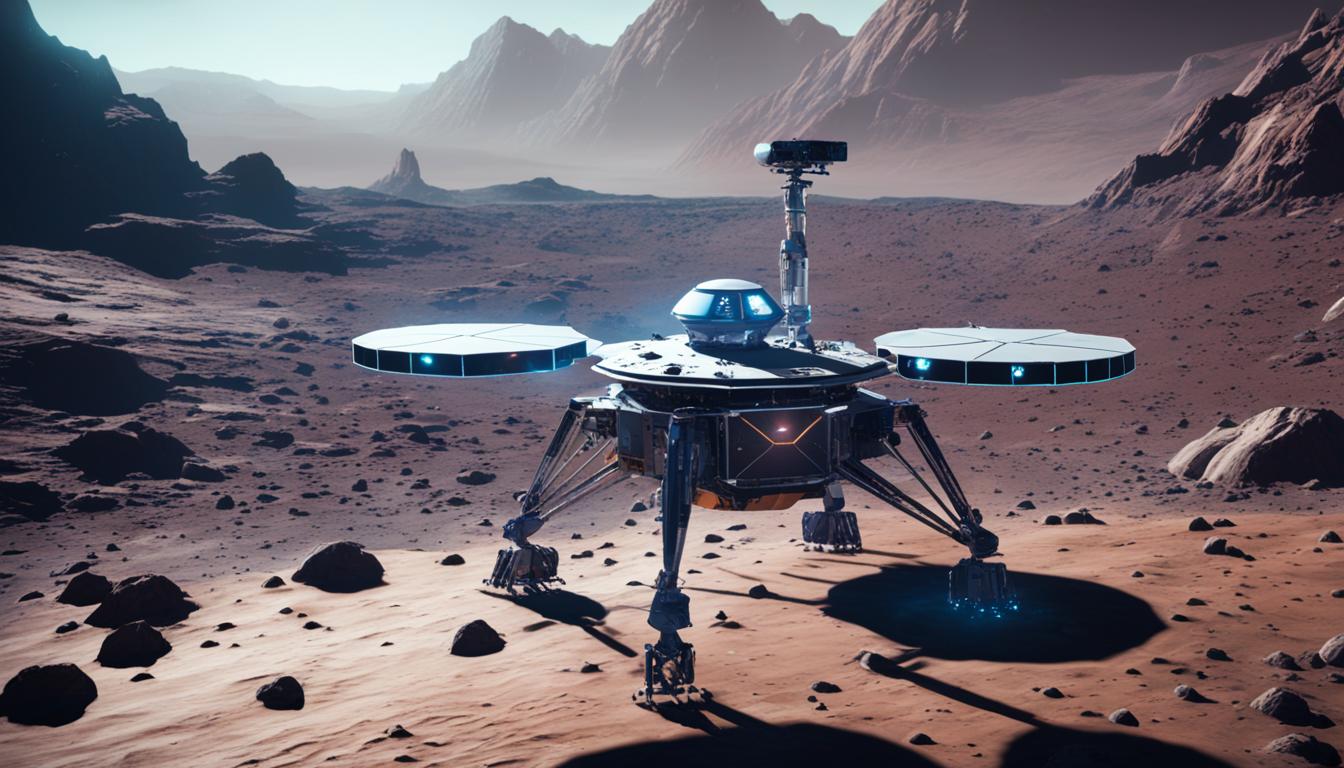
AI has already proven itself in autonomous space exploration. NASA’s Perseverance rover on Mars, for instance, uses AI to navigate the Martian surface, making decisions on where to go and what to study based on its environment. In the future, more autonomous spacecraft will use AI to explore distant exoplanets, stars, and even other galaxies.
These AI-powered spacecraft could make decisions about which planets to visit, how to analyze their atmospheres, and even whether they might support life. AI would not only assist in exoplanet discovery but also in determining which planets are worth exploring in greater detail.
AI in Future Telescopes
New space telescopes, such as the James Webb Space Telescope (JWST), are poised to send back an overwhelming amount of data. AI will be essential for processing this data in real-time, helping scientists prioritize the most promising exoplanet candidates for study.
AI can also be used to operate next-generation telescopes, making decisions about which stars to observe and how to focus the telescope’s resources. This autonomy will speed up the discovery process and allow astronomers to study exoplanets more efficiently.
Ethical Considerations of AI in Space
While AI holds incredible potential for space exploration, there are important ethical considerations. One concern is the autonomy of AI systems. As AI becomes more integrated into space missions, there will be situations where machines must make decisions without human intervention. This raises questions about accountability, especially if something goes wrong.
Another issue is the ethical implications of AI making decisions about the exploration of distant planets. Should AI decide which planets to study? And if we discover alien life, how should AI and human astronauts interact with that life? These are questions that will require careful consideration as AI becomes more involved in space exploration.
Conclusion
AI is revolutionizing the search for exoplanets, making the process faster, more efficient, and more accurate. From helping to detect exoplanets through advanced data analysis to enabling autonomous space missions, AI is playing a critical role in expanding our understanding of the universe. As we continue to explore the cosmos, AI will be a key player in helping us discover new worlds, study their environments, and even search for signs of life.
The future of space exploration is bright, and AI is leading the way.













Discussion about this post