



































In the ever-evolving landscape of engineering, innovation is the lifeblood of progress. Yet, the traditional paradigm of “faster, bigger, stronger” is increasingly colliding with the harsh realities of our environmental limits. Resource scarcity, climate change, and global population growth are reshaping priorities across industries, compelling engineers to reimagine solutions not only for functionality but also for sustainability. The question arises: can sustainability—once considered a constraint—be the very catalyst that propels the next wave of engineering innovation? The answer is a resounding yes, and the implications are both profound and exhilarating.
Redefining Engineering Innovation Through Sustainability
Sustainability is often misperceived as a limitation, a bureaucratic checkmark that slows down the pace of innovation. However, when approached creatively, sustainability becomes an enabler of ingenuity. Engineers are discovering that constraints in energy consumption, material efficiency, and environmental impact often spark novel solutions that would not have emerged in a resource-abundant environment.
Consider the example of material science. Traditional engineering has relied heavily on metals, plastics, and composites with high environmental footprints. Today, bio-inspired materials—derived from algae, fungi, or agricultural waste—offer renewable alternatives that are not only lighter and stronger in some applications but also biodegradable. The process of integrating these materials into real-world products challenges engineers to rethink manufacturing methods, supply chains, and end-of-life recycling strategies, creating a cascade of innovation opportunities.
The Circular Economy as a Playground for Engineers
One of the most promising frameworks marrying sustainability with innovation is the circular economy. Unlike the linear “take-make-dispose” model, a circular approach seeks to keep materials in use for as long as possible, regenerate natural systems, and minimize waste. This paradigm forces engineers to design for disassembly, modularity, and adaptability.
For instance, in electronics engineering, companies are exploring modular smartphones that allow users to swap components like batteries, cameras, or screens, dramatically extending product lifespan. Such designs require engineers to devise new assembly techniques, material combinations, and even microelectronics architectures—all driven by sustainability. Here, constraints become the incubator of breakthrough thinking, proving that sustainable engineering is not just responsible—it’s revolutionary.
Energy Innovation at the Crossroads
Energy consumption remains a cornerstone of both sustainability and engineering innovation. The urgency of transitioning to renewable energy sources is sparking some of the most inventive solutions in modern engineering. Solar panels are now being developed with flexible substrates, perovskite materials, and self-cleaning surfaces, making energy harvesting more efficient and versatile. Similarly, wind turbine design has evolved from the massive three-blade structures to compact, urban-friendly models that can be integrated into building facades or small-scale communities.
Beyond hardware, energy storage presents fertile ground for innovation. Engineers are exploring next-generation batteries, including solid-state, lithium-sulfur, and metal-air designs, each promising higher energy density, faster charging, and longer lifespans with a smaller ecological footprint. Even grid architecture is being reimagined to optimize energy distribution, integrate distributed renewable sources, and reduce waste. These challenges—once considered logistical hurdles—are now springboards for cutting-edge engineering solutions.
Transportation Engineering Meets Sustainability
The transportation sector, long a significant contributor to greenhouse gas emissions, is undergoing a seismic shift driven by sustainable engineering. Electric vehicles (EVs), hydrogen fuel cells, and autonomous systems are redefining mobility. But innovation extends beyond propulsion. Engineers are focusing on lightweight materials, aerodynamics, energy-efficient traffic algorithms, and vehicle-to-grid technology that allows cars to feed energy back into the grid.
Urban mobility itself is being rethought. Modular public transport systems, bicycle highways, and smart traffic networks are the product of engineers applying sustainable principles to reduce congestion, lower emissions, and enhance quality of life. In many ways, the constraints imposed by sustainability—limited energy, environmental concerns, and urban density—are driving a renaissance in transportation engineering.

Smart Cities and Sustainable Infrastructure
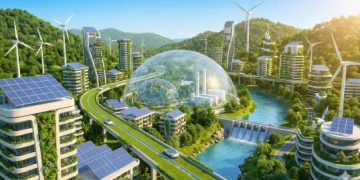
Civil and structural engineering are also being transformed by sustainability-driven innovation. The rise of smart cities illustrates how data, sensors, and adaptive infrastructure can reduce energy consumption, optimize resource use, and enhance urban resilience. Engineers are designing buildings that generate more energy than they consume, roads that harvest solar energy, and water systems that recycle and purify efficiently.
One exciting frontier is the integration of nature-based solutions. Green roofs, vertical gardens, and urban wetlands are no longer aesthetic afterthoughts—they are functional systems designed to improve air quality, reduce heat islands, and manage stormwater. Integrating these elements requires engineers to collaborate with architects, ecologists, and data scientists, fostering cross-disciplinary innovation that pushes the boundaries of conventional engineering.
Biotech and Sustainable Engineering
Sustainability’s influence reaches even the microscopic realm. Biotechnology offers engineers novel tools to create environmentally friendly processes and products. For example, microbes can now be engineered to produce biodegradable plastics, synthesize biofuels, or even repair concrete structures autonomously. The merging of biotechnology and traditional engineering is giving rise to a field sometimes called “synthetic sustainability,” where living systems are harnessed as part of engineering solutions.
Medical engineering also benefits from this convergence. Engineers are developing personalized implants using 3D printing techniques that minimize waste and tailor materials to each patient, reducing both material consumption and ecological impact. In these cases, sustainability becomes a lens that guides not only what engineers make but how they make it.
Innovation in Water and Resource Management
Water scarcity is an escalating global challenge, and sustainable engineering offers solutions that blend technology with resource stewardship. Desalination plants powered by renewable energy, smart irrigation systems for agriculture, and wastewater recycling processes exemplify how constraints in water availability are driving creative engineering approaches.
Engineers are also exploring decentralized systems, where communities manage water locally rather than relying on centralized infrastructure. This requires innovations in sensors, control systems, and modular treatment units. By prioritizing sustainability, engineers are not merely solving environmental problems—they are inventing new paradigms for human habitation.
Materials Innovation Beyond Sustainability
While sustainability often emphasizes environmental impact, it also catalyzes entirely new approaches to materials science. Engineers are exploring composites, metamaterials, and nanomaterials that offer superior strength-to-weight ratios, enhanced thermal properties, or adaptive functionalities. Often, these innovations are motivated by a desire to reduce energy consumption, improve recyclability, or extend product lifespans.
For example, self-healing concrete uses microcapsules filled with healing agents that repair cracks automatically, reducing the need for maintenance and conserving resources. Aerogels, ultralight materials with excellent insulation properties, are being applied in everything from aerospace engineering to energy-efficient construction. In these instances, sustainability and innovation are inseparable partners, each propelling the other forward.
The Role of Digital Engineering and AI
Digital tools are accelerating sustainability-driven innovation. Artificial intelligence, machine learning, and simulation platforms allow engineers to optimize designs, predict environmental impacts, and iterate faster than ever. Digital twins—virtual replicas of physical systems—enable real-time monitoring and performance improvements, minimizing resource waste and operational inefficiencies.
For instance, AI can optimize wind turbine placement to maximize energy generation, or predict when materials will fail to allow preventive maintenance. In manufacturing, AI-driven simulations help reduce material use, energy consumption, and emissions. By integrating sustainability into the digital design process, engineers are expanding the realm of what’s technically and ecologically possible.

Challenges and Opportunities
Despite the promise, sustainable engineering is not without challenges. Regulatory barriers, cost pressures, and entrenched industrial practices can slow adoption. Additionally, designing for sustainability often requires long-term thinking that may conflict with short-term financial incentives.
However, these challenges are themselves fertile ground for innovation. Engineers who can navigate regulatory frameworks, balance trade-offs, and leverage new business models will define the next generation of technological breakthroughs. In many ways, the obstacles imposed by sustainability are exactly what force the inventive leaps that drive engineering forward.
Education and the Cultural Shift
For sustainability-driven innovation to flourish, a cultural shift in engineering education is essential. Future engineers must be trained not only in technical skills but also in ecological literacy, systems thinking, and cross-disciplinary collaboration. Universities are increasingly embedding sustainability principles into curricula, encouraging students to consider the environmental and social implications of their designs from day one.
This educational evolution is critical. Engineers equipped with both technical expertise and a sustainability mindset are more likely to produce innovations that are not only functional and profitable but also resilient and regenerative. By cultivating this mindset, the engineering profession ensures that sustainability is a driver, not a constraint.
The Business Case for Sustainable Engineering
Sustainability is increasingly linked to economic performance. Companies that embrace eco-innovation often see cost savings through resource efficiency, enhanced brand value, and access to emerging markets. Engineering solutions that reduce energy, minimize waste, or optimize supply chains can deliver measurable financial returns while supporting environmental stewardship.
Moreover, consumers are increasingly conscious of sustainability, demanding products and services that align with their values. Engineers who integrate sustainability into design and production are therefore creating both ecological and market advantages. Innovation and sustainability are not merely compatible—they are mutually reinforcing.
Global Collaboration and Knowledge Sharing
Finally, sustainability-driven innovation thrives in a global context. Environmental challenges do not respect borders, and solutions benefit from cross-cultural, interdisciplinary collaboration. Engineers working across continents are sharing best practices, open-source designs, and collaborative research projects, accelerating the pace of innovation.
Global challenges such as climate change, water scarcity, and renewable energy integration demand solutions that are scalable, adaptable, and culturally sensitive. Sustainability provides a unifying framework for engineers to tackle these problems collectively, turning shared constraints into shared opportunities for inventive breakthroughs.
Conclusion: Sustainability as the Innovation Engine
Sustainability is no longer a peripheral consideration in engineering—it is becoming the engine of innovation itself. By reframing constraints as opportunities, engineers are developing materials, energy systems, transportation networks, water infrastructure, and digital solutions that are smarter, more resilient, and environmentally responsible.
From bio-inspired materials to AI-optimized energy systems, the next wave of engineering innovation is being shaped not by what we can consume but by how wisely we use what we have. In embracing sustainability, engineers are not only solving today’s problems—they are inventing a future where technological advancement and ecological stewardship advance hand in hand.
Sustainability, once viewed as a limit, is emerging as the ultimate catalyst for creativity, efficiency, and progress. The engineering profession is at the threshold of a new era—one where innovation is defined not only by what we can build but by how responsibly we can build it. And in this era, sustainability is not a constraint—it is the spark.













Discussion about this post