





































In an era where technological advancements define the pace of economic growth, scientific discovery, and societal transformation, the concept of innovation is no longer confined to closed laboratories or corporate research departments. The traditional model of innovation, often dubbed the “closed innovation” approach, relied heavily on proprietary research, confidential development, and a linear pipeline from idea to market. While this model produced groundbreaking inventions, its pace was inherently limited by the boundaries of individual organizations. Enter open innovation, a paradigm that is reshaping how we think about technological progress.
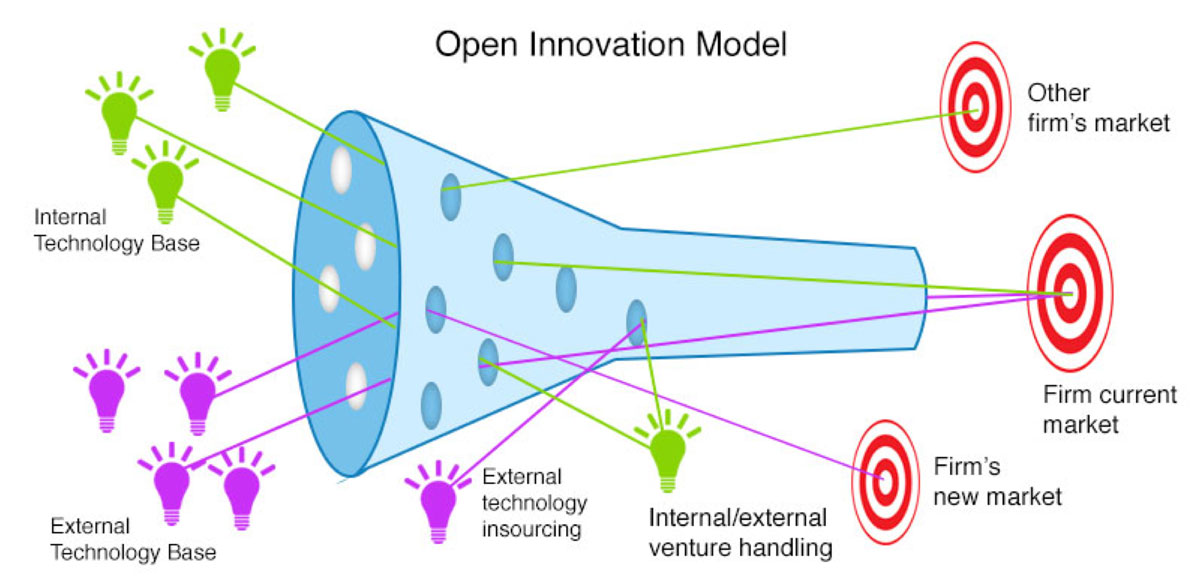
Open innovation emphasizes the free flow of ideas, collaboration across organizational and geographical boundaries, and leveraging external as well as internal sources of knowledge. In essence, it suggests that companies and research institutions do not need to rely solely on their internal resources; they can tap into the creativity, expertise, and networks of others to accelerate innovation. The question then arises: is open innovation truly the key to faster technological progress? To answer this, we need to explore its principles, mechanisms, successes, limitations, and broader implications.
The Evolution from Closed to Open Innovation
The closed innovation model dominated the 20th century. Corporations like Bell Labs, IBM, and Xerox PARC built enormous research labs where scientists and engineers worked under strict confidentiality agreements. Successes from these labs—transistors, personal computers, and lasers—transformed the world, but the process was slow and expensive. Ideas that emerged outside these labs were often ignored, and collaboration was limited to formal partnerships or licensing deals.
By the early 21st century, the limitations of closed innovation became evident. Technological development cycles were accelerating, the cost of research was skyrocketing, and no single organization could maintain leadership across multiple disciplines. Companies and institutions began to recognize the value of opening up their innovation processes. Open innovation, popularized by Henry Chesbrough, proposed a radical shift: allow knowledge to flow in and out, collaborate with external partners, and embrace external ideas to complement internal R&D.
At its core, open innovation rests on three principles:
- Inbound Innovation – Leveraging external ideas, technologies, or solutions to improve internal processes and products.
- Outbound Innovation – Sharing internal knowledge or technologies with external partners for commercialization or further development.
- Co-creation and Collaboration – Engaging customers, startups, universities, and even competitors in joint innovation efforts.
The evolution from closed to open models has not only increased the pace of technological progress but also expanded the diversity of solutions and applications across industries.
Mechanisms That Accelerate Technological Progress
Open innovation accelerates technological development through multiple mechanisms:
1. Crowdsourcing and Collective Intelligence
Crowdsourcing platforms allow organizations to tap into a global talent pool. Problems that might take years to solve in-house can be tackled by thousands of participants worldwide. Platforms like InnoCentive, Kaggle, and Topcoder enable organizations to present challenges and reward successful solutions.
Collective intelligence doesn’t just solve problems faster; it introduces diverse perspectives. A team of engineers from one culture may approach a problem very differently from a group of scientists in another region. This diversity often leads to creative breakthroughs that would be unlikely in a closed environment.
2. Strategic Partnerships and Alliances
Open innovation encourages partnerships not just with suppliers or distributors but with universities, startups, and even competitors. For example, pharmaceutical companies often collaborate with biotech startups to access novel drug discovery platforms, accelerating the pace from lab discovery to clinical trials. Similarly, in the automotive industry, alliances between tech companies and traditional manufacturers are speeding the adoption of autonomous vehicles and electric propulsion systems.
3. Licensing and Knowledge Exchange
Intellectual property is no longer a tool for isolation. Licensing patents and sharing proprietary technology with external entities can create an ecosystem of innovation. This approach allows companies to monetize unused technologies while benefiting from external commercialization efforts. The semiconductor and software industries have been pioneers in such collaborative licensing models, leading to faster product cycles and wider adoption.
4. Open Source and Community-Driven Development
Software development illustrates one of the clearest examples of open innovation. Open-source platforms like Linux, Apache, and TensorFlow thrive because they embrace external contributions. Developers worldwide improve code, fix bugs, and introduce new functionalities. The result is rapid technological evolution at a scale no single company could achieve independently.
This model is now influencing hardware and biotechnology. Open-source drug discovery, open hardware prototyping, and community-driven AI research demonstrate that collective effort can significantly shorten innovation cycles.
Case Studies in Open Innovation
Technology Sector: AI and Machine Learning
Artificial intelligence (AI) exemplifies how open innovation accelerates technological progress. Open datasets, pre-trained models, and collaborative research papers allow AI researchers worldwide to iterate rapidly. Companies like OpenAI, Google, and Microsoft have embraced openness by publishing models, sharing benchmarks, and hosting competitions. The result? AI advances that once took decades can now happen in months.
Biotechnology: CRISPR and Gene Editing
In biotechnology, CRISPR technology illustrates the power of open scientific collaboration. Researchers across universities and private companies contributed to understanding and refining CRISPR, leading to unprecedented speed in gene-editing applications. Open sharing of protocols, research results, and patents (in some cases) accelerated progress that could have otherwise taken decades of isolated effort.
Aerospace: Space Exploration
Open innovation is also reshaping space exploration. Companies like SpaceX and Blue Origin leverage partnerships with NASA, private suppliers, and international collaborators to develop rockets, satellites, and lunar technologies. Open calls for research proposals, collaborative projects with universities, and the sharing of non-critical data have dramatically accelerated progress in space technology.
Healthcare: Personalized Medicine
In healthcare, open innovation enables rapid development of personalized medicine. Genomic data, computational models, and patient insights are shared across research institutions. Pharmaceutical companies, AI startups, and hospitals collaborate on predictive models for disease, accelerating drug discovery and treatment optimization. Without open innovation, the integration of AI into healthcare would have been slower and far less efficient.
Benefits of Open Innovation
The advantages of open innovation extend beyond speed:
- Faster Problem Solving – Accessing external expertise reduces the time from idea to solution.
- Lower Costs – Sharing knowledge and resources decreases the financial burden of R&D.
- Increased Diversity – Broader perspectives often result in more creative and adaptable solutions.
- Enhanced Market Responsiveness – Open innovation allows companies to quickly adapt to changing market needs by incorporating external insights.
- Risk Sharing – Collaborative projects spread technological and financial risk among partners.
Moreover, open innovation often cultivates ecosystems where complementary technologies develop simultaneously. This network effect can accelerate the overall pace of technological progress, creating a virtuous cycle of innovation.
Challenges and Limitations
Despite its benefits, open innovation is not a panacea. Several challenges must be addressed:
Intellectual Property Management
Balancing openness with protection of proprietary knowledge is complex. Companies must decide which technologies to share, which to protect, and how to structure agreements to avoid litigation. Poor IP management can stifle innovation rather than accelerate it.
Cultural and Organizational Barriers
Some organizations struggle to embrace openness due to entrenched hierarchies or fear of losing competitive advantage. Cultural resistance can limit collaboration and reduce the effectiveness of open innovation initiatives.

Quality Control
Crowdsourced solutions or externally developed technologies may not always meet quality standards. Organizations need robust vetting and integration processes to ensure that external contributions enhance rather than hinder progress.
Coordination Complexity
Collaborating across multiple organizations, geographies, and disciplines introduces logistical and managerial complexity. Effective open innovation requires sophisticated coordination mechanisms and strong leadership to align goals and timelines.
The Role of Technology in Enabling Open Innovation
Ironically, the very technologies that are products of open innovation also facilitate it. Cloud computing, collaboration platforms, and digital communication tools allow researchers, engineers, and designers to share ideas instantly across the globe.
- Digital Twins and Simulation – Enable remote collaboration and rapid prototyping.
- AI and Machine Learning – Analyze vast datasets, identify patterns, and accelerate discovery.
- Blockchain – Securely manage IP and collaborative agreements in decentralized networks.
- Virtual and Augmented Reality – Allow teams to collaboratively design and test products in immersive environments.
Without these enabling technologies, the scale and efficiency of open innovation would be severely constrained.
Open Innovation and the Global Economy
Open innovation not only speeds technological progress but also has significant economic implications. Countries and regions that embrace collaborative research, knowledge-sharing ecosystems, and innovation-friendly policies often outperform others in technological competitiveness. For instance, Europe’s Horizon Europe program and the U.S.’s public-private research collaborations demonstrate that structured support for open innovation can accelerate national scientific and industrial capabilities.
Moreover, open innovation encourages startups and SMEs to participate in global technological development. By reducing barriers to entry and facilitating knowledge access, smaller players can contribute meaningfully to breakthroughs traditionally dominated by large corporations.
Open Innovation in Emerging Fields
Open innovation is particularly critical in emerging technologies:
- Quantum Computing – International collaboration on quantum algorithms and hardware accelerates development.
- Renewable Energy – Sharing technology and best practices across borders speeds adoption and efficiency.
- Autonomous Vehicles – Collaborative testing platforms and shared datasets reduce safety risks and accelerate AI model training.
- Space Colonization – Joint missions, shared research, and multinational collaborations make large-scale space projects feasible.
In each of these fields, the complexity and scale of the challenges demand collective intelligence and shared resources.
Future Outlook: Open Innovation as the Norm
The trajectory suggests that open innovation is not just a trend—it is becoming the default mode of technological development. Hybrid models, combining internal R&D with external collaboration, are likely to dominate. Organizations that remain isolated may fall behind in innovation speed, adaptability, and market relevance.
Artificial intelligence may further accelerate this process. AI-driven platforms can match problems with external experts, optimize collaboration, and predict technological trajectories, making open innovation smarter, faster, and more efficient.
The future could involve global, AI-facilitated innovation networks where ideas circulate freely, tested virtually, refined collaboratively, and implemented in real-time—a dramatic acceleration from the linear, siloed processes of the past.
Conclusion
Open innovation is undeniably a catalyst for faster technological progress. By leveraging external expertise, promoting collaboration, and embracing transparency in certain areas, organizations and societies can overcome the limitations of closed innovation. Case studies from AI, biotechnology, aerospace, and healthcare clearly illustrate that collaborative approaches can drastically reduce development time, lower costs, and expand creative potential.
However, open innovation is not without challenges. Intellectual property concerns, cultural resistance, quality assurance, and coordination complexity must be managed carefully. The successful adoption of open innovation requires thoughtful strategy, enabling technologies, and a willingness to embrace shared knowledge as an asset rather than a liability.
In sum, open innovation does not replace internal R&D; it amplifies it. For any organization, industry, or nation seeking to accelerate technological progress in the 21st century, the question is no longer whether to embrace open innovation, but how to do so most effectively. The key to faster technological progress lies not in guarding knowledge behind closed doors but in opening doors to collaboration, diversity, and collective creativity.













Discussion about this post